
Puerto de la Cruz Moves to Stabilize Historic Casa Amarilla After Years of Neglect
The Puerto de la Cruz City Council has secured a commitment from the Daltre Group to stabilize the historic Casa Amarilla, ending years of neglect for the site where psychologist Wolfgang Köhler conducted his groundbreaking research.
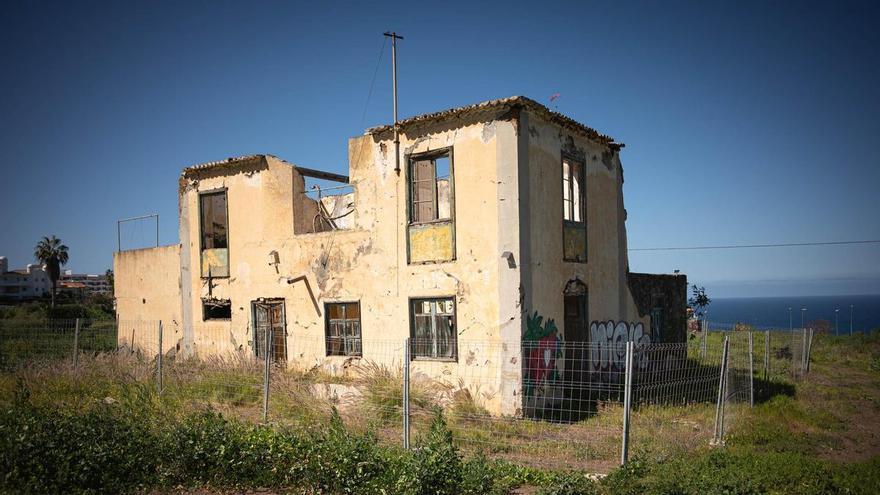
The Casa Amarilla in Puerto de la Cruz has finally reached a turning point. After years of severe decay, the local council has broken the deadlock that threatened to destroy this historic scientific site, which has been officially protected as a Property of Cultural Interest (BIC) since 2011.
The council’s intervention has forced a change in strategy from the Daltre Group, the construction company that owns the land. Following a formal request from the Department of Urban Planning, the company has submitted a technical plan to stabilize the building. The proposal involves installing internal metal supports to secure the facades without damaging the original structure. While this plan still requires final approval from the Cabildo de Tenerife’s Heritage Department, it is the first real step toward saving a building that had been left to rot and suffered from illegal occupation.
Urban Planning Councilor David Hernández noted that the situation is now much improved compared to the years before 2020. While the owners still hope to develop a hotel on the site, the City Council has promised to keep a close watch and pressure island authorities to speed up the necessary permits. Furthermore, the local government has warned that it will take a tougher stance on owners of protected properties who fail to maintain them, ensuring that private negligence no longer puts public heritage at risk.
The building’s importance goes beyond its architecture. Between 1913 and 1918, the Casa Amarilla served as a laboratory for German psychologist Wolfgang Köhler. His experiments with chimpanzees among the local banana plantations proved that primates are capable of "insight"—or sudden reasoning—a breakthrough that made Tenerife a global leader in comparative psychology.
Although there were plans in 2016 to turn the site into a neuroscience center to honor this history, the project was eventually abandoned. The current effort to save the building, driven by administrative pressure and the owner’s new cooperation, ends a long period of neglect that had been widely criticized by experts. Stabilizing the Casa Amarilla not only prevents its collapse but also helps preserve one of the most significant chapters in the history of science in the Canary Islands.