
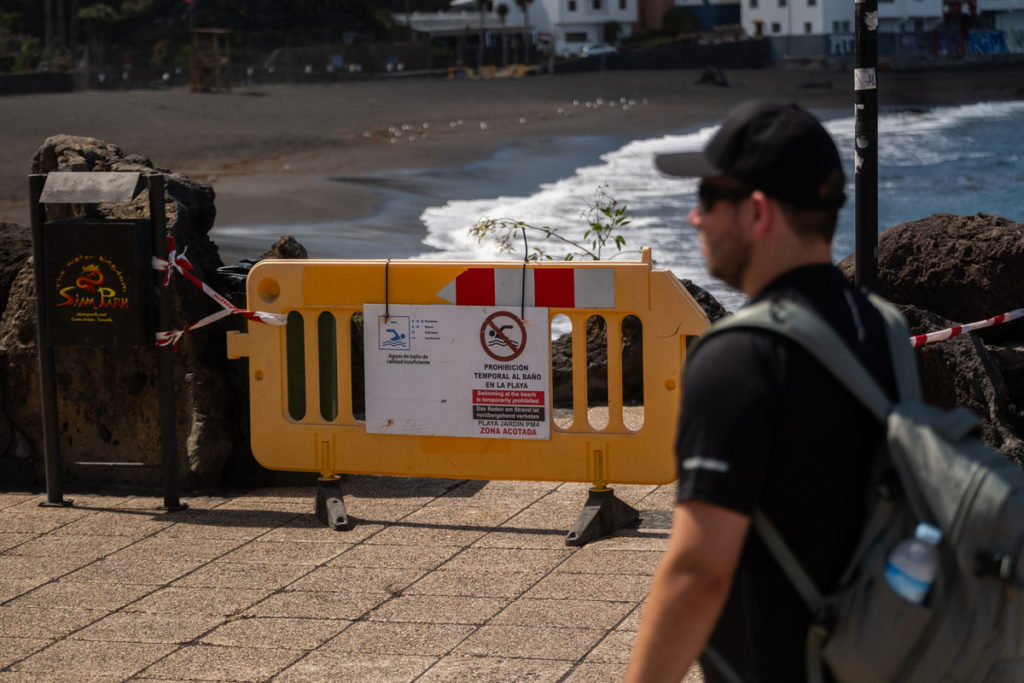
Puerto de la Cruz Demands Joint Water Testing Amid Playa Jardín Closure Dispute
Puerto de la Cruz officials are demanding joint water testing with the Canary Islands’ Public Health Department to resolve conflicting data that has led to repeated, contentious closures of Playa Jardín.
A dispute over water quality at Playa Jardín has sparked a standoff between the Puerto de la Cruz City Council and the Canary Islands’ Public Health Department. As reported by El Día, the two authorities are frequently at odds, with official government water tests often contradicting those commissioned by the local council. Mayor Leopoldo Afonso has now formally requested that both parties conduct joint water sampling to resolve the conflicting data that has led to repeated beach closures in recent months.
Tensions rose again this past Wednesday when the regional authority ordered the temporary closure of Playa Grande Centro. While Public Health officials cited high levels of E. coli as the reason for the ban, an independent laboratory hired by the city has consistently reported that the water quality remains safe. This disagreement has occurred four times this year, including closures throughout August and September.
The municipal government argues that the lack of a consistent testing method is causing unnecessary legal and social uncertainty. Although the mayor has requested a meeting three times without a formal reply, regional government sources suggest that a proposal for joint testing—a practice used in the past—is currently under review and could be finalized as early as next Tuesday.
The ongoing conflict has raised concerns about the future of this popular tourist destination. The activist group "Stop Vertidos al Mar" (Stop Discharges into the Sea) has warned that frequent closures could eventually lead to a permanent shutdown of the beach. These fears are fueled by the memory of a major contamination crisis that kept Playa Jardín closed for nearly a year, from July 2024 to June 2025. The current cycle of rapid closures and reopenings highlights the fragility of the local coastline and the urgent need for a transparent testing protocol to ensure the safety of all bathers.