
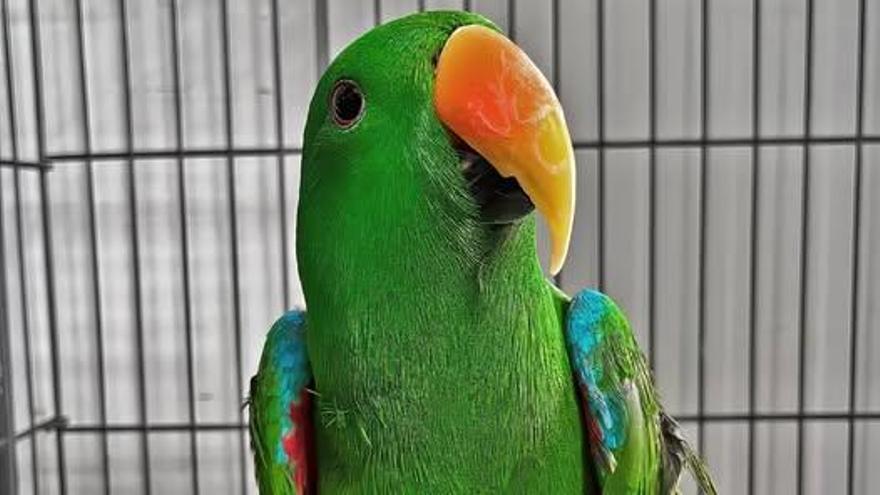
Protected Eclectus Parrot Found in Tenerife, Owner Sought
A protected Eclectus parrot found in northern Tenerife is at the Neotrópico Foundation's Wildlife Recovery Center, which is seeking its legal owner with valid CITES documentation.
An Eclectus parrot, a protected species, was recently taken to the Neotrópico Foundation's Wildlife Recovery Center. The male bird was found in La Orotava, northern Tenerife. It's currently in isolation for health checks while the center tries to find its legal owner. Only the owner with the correct paperwork can get the parrot back.
The Neotrópico Foundation explained that the parrot can only be returned to an owner who shows valid legal documents and an identification ring that matches the bird. This proves the parrot was legally acquired and can be tracked. The center also stressed that the parrot cannot be adopted. This is because it's a CITES Appendix II species, meaning it's illegal to own without special administrative permission.
This isn't the first time this has happened. On July 12, another Eclectus parrot, looking very similar, was found between San Juan de la Rambla and La Guancha. That bird had a unique ring, which helped identify its owner and allowed for its legal return.
This previous case highlights why it's so important for protected species to have mandatory identification, like a closed ring or microchip. It's a key requirement for owning such animals legally.
If the owner isn't found, the parrot will stay permanently at the Neotrópico Foundation's Recovery Center, under the care of the relevant authorities. It will live in a large aviary with other Eclectus parrots, ensuring its welfare and compliance with environmental rules.
The Neotrópico Foundation stresses that actions like these are part of its ongoing efforts to protect nature in the Canary Islands, combat illegal wildlife trafficking, and control invasive exotic species.
Since 2005, the Foundation has also been involved in research, biodiversity conservation, animal welfare, and environmental education. Additionally, it promotes projects related to the circular economy, eco-sustainable farming, and locally sourced products.