
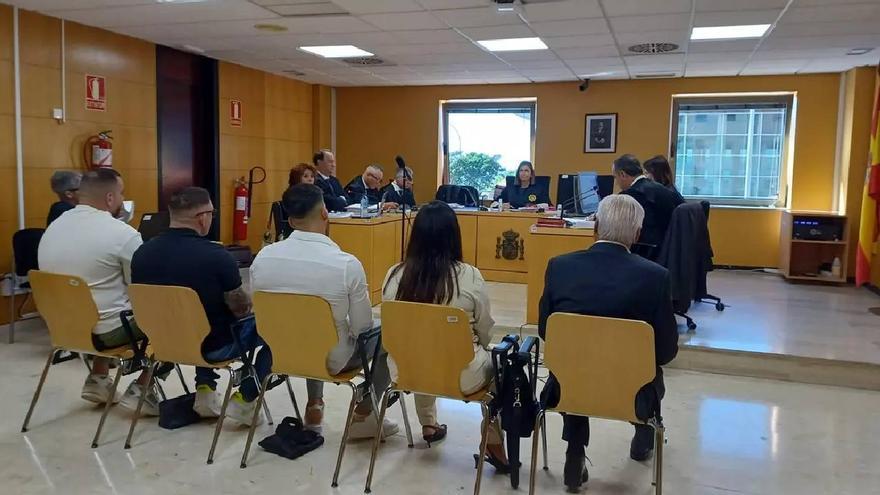
Tenerife: Court upholds sentence in case of pressure on businessman to withdraw lawsuit
In Tenerife, the court upheld the sentence for four individuals found guilty of coercing a businessman into dropping a lawsuit through intimidation.
In Tenerife, a court upheld the sentence for four people in the Satyani case. They are accused of forcing a businessman to drop a lawsuit.
The court upheld the sentence of 2.5 years in prison for Renuka Satyani and three men associated with gyms for obstruction of justice. One of them, Moises Baute, is currently in custody in a murder case. Each of them must also pay 5,400 euros in compensation.
The investigation established that in 2019, these four forced businessman Victor Esteves to withdraw a lawsuit in which he demanded the return of a large sum of money. This happened on the premises of a casino in Tenerife. Renuka's father, Kamlesh Kumar Satyani, who was also convicted in the first instance, was acquitted because it was not proven that he intimidated anyone or helped commit the crime.
The case began when Victor Esteves sued a company associated with the Satyani family for 751,000 euros. Renuka Satyani offered Esteves a meeting at the casino to resolve the issue peacefully. But the meeting turned into pressure and threats from Renuka and three guards. Renuka's father waited in the casino lobby while his daughter and the guards "worked" with Esteves.
Victor Esteves' lawyer said that the four convicts surrounded his client. One of the guards took the lawyer out of the room and blocked the door. Then Renuka and two guards began to pressure Esteves to drop the lawsuit. Esteves also stated that he was pushed and hit on the head, which was confirmed by a medical certificate.
The court decided that everyone acted together to restrict the businessman's freedom and obstruct justice. Even if not everyone used force, their presence together created an atmosphere of intimidation. Therefore, the court believes that they abused their position, because the victim was alone against several people who acted in concert.
The defense argued that it was just negotiations, there were no threats, and there were inaccuracies in Esteves' words. The lawyers also insisted on the presumption of innocence and the absence of direct evidence. But the court rejected these arguments, noting that Esteves' words were consistent and truthful, and were also supported by other evidence, such as WhatsApp messages used to organize the meeting, and a medical certificate.
The court's decision stated that the joint actions of several people increased the intimidation. Even if there was no physical contact, as the defense claimed, the presence of several defendants acting together deprived the victim of the opportunity to defend himself.
The court concluded that the defendants tried to influence justice by forcing a citizen to withdraw a complaint. Therefore, the verdict for those who took an active part in these events is fair. The court emphasized that trying to force a person to withdraw a complaint with threats and attacks is a very serious crime.
This decision is not final and can be appealed in cassation. But the court of cassation must respect the established facts, and complaints that contradict them will not be accepted.