
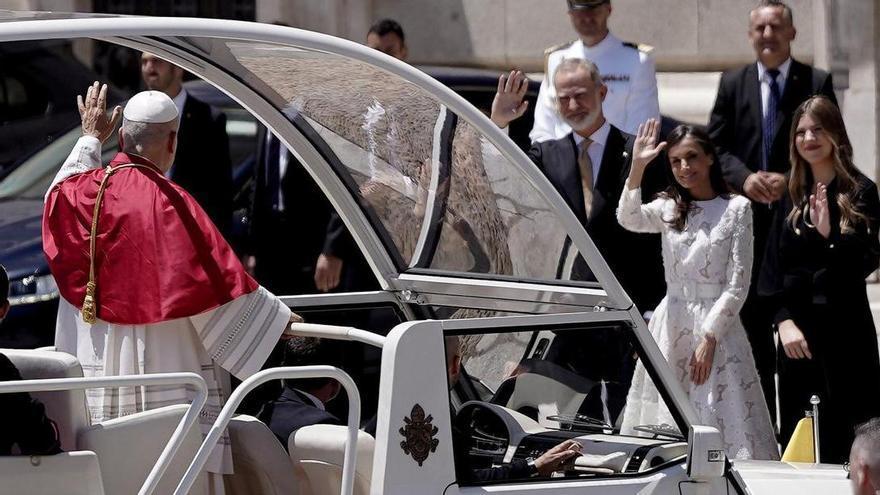
Pope Leo XIV Concludes Spain Visit Amid Calls for National Unity
Pope Leo XIV concluded his week-long visit to Spain, during which he and King Felipe VI emphasized a shared message of national unity and moderation amidst the country's ongoing political tensions.
Pope Leo XIV concluded his visit to Spain this Friday, departing from Tenerife after a trip that sparked significant institutional discussion. According to El Confidencial, the visit highlighted a strategic alignment between King Felipe VI and the Holy See regarding the country’s current political climate.
The visit revealed a shared message between the King and the Pope, both of whom emphasized moderation and social unity. From his arrival at the Royal Palace to his address to the Cortes Generales, the Pope urged the nation to move past political divisions and identity conflicts. This mirrors the King’s own consistent stance, seen in his previous speeches—from the height of the 'procés' to his recent Christmas messages. This unified approach serves as a notable example at a time when Spanish public life is defined by intense parliamentary tension.
The Royal Household was unusually active throughout the seven-day visit. The royal family greeted the Pope at Barajas and attended key events, including the Eucharist at Plaza de Cibeles and the visit to the Sagrada Familia. Queen Sofía and other family members participated in private meetings, and King Felipe VI personally saw the Pope off in the Canary Islands, underscoring the Crown’s commitment to the visit.
The final leg of the trip in the Canary Islands brought the complex issue of migration to the forefront. Despite concerns from political groups like Vox that the government might use the visit for political gain, the Royal Household remained focused on the King’s institutional role. Ultimately, the visit took place against a backdrop of ongoing national controversies and judicial investigations, which often overshadowed the message of harmony the two leaders sought to promote. The trip served as more than a religious event; it was an exercise in institutional diplomacy that underscored the gap between the call for national unity and the reality of daily political debate.