
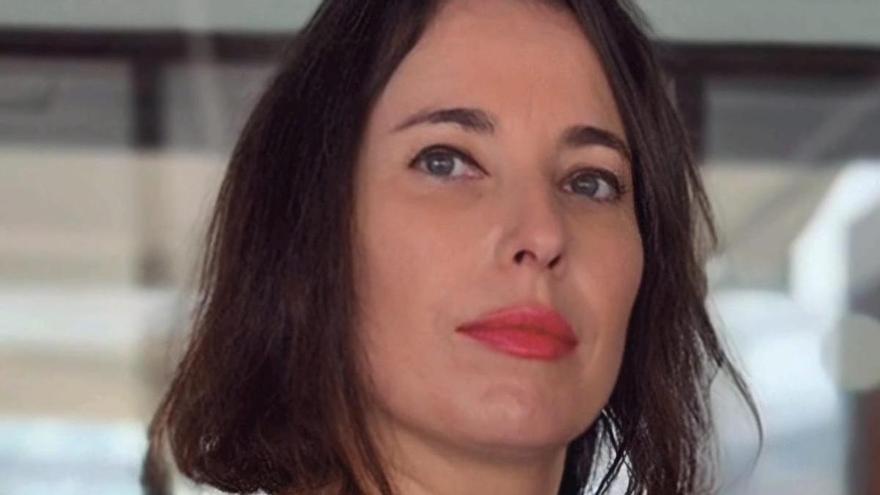
Police Commander Authors Crime Novel Probing Political Corruption
Psychologist and South Tenerife police commander Ángela Pinacho Gómez debuts her crime novel Los Llanos de Troya, featuring an inspector investigating a transgender sex worker's death linked to a prominent politician and exploring political corruption.
Ángela Pinacho Gómez, born in Santander in 1980, is a psychologist, a police commander at the South Tenerife Police Station, and the author of the crime novel Los Llanos de Troya. In her dark-themed plot, Pinacho Gómez introduces Inspector Diana Uribe, who investigates the death of a transgender sex worker linked to a prominent conservative politician on the island. "There's a lot of me in how Diana acts and leads her team, but not in the events themselves," Pinacho Gómez explains. "Readers often ask if the story is true, and I always tell them, 'No, no, no... it's all fiction.'" Pinacho Gómez currently works with the Scientific Police Brigade and has previously served in judicial police, a Citizen Security group, and as a student tutor. She has also worked for Frontex, the European Border and Coast Guard Agency, in Spain, Slovakia, and Poland.
"I'm an avid reader, but I never imagined writing for others," Pinacho Gómez says. "I'm part of two book clubs – Tenerife Noir and Club Refugio de Adeje – and one of our activities involved writing short pieces. A story I wrote, 'Manuel's story,' was very popular. I entered it into a competition run by the National Police. Although it didn't win, it made me consider what to do next: just keep it, or try to get it published."
Pinacho Gómez recalls attending a Tenerife Noir event where Carlos Salem, an Argentine crime writer and journalist, gave a talk on storytelling. "After I finished Los Llanos de Troya – named after an area in Arona known for prostitution – I sent him the manuscript," she explains. "I didn't know anyone in the literary world, and he offered manuscript corrections. He read it and called me, saying it 'needed a couple of things polished, but had a lot of potential.' He even suggested it could be the first book in a series."
Salem made the publishing process very straightforward. He mentioned he worked for a small crime novel publisher in Madrid that focused on new authors, and he offered to publish her book for free. "It was a fantastic opportunity," she says. (Carlos Salem described the book as "A story narrated with sobriety and a credible and likable protagonist in her dual, sometimes exhausting, role as a mother and head of a police investigation group.")
Pinacho Gómez clarifies that her novel isn't specifically an attack on corruption in Arona, but rather on corruption across Spain. She notes that some events described in the book did occur in Arona, though she wasn't living there at the time and learned about them later. She suggests that the south of the island might see more corruption or crime than other areas because of its strong economy. "Bad people are always drawn to places where a lot of money changes hands," she explains, adding that "people from all over the world come here."
When discussing the effectiveness of police work, Pinacho Gómez believes that police teams are increasingly successful. "Some criminals might escape for a while," she concedes.
Pinacho Gómez says that while her police profession has certainly influenced her writing, her biggest inspiration comes from the crime and detective novels she's read since she was a teenager. "I enjoy historical novels, but I haven't ventured into that genre yet," she adds. "I'm fortunate to work in an environment that provides plenty of material for these kinds of plots."
"A little bit, yes," she laughs, when asked if her work feels real. Readers often comment that "everything seems very real" in the novel. Despite it being fiction, Pinacho Gómez later discovered that a transgender sex worker was reportedly murdered in the 1990s in the very area where her story is set. "It's the kind of story I enjoy reading," she explains. "While this specific event didn't happen, it feels believable."
The novel offers a subtle critique of political corruption. Inspector Uribe and her team must uncover who is responsible for the death of a transgender sex worker. Their investigation starts in the criminal underworld of southern Tenerife and eventually reaches the highest levels of the island's political establishment. It's an intense story, yet also very engaging and entertaining.