
Peacock Sighting in Teide National Park Sparks Invasive Species Concerns
Authorities in Tenerife are working to capture a peacock spotted in the protected Teide National Park, highlighting the ongoing threat invasive species pose to the island's fragile ecosystem.
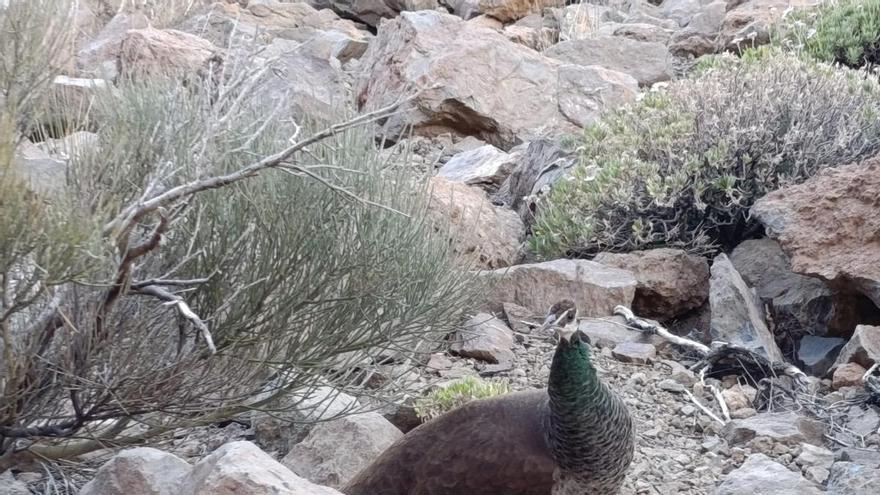
A peacock recently spotted in Teide National Park has once again drawn attention to how vulnerable island ecosystems are to non-native species. Hikers reported seeing the bird near trail 15, between Degollada de Guajara and Alto de Guajara—a highly protected area where such a bird does not belong.
Staff from the public company Tragsa have tried to catch the peacock several times without success. The Tenerife Island Council (Cabildo) has an active response plan in place, and a team specializing in exotic species searched the area on Thursday. They plan to continue their efforts on Friday, August 7. If caught, the bird will be taken to the La Tahonilla Wildlife Recovery Center for a health check. While there are photos of the bird, its exact location remains unknown.
The peacock’s presence is a concern for the park’s native wildlife, such as the Teide finch and the kestrel. Authorities are investigating how it got there, considering both an accidental escape from a private owner or a deliberate abandonment. In the past, similar cases have been linked to ritual practices in the forest, highlighting the difficulty of managing wildlife in such a sensitive environment.
Biologist Víctor de León warns that while one bird may not immediately take over the area, its diet could threaten local insects and reptiles. There is also a risk that the bird could carry diseases that the island’s isolated ecosystem is not equipped to fight.
This incident highlights a broader issue for the Canary Islands, which are home to nearly 1,200 non-native species. History shows that once animals like cats or mouflons become established in the wild, they are nearly impossible to remove. Because Teide evolved without large predators, any new arrival can easily disrupt its delicate biological balance.
The Canary Islands Early Warning Network for Invasive Alien Species (RedEXOS) is the primary tool for managing these threats. Officials rely on the public to report sightings through mobile apps to help trigger quick responses. While there are legal penalties for abandoning animals or releasing invasive species, the real challenge remains protecting a unique natural heritage that, once damaged, cannot be restored.