
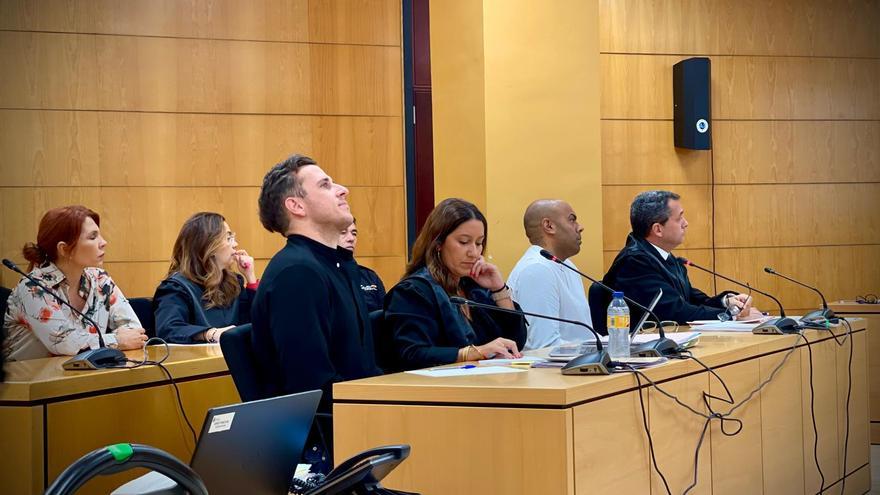
Three people are on trial in Tenerife on suspicion of fraud of €2.5 million in the "Tradex" case.
The trial in the "Tradex" case has begun in Tenerife, where three people are accused of fraudulently taking 2.5 million euros from investors by promising high profits from stock market transactions.
A major trial has begun in Tenerife in the case known as "Tradex". In the dock are three people accused of fraudulently obtaining around 2.5 million euros from over a hundred investors from the city of Santa Cruz de Tenerife. People gave them money to invest in various stock market instruments. The suspects promised up to 50% profit every two months.
But it all ended like a typical Ponzi scheme: the first clients are paid interest from the money of new investors. And this continues until the pyramid collapses because there is nothing left to pay. Then the organizers disappear with the money, and the stolen funds are hidden in various places, making them almost impossible to find. The main suspect was arrested and returned from the United Arab Emirates, where he had fled.
Mukesh Daswani, his partner Francisco I. P. A., and Daswani's girlfriend are accused in this case. Prosecutors want Daswani to receive 12 years in prison for fraud and concealment of assets, and his partner 9 years. Daswani's girlfriend is accused of fraud, but she is only concerned with civil liability – 327,000 euros.
At the first hearing, which will last until January 20, 2026, the victims' lawyers demanded that Daswani's partner also be tried for fraud so that he would be responsible for returning the stolen money. The prosecution, on the other hand, wants to try both as criminals and then, if they are found guilty, open a separate case so that the victims can receive compensation.
During the first hearing, the parties discussed various procedural issues. Francisco I. P. A.'s lawyer demanded that the case be dismissed. She said that her client, upon learning of Daswani's possible fraud, contacted a law firm to represent him as a victim. He provided them with all the documents and helped create a platform for the victims, as he and his relatives had also invested money in Daswani's scheme. The lawyer also denied that her client was involved in the misappropriation of money. She accused the law firm of violating her client's right to defense and professional secrecy.
Francisco I. P. A. was Daswani's partner in the company through which the investments were made. After some time, the law firm refused to represent him when the police began investigating. The firm kept all the documents and many clients who had suffered from the fraud. There are about seven law firms in this case representing the interests of over 120 victims who claim to have been defrauded by the company created by the two main defendants.
Mukesh Daswani's lawyer pointed out that the company that received the money and made the investments was not summoned to court. He tried to make this company responsible for returning the money.
After a break, the judges decided not to grant the lawyer's motion to dismiss the case. They said that it looked like an attempt to "throw up a smokescreen" at this stage, although this could have been done during the investigation. The lawyer claimed that she had submitted an audio recording that was included in the investigation but did not insist on it. The judges noted that if the lawyer believed that the law firm's actions could have harmed her client, she should file a complaint with the bar association.
Only these procedural issues were considered at the first hearing, where the prosecutor read the indictment for more than an hour. The next witnesses, including company employees, will appear on November 5. The defendants will testify last.