
Olympic Champion on Cycling's Future: Youth, Pogacar, and Mental Health
An Olympic gold medalist offers insights into the evolving landscape of professional cycling, emphasizing the importance of mental health for young riders and the unique challenges faced by stars like Tadej Pogacar.
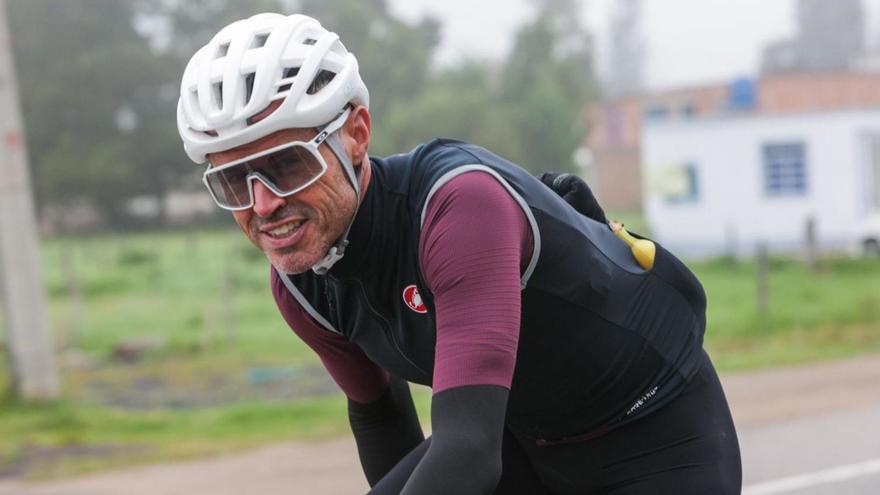
An Olympic gold medalist from Beijing 2008 and one of Spain's most consistent cyclists in recent decades, he's still deeply involved in the sport. Just before a race in La Palma, he shared his thoughts on the current cycling scene.
Iván isn't the only one. There are many other talented young riders like Benjamín Noval, Markel Beloki, Pelayo Sánchez, Samuel Fernández Ceres, Samuel Fernando García, Hugo de la Calle, and Mario Aparicio. We've always had fantastic young people who are incredibly passionate about cycling. To become a cyclist, you truly have to love the bike, knowing it demands a huge sacrifice. We're very proud to see them competing alongside stars like Pogacar.
Every rider goes through a learning process, and it's clear not everyone will reach the level of Pogacar, Del Toro, or Evenepoel. Each person adapts and learns at their own pace. Some, like Del Toro, Evenepoel, or Juan Ayuso, adjust quickly and seem to have been professionals forever. But those are rare exceptions. Not everyone develops at the same speed, and they need time to mature. We can't expect the same from everyone; instead, we need patience and a calm approach so young riders don't put too much pressure on themselves. Teams also have a crucial role in supporting this development.
While almost everything in cycling is measurable these days, a young rider's mental health isn't. Yet, it's the most important factor for the future of these new generations, who are aware of everything even as cadets or juniors. With so many ways to communicate and spread information, it's vital to closely watch the cyclists' surroundings, especially their families. We need to help them stay calm and not overwhelm them, allowing them to mature psychologically step by step. This helps them avoid unnecessary frustrations and cope with the loneliness that can come with defeats. However, I also believe that sometimes frustration can be beneficial, helping to ground them and ultimately grow.
It's clear that our understanding and tools for identifying talent at a very young age have improved massively. Cycling and the industry have made huge strides. We can now measure things like lung capacity, power output (watts), strength, and even sweat rates – none of which existed decades ago. On top of this, all World Tour teams are investing in junior categories. The goal is to spot talent early, then nurture and develop it to see its full potential. But I must stress again, not everyone develops quickly. For example, at the Academy, Benjamín Noval (who just turned 17) has incredible data; his 'engine' is impressive and has caught the eye of World Tour teams. Yet, other riders might not fully develop until they're 20 or 21.
Exactly. It's often true that careers that begin very early also end early. However, this might not apply to someone as successful as Pogacar, unlike a domestique or a stage hunter. Pogacar wins almost every race he enters. The day he stops winning, he'll likely feel he's no longer enjoying cycling and that it's not worth continuing, especially given his incredible achievements and accumulated wealth. But generally, the physical and psychological toll is immense, leading cyclists to retire much earlier. It will be tough to find riders with careers as long as those in the past.
Comparisons are always difficult. You could argue Eddy Merckx had the best results ever, winning so much. But what Tadej Pogacar is doing now, in an era where physical talents are very similar and statistics dominate, clearly puts him among the greatest in history. His achievements are incredible; he's doing things no one else has. In terms of pure performance and displays of strength, he's exceptional. Statistically, Merckx is still ahead, and we'll see if Pogacar continues to amaze us and eventually surpasses him. But I maintain that comparisons are tricky because each generation is different, influenced by many factors like equipment, scientific knowledge, and even road surfaces. Cycling is evolving at an incredible pace.
I believe Pogacar and his team know that riding all three Grand Tours in a year would likely shorten his career, not so much physically, but especially mentally. It would be an enormous effort. In cycling, you need to be physically exceptional, almost 'touched by a magic wand,' but mentally, you must also know how to manage those gifts. Doing three Grand Tours back-to-back is a sure way to shorten your time in the sport. They seem to be pacing themselves, so we might not see him attempt all three in one year, or if we do, it will be much later in his career as a final challenge.
While they've achieved a historic record, we should also recall when Visma won all three Grand Tours in a single year, which was equally historic. UAE has such a high-quality roster of riders that they can win almost any race. Between Pogacar, Del Toro, Almeida, and to some extent Ayuso, they secure a huge percentage of victories. It's clear that in sports, strong financial backing allows you to attract the best talent. Cycling is becoming more professional every day, with more money flowing in and higher salaries paid, which in turn attracts even more talent. Regulating this is very complex because it's a sport funded by private companies, many of whom are determined to be the best and will spend whatever it takes. I believe the only way to balance things would be through a fairer distribution of television rights, but that's not currently happening.
I've had a quick look at the route and saw that Alpe d'Huez is climbed twice, along with some other great features. It feels a long way off, but the Tour de France will always be 'the Tour.' The best riders will be there, guaranteeing daily excitement.
Out of everyone involved in the Vuelta, the cyclists themselves will suffer the least. Their only extra effort is a two-hour plane journey, and everything for their recovery will be ready when they land. I've had similar experiences, like a Giro where we flew from Ireland to southern Italy, and everything was prepared upon arrival. The real challenge will be logistics, especially for smaller teams that don't have the same staff numbers as the bigger ones. As for racing in the Canary Islands, I've always said you could easily create four or five incredible stages there. From my training experiences, I've seen some amazing areas.
We need to wait a bit to see how the year unfolds and how sponsor and advertising arrangements are finalized. Ultimately, the International Olympic Committee (IOC) makes the decisions, as they have for other sports and countries. The UCI (cycling's governing body) can do little if a team follows the rules. We saw this in La Vuelta, where things were held up because decisions had to come from higher authorities. Hopefully, everything will proceed smoothly.