
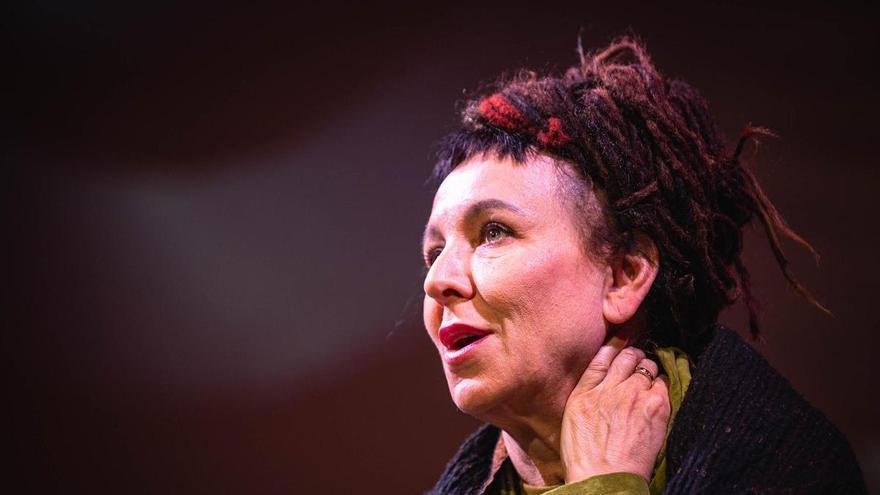
Olga Tokarczuk Redefines Noir as a Tool for Ethical Debate at Tenerife Festival
At the Tenerife Noir festival, Nobel laureate Olga Tokarczuk discussed how modern literature, particularly crime fiction, is evolving into a vital tool for exploring collective responsibility, ecological connection, and complex moral debates.
Modern literature is currently being redefined. Rather than becoming obsolete, traditional genres are evolving into tools for ethical debate. As discussed at the Tenerife Noir festival, Nobel laureate Olga Tokarczuk highlighted how storytelling can challenge our society’s moral foundations. She uses crime fiction not just to solve a mystery, but to examine our collective responsibility.
For Tokarczuk, the noir genre provides a familiar structure—much like a recipe—that allows her to explore complex issues, such as why we normalize violence or justify human behavior. While she acknowledges the influence of classic writers like Agatha Christie, her work goes beyond the puzzle to address existential questions and the deep connection between individuals and the natural world.
Tokarczuk argues that human identity cannot be separated from the ecosystem; she views our biology as being tied to the cycles of nature. This perspective ignores cultural and national borders, influencing how she builds her characters. In her novel Drive Your Plow Over the Bones of the Dead, she features a mature female protagonist to address a gap in modern fiction: the need for authoritative, active characters who break away from the traditional masculine archetypes of detective novels.
The Tenerife festival also provided a space to discuss how the fast-paced nature of today’s world affects writing. Tokarczuk noted that current political and social uncertainty makes it difficult to find the distance needed for deep reflection. This, she suggests, is why genres like autofiction and science fiction have become popular ways to explore the human condition. Additionally, she praised European libraries as essential guardians of our collective memory and history.
Finally, Tokarczuk’s first visit to the Canary Islands left a lasting impression. She expressed a strong interest in the legacy of the Guanches, noting that their rich history holds significant potential for modern storytelling and could be adapted for contemporary audiences.