
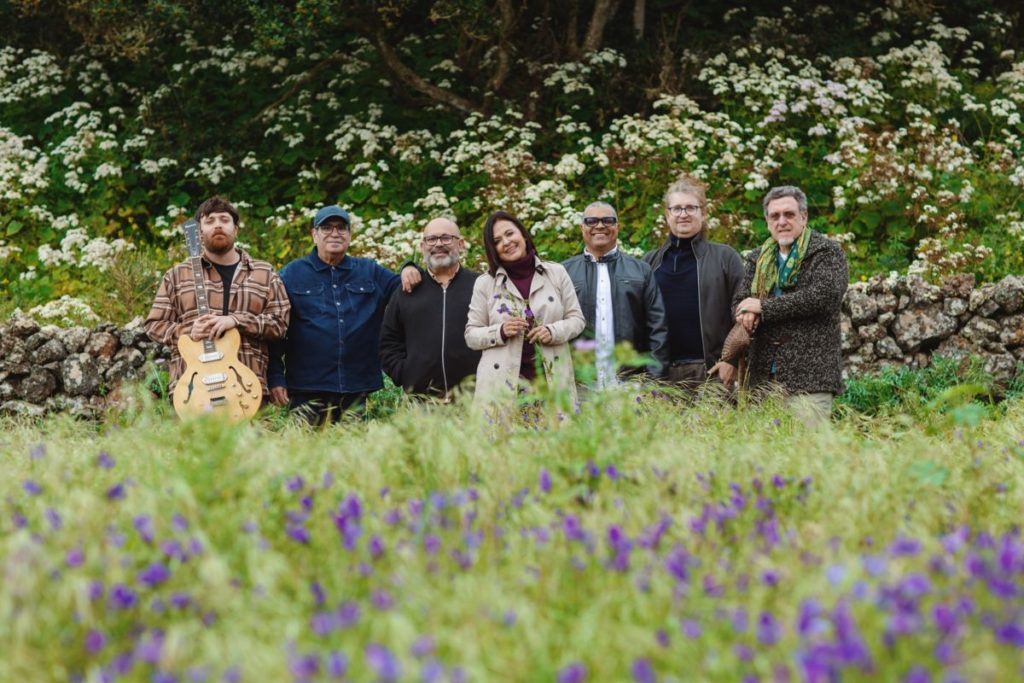
Olga Cerpa and Mestisay Explore Canary-African Maritime History in New Album 'La costa de los cantares'
Olga Cerpa and Mestisay have released La costa de los cantares, a collaborative album that explores the historical and cultural maritime connections between the Canary Islands and the African Atlantic coast.
Olga Cerpa and Mestisay have released their latest album, La costa de los cantares. More than just a new collection of songs, the project serves as a musical exploration of the historical and cultural connections between the Canary Islands and the African Atlantic coast.
The album’s concept is rooted in research conducted decades ago by Manuel González. As a university student, he interviewed local fishermen who spent years working in waters near the African continent. During their long voyages, these men often listened to local radio stations, unintentionally absorbing the sounds and cultures of the region. The album aims to musically recreate that maritime experience.
The project is truly international, featuring musicians and singers from Angola, Guinea-Bissau, Congo, and Cape Verde. Notable collaborators include Eneida Marta, Bau, Matías Dorán, Ricardo Campos, Miroca Paris, Zizi Vasconcelos, and Yura Silva. The album was produced by Hirahi Afonso and Manuel González, with cover art by Jorge Leal, which incorporates AI-enhanced photography by Ángel Luis Alday and Enrique Nácher.
In addition to its digital release, the album will be available on CD and vinyl. A series of live performances will kick off on June 19 at the Plaza de Santa Ana in Las Palmas de Gran Canaria, featuring several of the international artists from the recording. A second show is scheduled for July 2 at 8:30 p.m. at the Teatro Leal in La Laguna, Tenerife.
This release reflects a growing effort to preserve the oral and maritime history of the Canary Islands. By highlighting how fishing routes shaped local culture, Cerpa and Mestisay have created a "sound map" that underscores the islands' historical role as a meeting point between Europe, Africa, and the Americas.