
Nobel Laureates Headline 18th Physics Students Congress at University of La Laguna
The University of La Laguna is hosting the 18th Physics Students Congress, featuring Nobel laureates Duncan M. Haldane and Serge Haroche alongside over 250 students to discuss advancements in quantum physics and fundamental research.
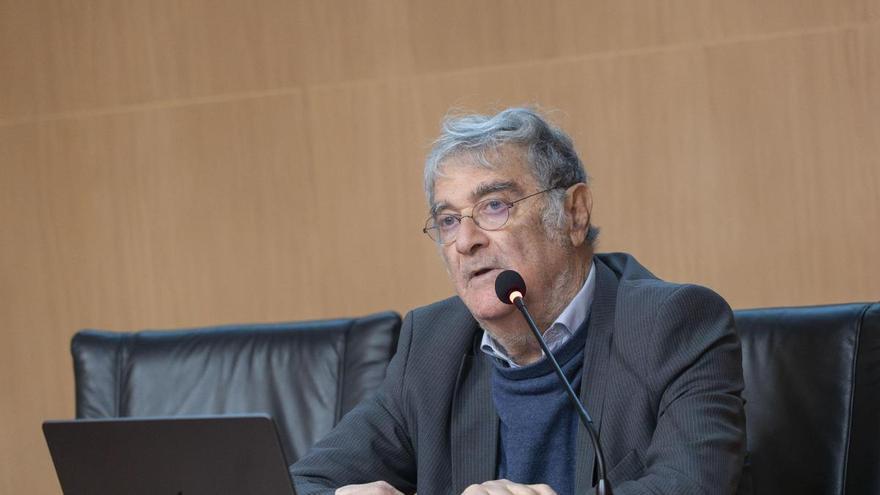
The University of La Laguna has become the heart of the national physics community this week as it hosts the 18th Physics Students Congress (Coefis). The event has drawn two world-renowned Nobel laureates to Tenerife: Duncan M. Haldane and Serge Haroche, who are sharing their research with over 250 students, ranging from undergraduates to doctoral candidates.
The attendance of these two distinguished scientists highlights the growing prestige of the congress. Organized entirely by students, the event has become a key fixture on the Spanish scientific calendar. This success reflects the high standing of the university’s physics program, which is consistently ranked among the best in the country and is internationally recognized for its research.
Held across the Blas Cabrera Felipe Aula Magna and the Institute of Astrophysics of the Canary Islands (IAC), the congress offers more than just theoretical lectures. Haldane, who won the 2016 Nobel Prize for his work on topological phases of matter, discussed the mechanisms behind quantum-scale anomalies. Haroche, the 2012 laureate, explored his pioneering work in manipulating individual quantum systems—a breakthrough that has been essential to the development of modern quantum computing.
The congress also features a diverse range of topics, including volcanic seismology with Itahiza Domínguez of the National Geographic Institute, astrobiology with astronomer Ana Ulla, and digital scientific outreach with José Luis Oltra.
On the final day, the focus will turn to the value of fundamental science. Haroche is set to discuss why basic research is a vital driver of progress, even when it does not lead to immediate technological applications. This emphasis reinforces the university’s role as a center for critical thinking and innovation, cementing its position as a strategic hub for the physical sciences.