
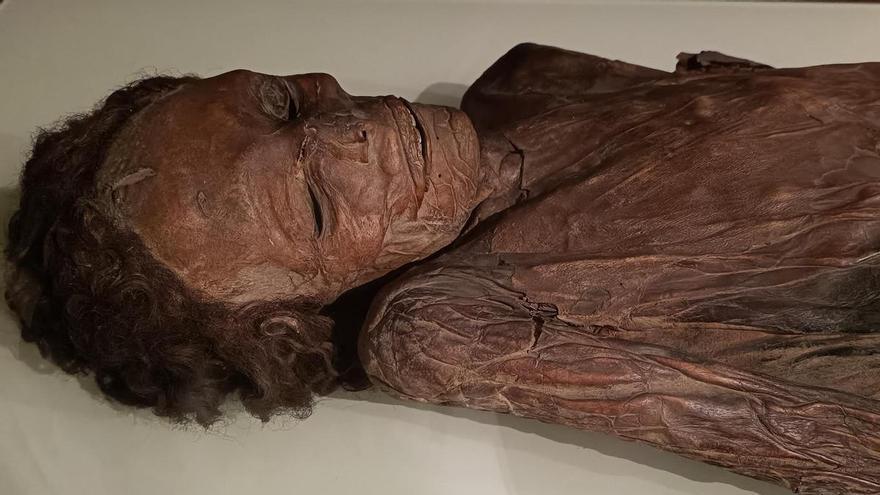
New Paleopalynology Techniques Reveal Ancient Guanche Diet in Tenerife
Advanced paleopalynological analysis of a 700-year-old Guanche mummy has revealed a complex diet of cereals, fruits, and marine life, offering new insights into the daily lives and medicinal practices of pre-Hispanic Canary Islanders.
We are learning much more about the diets of pre-Hispanic populations thanks to new techniques in paleopalynology, a method recently highlighted by science communicator Marcos (@biolomarcos). This scientific advancement allows researchers to look beyond traditional archaeological findings and gain a clearer picture of the daily lives of people who lived in the Canary Islands seven centuries ago.
A major breakthrough occurred in 2021, when a team of local researchers analyzed the Guanche mummy known as Achinech, which is kept at the Museum of Nature and Archaeology (MUNA) in Tenerife. Instead of relying on traditional physical examinations, the team studied microscopic remains and pollen grains found within the mummy’s digestive tract. Because pollen clings to organic matter—such as fruits, flowers, and vegetables—it acts as a biological fingerprint, allowing scientists to reconstruct the individual's final meal with high precision.
The analysis revealed a complex and varied diet. Researchers identified cereals like wheat and barley, as well as pine nuts from the Canary Island pine and fruit from the faya tree. The discovery of small crustacean remains also suggests that these people relied on marine resources. Experts believe some of these items may have been consumed for medicinal purposes, indicating that botany played a key role in the traditional healthcare of the time.
These findings do more than just show us what ancient islanders ate; they highlight the vital importance of preserving our bioanthropological heritage. By identifying the last meal of someone who lived 700 years ago, forensic archaeology has become an essential tool for understanding how past societies adapted to their environments, offering a unique look into the social history of the Canary Islands.