
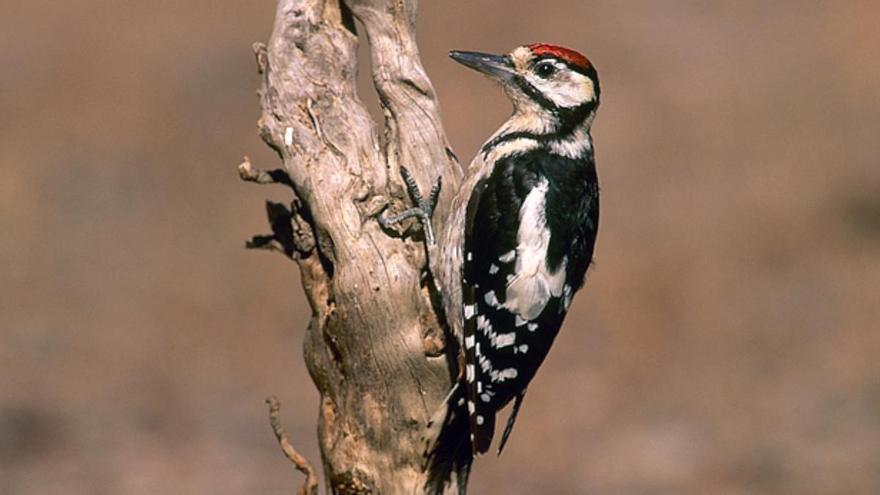
New Footage Highlights Great Spotted Woodpecker Mating Season in Canary Islands
Biologist Eduardo Martín has released new footage of the great spotted woodpecker in the Canary Islands, highlighting the species' vital role as an indicator of forest health during its spring mating season.
The unique wildlife of the Canary Islands is back in the spotlight thanks to biologist Eduardo Martín, who recently shared new footage highlighting the great spotted woodpecker (Dendrocopos major). As Martín explains, the bird’s signature "drumming"—a rhythmic tapping on tree trunks—is especially common in April, as it plays a key role in the species' mating season.
Two distinct subspecies live in the archipelago: canariensis, found on Tenerife, and thanneri, which inhabits the pine forests of Gran Canaria. According to the conservation group SEO/BirdLife, these birds are highly adaptable. They have evolved strong beaks and specialized skulls that allow them to bore into dense wood with ease.
These woodpeckers are relatively small, measuring about 20 to 25 centimeters in length with a wingspan of up to 44 centimeters. They are easily recognized by their black-and-white feathers, accented with red on their undersides. Males also feature a distinctive patch of red on the back of their heads.
While the birds use their drumming to communicate with potential mates and mark their territory, it is also a vital survival tool. The tapping helps them locate invertebrates hiding beneath tree bark. Because these woodpeckers rely on healthy pine forests to thrive, they serve as an important indicator of the ecosystem's overall health, highlighting the urgent need to protect these natural habitats from environmental threats.