
New Exhibition Reveals Luis Diego Cuscoy’s Legacy Beyond Archaeology
A new exhibition at Tenerife’s Museum of Nature and Archaeology highlights Luis Diego Cuscoy’s multifaceted legacy as both a pioneering archaeologist and a critical observer of the social and environmental transformations caused by 20th-century tourism in the Canary Islands.
Luis Diego Cuscoy is often remembered primarily as an archaeologist, but a new exhibition at Tenerife’s Museum of Nature and Archaeology (MUNA) and research by Professor Juan Francisco Navarro Mederos reveal a much broader legacy. While he is famous for his work on the Canary Islands' pre-Hispanic past, Cuscoy was also a keen observer of his own era, documenting the rapid social and economic changes that transformed the islands during the 20th century.
Cuscoy’s extensive archive—which includes over 374 newspaper articles and a vast collection of photographs—shows that he was an early critic of the region's tourism-focused economy. He documented the decline of traditional trades and the primary sector, warning of the environmental damage caused by development and the loss of the islands' rural character.
His career was shaped by the political turmoil of 20th-century Spain. After facing purges during the early Franco regime, Cuscoy had to navigate strict censorship. As Professor Navarro Mederos notes, he developed a writing style filled with irony and poetic nuance to express his social concerns without drawing the ire of authorities. This created a distinct divide between his early, more overtly critical work and his later writings.
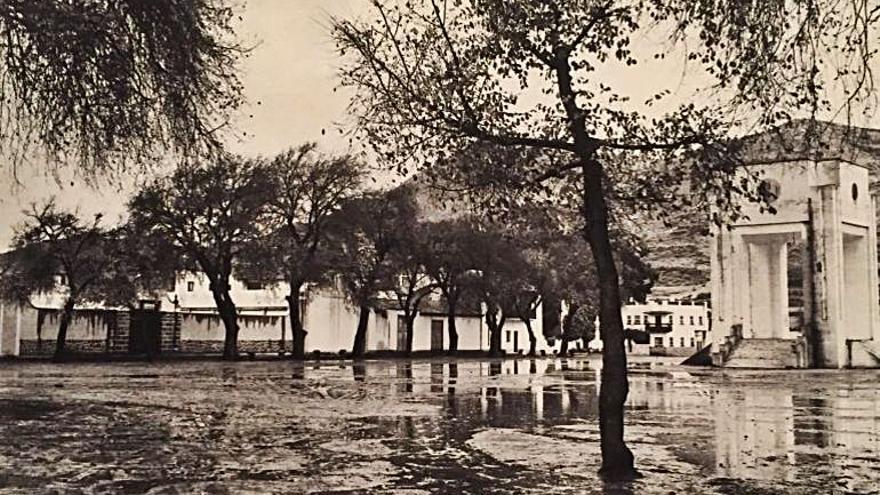
Beyond his words, Cuscoy’s photography serves as more than just an ethnographic record. His images of shepherds, fishermen, and traditional crafts provide a vital benchmark for understanding how much the landscape has changed. Researchers today use his work to measure the impact of mass tourism—a trend Cuscoy would likely have mourned, especially regarding the state of Las Cañadas del Teide, a place he once cherished for its silence and isolation.
Ultimately, Cuscoy’s influence goes far beyond archaeology. By identifying key historical sites and sharing the story of the islands' ancient inhabitants, he helped shape how generations of Canary Islanders understand their own identity. While his scientific conclusions are subject to modern review, his role in defining the archipelago’s cultural history remains unmatched.