
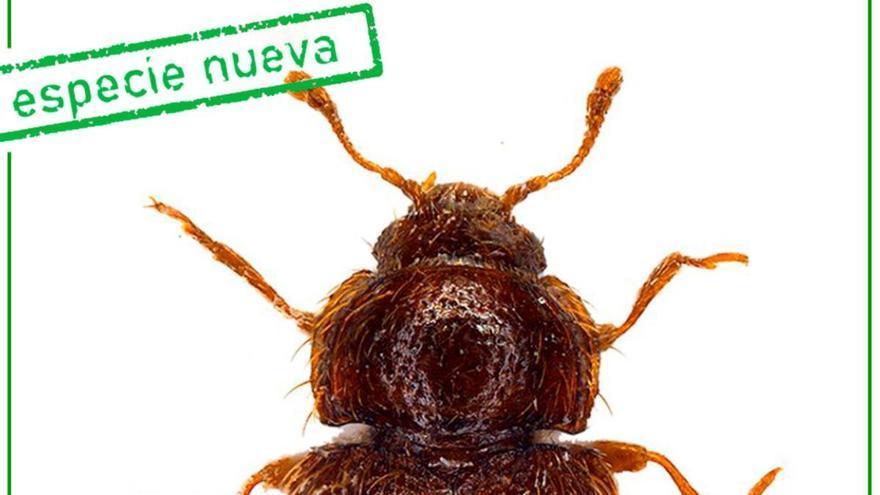
New Beetle Species Discovered in Tenerife Highlights Canary Islands' Evolutionary Significance
Researchers have identified a new beetle species, Mycetaea tenerifensis, in Tenerife, underscoring the Canary Islands' significance as a unique evolutionary laboratory.
A new beetle species has been discovered in the Canary Islands, highlighting once again why these islands are such important natural laboratories for evolution. As detailed in the Zoological Journal of the Linnean Society, the newly identified Mycetaea tenerifensis is unique to the region and found only in a very small area.
The discovery was led by researchers Wioletta Tomaszewska, Emmanuel Arriaga-Varela, and Karol Szawaryn as part of a wider study on the Mycetaeidae family—a group of beetles that has historically received little scientific attention. The researchers found the specimens in the Barranco de Lora, located in Los Realejos, Tenerife. They collected the beetles by sifting through soil beneath fig trees at an altitude of about 400 meters.
This finding is more than just a new entry in a scientific catalog; it is a vital piece of the puzzle in understanding the islands' biological complexity. The Canary Islands' geographical isolation has long driven unique evolutionary processes, yet many of the region’s invertebrates remain poorly understood. These small creatures often go unnoticed, even though they provide essential clues about the history and resilience of local habitats.
For those interested in the technical details, information on Mycetaea tenerifensis has been added to the Canary Islands Biodiversity Data Bank (BIOTA). As the official repository for the archipelago’s biological records, BIOTA ensures that new discoveries like this one help inform the conservation and management of the islands' natural heritage in the face of modern environmental challenges.