
Motorhome Association Challenges Arico Parking Restrictions Amid Canary Islands Regulatory Dispute
The Tenerife Motorhome and Caravan Association has launched a formal appeal and scheduled a protest against Arico City Council’s restrictive parking policies, highlighting the urgent need for unified regional regulations for motorhome tourism in the Canary Islands.
A recent decision by the Arico City Council to restrict parking along the La Jaca coastline during the Easter holidays has reignited the debate over how the Canary Islands manage public space and motorhome tourism. The Tenerife Motorhome and Caravan Association (ACAT) has formally appealed the move, arguing that the council’s safety justifications lack a solid technical foundation and have led to unfair, arbitrary access rules.
The dispute centers on a selective permit system that allowed some vehicles to park while blocking others, without clear or transparent criteria. The association has labeled these restrictions on Cho Pino and Amelia streets as discriminatory. This is not an isolated issue; it reflects a broader, structural problem affecting the more than 21,000 motorhomes currently in the archipelago—15,000 of which are registered locally, with another 6,000 arriving from the mainland.
Experts and industry members agree that the lack of unified regional regulations is the primary cause of this legal uncertainty. Because each municipality sets its own rules—ranging from 24-hour parking limits to the installation of height barriers—it is difficult for the sector to operate effectively. ACAT, which represents nearly 900 members across the islands, argues that motorhome travel should be viewed as an economic opportunity rather than a public order issue.
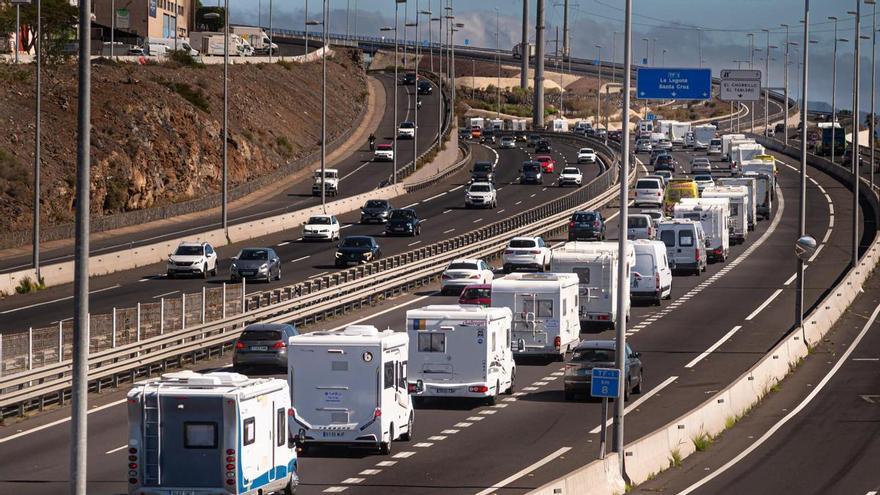
In response to the growing tension, the association has organized a protest for April 25. The demonstration will travel along the TF-1 South Highway, from San Miguel de Abona to Santa Cruz de Tenerife, to highlight the lack of basic infrastructure, such as waste disposal facilities, and to protest what they describe as systematic exclusion. After a year of intensive legal and technical work, the group is calling for a fair, consistent framework that ensures equal rights for all road users, regardless of their vehicle type.