
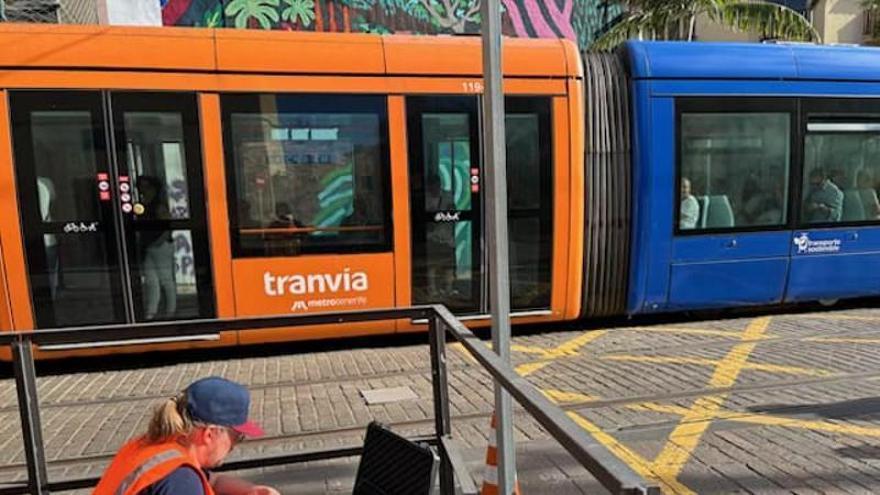
Metrotenerife Completes Scheduled Track Maintenance Following Two Decades of Service
Metrotenerife has completed a scheduled round of track maintenance and rail grinding across its tram network to ensure long-term infrastructure reliability following two decades of service.
The Tenerife tram network has finished a scheduled round of track maintenance. According to the operator, Metrotenerife, the work was part of a long-term renewal plan following two decades of service and was not related to any external incidents.
The repairs, which took place between January 31 and February 2, required temporary service suspensions on parts of lines 1 and 2. Crews replaced rails that had worn down from heavy use across nine kilometers of Line 1—between the Chimisay and Avenida de la Trinidad stops—and the entire length of Line 2. Project engineer Pablo Oromí explained that the work had to be done during the day because the process of breaking up the concrete covering the tracks would have been too disruptive to neighbors if performed at night.
In addition to replacing rails, the team performed "grinding," a process that smooths out the tracks to remove bumps and irregularities caused by daily wear. This extends the life of the infrastructure, makes for a smoother ride, and reduces noise. Metrotenerife confirmed that one final day of work is still needed to complete the system’s fine-tuning.
The operator addressed public concern regarding the timing of these repairs, which coincided with a railway accident in Córdoba on January 18. They clarified that the maintenance schedule was finalized months ago through standard public contracting procedures.
Separately, the tram’s infrastructure received positive feedback at the recent European Light Rail Congress held on the island. A report on the "floating slab track" system—installed in 2007 to reduce vibrations—confirmed that the technology is still performing well after nearly 20 years. The data shows the system continues to effectively dampen vibrations, which is essential for keeping the tram quiet and well-integrated into the city’s urban environment.