
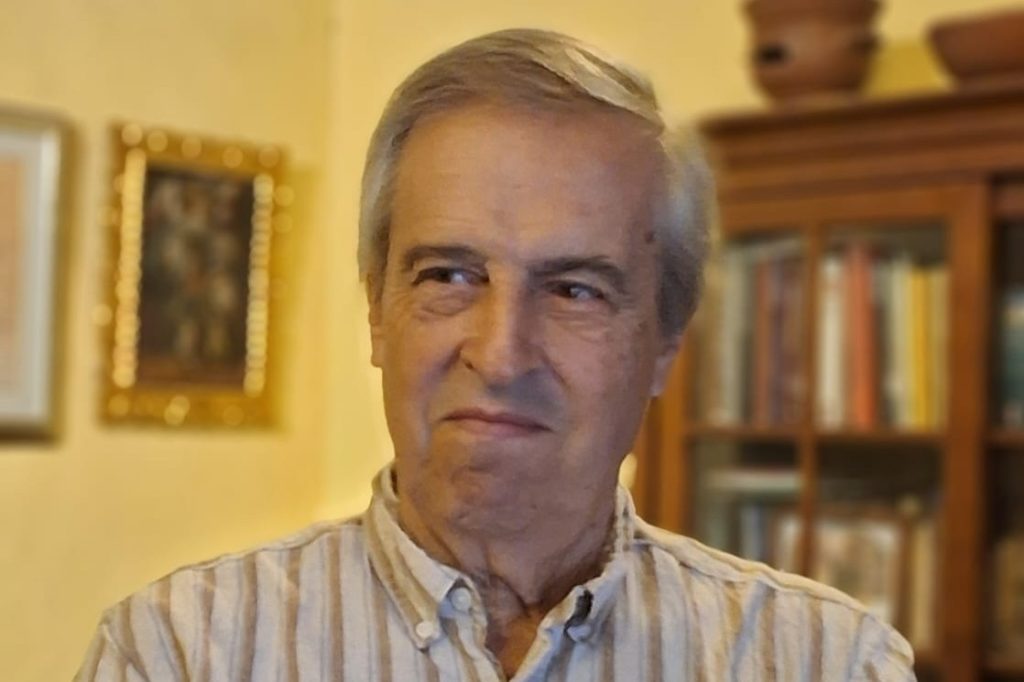
Melchor Núñez Pérez Releases New Essay Collection 'Divagaciones de convalecencia'
Prominent Canarian politician and educator Melchor Núñez Pérez has released Divagaciones de convalecencia, a reflective essay collection that explores philosophy, politics, and memory through the lens of his personal experiences.
The Centro de la Cultura Popular Canaria (CCPC) has published Divagaciones de convalecencia (Convalescent Ramblings), a unique new essay collection by educator and prominent Canarian politician Melchor Núñez Pérez. In this book, Núñez Pérez uses his personal life as a lens to examine a wide range of topics, including science, philosophy, literature, and modern politics.
Rather than following a rigid academic style, the author adopts an informal tone. He intentionally invites readers to engage with his ideas—even if they disagree. The book was written while Núñez Pérez was recovering from an illness, a period of reflection that allowed him to explore themes of memory and the interconnectedness of human experience. Throughout the text, he offers a sharp critique of today’s media, arguing that it contributes to social confusion, and calls for a return to deep, reflective thought in an age dominated by instant technology and self-help culture.
The book draws on the author’s extensive background, which includes previous works on the history of Patagonia, the history of La Laguna, and the Canary Islands' neutrality regarding NATO in 1986. Núñez Pérez references influential thinkers like Chateaubriand, Kafka, and Walter Benjamin, while also highlighting the Canarian identity of author Carmen Laforet. His essays cover diverse ground—from observations of the natural world to the distinction between science and technology—all tied together by his own life story.
Journalist Juan Cruz provides the prologue, highlighting the importance of this work in the cultural landscape. With this collection, Núñez Pérez wraps up a period of personal reflection and looks toward the future; he is currently working on his first novel. Ultimately, the book serves as an introspective guide, using memory to help make sense of an uncertain world.