
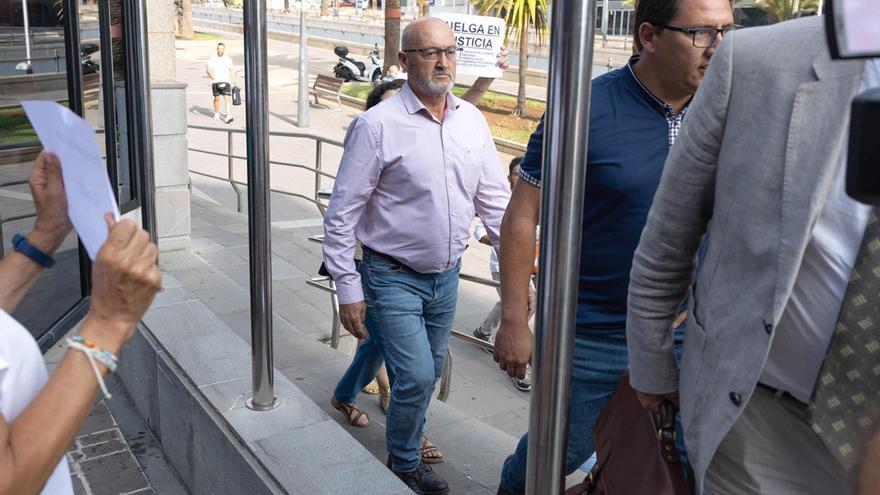
"Mediator Case" Investigation Concludes, 23 Indicted
Judge María de los Ángeles Lorenzo-Cáceres Farizo has concluded the main investigation into the "Mediator case" in Santa Cruz de Tenerife, finding enough evidence to charge 23 people with various crimes and moving the case to a shorter legal process.
Judge María de los Ángeles Lorenzo-Cáceres Farizo, who leads investigating court number four in Santa Cruz de Tenerife, has finished the main investigation into the well-known "Mediator case." This was announced on Wednesday. Her decision means the case will now move to a shorter legal process, as the judge believes there's enough evidence to charge 23 people with various crimes.
This legal step gives everyone involved—the public prosecutor, private lawyers, and defense teams—ten days to act. They can either ask for a trial to begin or for the case to be dropped. Because the case file is huge, containing four terabytes of information, defense teams can, if they wish, ask for more investigations. Also, there's a three-day window to appeal the court's decision.
The possible charges include bribery, misusing public funds (embezzlement), obstructing justice, using influence improperly (influence peddling), crimes against public administration, fraud, faking documents, money laundering, and tax fraud.
Police, Civil Guard, and the Tax Agency worked together on this investigation. They uncovered a scheme with two main parts, both linked to Marco Antonio Navarro Tacoronte, who is seen as the central go-between in the plot.
One part of the investigation looks at former socialist politician Juan Bernardo Fuentes Curbelo and his nephew, Taishet Fuentes Gutiérrez. Taishet took over from his uncle as the Director General of Livestock for the Canary Islands government. Both are accused of giving special treatment to businesses in the primary sector (like farming or fishing) in return for money. Some of this money was allegedly paid as sponsorships to a sports club in Fuerteventura, which Fuentes himself ran.
Separately, the case also involves contacts with Francisco Espinosa Navas, who was then a Civil Guard General. Navarro also acted as the link here. Espinosa is accused of using his influential position to negotiate with business owners who wanted public contracts.
Key people under investigation include Marco Antonio Navarro Tacoronte, Juan Bernardo Fuentes Curbelo, Taishet Fuentes Gutiérrez, Francisco Espinosa Navas, Antonio Bautista Prado, Raúl Gómez Rojo, Miguel Ángel Robayna García, Alberto Montesdeoca García (who also faces tax fraud allegations), María Inmaculada Roca Enrich, Esteban Banús Ricoma, José Santiago Suárez Esteve, Marta Isabel Suárez Cueva, Arantxa Suárez Cueva, and Maximiliano Miguel Poveda Sierra. Other individuals, such as Álvaro de la Bárcena Argany, Estefanía Margarita González Núñez, Bienvenida Reyes Ojeda, José Domingo Fernández Herrera, and María Loreto Fuertes Díaz, are charged with crimes like obstructing justice, influence peddling, acting against public administration, and/or misusing funds. For money laundering, the list includes Navarro Tacoronte and Robayna García, along with Irene Megolla Pérez, Rubén Fuentes Pérez, Celedonio Castro Marrero, and Cristian Mauricio Lillo Meza.
This progress in the main case follows a separate part of the investigation. In late January, a jury found three people guilty of bribery in that first trial: Civil Guard Major General Francisco Espinosa, businessman Antonio Bautista, and Marco Antonio Navarro. They were convicted for taking bribes to help secure contracts for installing solar panels. After the verdict, the public prosecutor asked for a one-year prison sentence for each of them, while their defense lawyers argued for lighter punishments.