
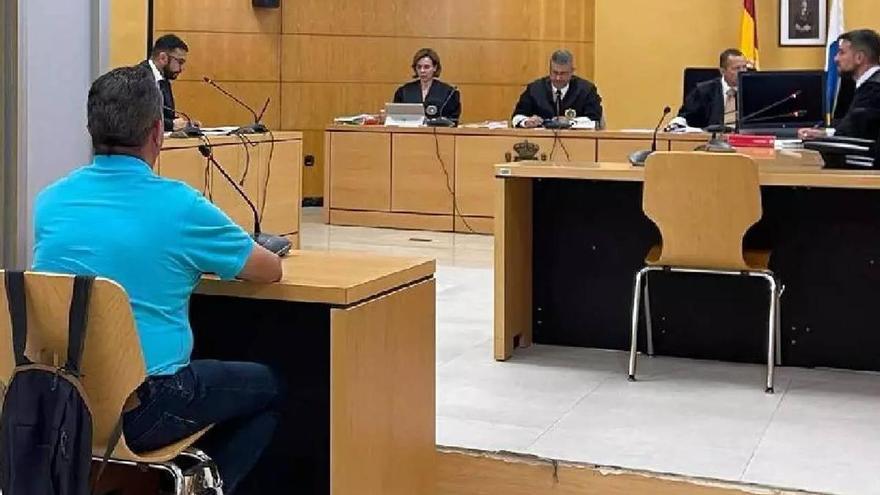
Man Acquitted of Sexual Abuse in Tenerife Despite Victim's Disability
A Santa Cruz de Tenerife court has acquitted a man accused of sexually abusing an adult with an intellectual disability, citing insufficient evidence to overcome the presumption of innocence and highlighting inconsistencies in the alleged victim's testimony and the complaint's history.
A court in Santa Cruz de Tenerife has cleared a man accused of sexual abuse. This case highlights how strictly the Spanish legal system applies the rule that someone is innocent until proven guilty. The court's decision was announced earlier this year, following a trial last June. It came despite the fact that the alleged victim is an adult with an intellectual disability and a 66% disability rating.
The court found that the evidence presented by the prosecution was not strong enough to prove the man's guilt beyond a reasonable doubt, which is needed to overcome the presumption of innocence. The accusation mainly relied on the alleged victim's statement, along with indirect accounts from family members and a psychological report from an expert. However, the court pointed out major inconsistencies in the alleged victim's testimony, judging its reliability based on rules set by Spain's Supreme and Constitutional Courts.
The court's decision highlighted several weaknesses: the alleged victim gave different versions of events, initially withdrew the complaint to the police, provided an unclear timeline, and there was no other clear, independent evidence to support their story.
The history of the complaint process was a key factor in the court's decision. After first making an accusation in January 2018, the alleged victim withdrew it days later, denying the claims and saying others had influenced them. The complaint was then brought up again three years later in 2021. This happened at the same time the accused's romantic relationship with the alleged victim's mother ended. The court felt this timing raised questions about the motivation behind the complaint.
The accused's lawyer, Antonio Perera, argued his client was innocent. He claimed the accusations stemmed from family conflicts and old grudges with his ex-partner's family. The defense pointed to earlier complaints of alleged injuries made by the same family, which were later dismissed. This, according to the defense, showed a pattern of hostility.
The testimonies from close relatives did not strengthen the accusation; instead, they contradicted each other and were mostly indirect. Even the only witness who claimed to have seen the events had important inconsistencies, admitting they didn't live at the house when the abuse supposedly happened. The psychological expert's report also didn't offer enough clear evidence to convict the man without other proof.
In the end, the court concluded that the lack of proof for the alleged actions created a reasonable doubt. By law, this doubt must benefit the accused, leading to his acquittal.