
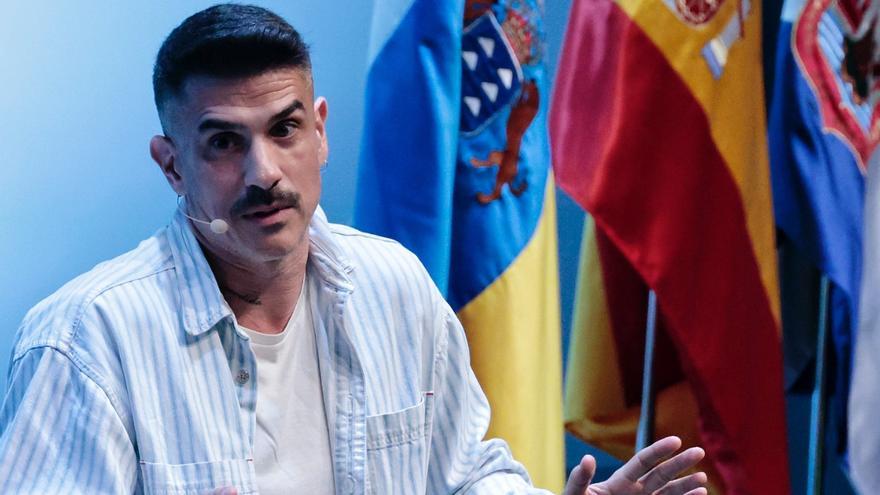
Álvaro Benito: "Doing What You Love Is The Greatest Privilege"
Former footballer and Pignoise musician shares his personal contentment from fulfilling work, while offering candid insights on football's top players, club dynamics, and the challenges of public life.
I'm always happy, and I'm currently in a very content phase of my life. This feeling comes from doing work that truly fulfills me. For instance, with my band Pignoise, I enjoy every aspect – both the public-facing parts and the behind-the-scenes work, like the creative process, logistics, and managing the group. All of it brings me great satisfaction and joy.
I know it's a huge privilege to do what you love. It's not always glamorous; there's a 'side B' that people don't often see. But it's a real luxury to pursue your passion – truly the greatest privilege imaginable. For me, going to a concert isn't 'work'; it's like a camping trip with friends. I absolutely love playing football; it's my greatest passion. Commentating, while enjoyable for some incredible matches, doesn't quite compare. Sometimes, with other games, you might even find yourself on autopilot.
First, I still think it's a shame that Tenerife has dropped to its current position. I hope it's only temporary. However, it's often during the toughest times that fans come together the most. We've seen many examples of clubs that faced similar struggles but later rose to the top. I always say that when I first arrived on the island, I felt a strong connection to the team, even when our performance wasn't the best. We had a good squad, and whether we won or lost, the fans were always with us; they made that clear. I had come from the Bernabéu, which is different now, but used to be incredibly critical. One extra touch of the ball and you'd hear murmurs. That kind of pressure and whistling could really affect a player. Here in Tenerife, it was completely different.
Initially, I feel sorry for him, I pity him (laughs). Just kidding, of course. Ultimately, he's gone through a whole journey: he was a footballer, then a sporting director, and now he's president. To take on such a role, you need all sorts of resources, plus the necessary persistence and integrity to truly understand how things work. Life's experiences provide that. As you near retirement, you can steer your career towards what you enjoy most. But being president is a huge responsibility, and I sincerely wish Felipe all the best. To be in his position, you have to be extremely well-prepared, which he is, and also very dedicated. I honestly couldn't do it myself. I hope he has the best of luck.
For me, I had two paths. I was a good student and had studied Law for three years. But music came into my life, and I decided to stick with it until I could make it a professional career. I think having a clear goal helped me keep trying and stay enthusiastic. If you don't have aspirations, you lose your drive. That passion to keep the band going, which took seven years, was what motivated me. The big lesson I learned is that processes are crucial. To give you an idea: no one would take Sergio Ramos seriously as a musician today, and we faced a similar challenge. It took many years of hard work to overcome those initial hurdles.
No one really prepares you for fame or for being constantly exposed to public opinion. With today's technology, everyone can share their views, and some criticisms can be harsh and damaging. I think people in the public eye need more support in this area, because not everyone is equipped to handle it. It's tough, because when you're feeling strong, it might not bother you as much. But if you're going through a difficult time or aren't at your happiest, it's different. People don't always realize that your mental state affects your performance. It's hard to separate the two. Another important point is that no one prepares you for life after football – for retirement. You're used to a certain routine and specific excitements. How do you replace that? Music was a huge help for me in that transition.
This next topic is a bit tricky, isn't it?
If we consider what a fair and pure competition should be, then yes, there was a potential imbalance; that's clear. Playing on a neutral field isn't the same as playing on an opponent's home turf. Based on that, I don't want to delve into business matters, LaLiga's expansion, club payments, or purely financial aspects. However, from an economic standpoint, the integrity of the schedule was indeed somewhat compromised. Playing at Villarreal's stadium is simply not the same as playing in Miami.
Right now, I think Bayern Munich and Paris Saint-Germain are the two standout teams, head and shoulders above the rest. I'm talking about the current moment. But the Champions League is decided much later, with everything really kicking off after February.
I don't think so; I don't see that happening in the near future. This is a complex discussion. Both teams are in different phases. Real Madrid has a new coach, a new system, and plenty of room to improve. Xabi likely hasn't settled on his ideal lineup for crucial matches, with some player positions still uncertain. The team needs to develop significantly in many areas. They're clearly making progress, but it's a system that still needs to prove itself. Flick, on the other hand, is in his second year, which is often the toughest. In the first year, there's new energy, competition, and new players are less likely to complain. But what about now? A coach always needs to be believable and persuasive, constantly motivating players to perform at their peak, season after season. Once you've reached the top and overcome challenges to get there, it's hard to maintain that same drive. Why? Because you already know what it feels like to be at the top, and you might question if you need to push yourself quite as hard.
Pedri is, without a doubt, the best midfielder in the world. Flick spotted something others missed. He shifted Pedri's position further back, making him an even more exceptional player. Pedri leads quietly; he clearly dictates the game for both Barcelona and the national team. He does it not by speaking loudly, but purely through his brilliant play.
He's been through some very challenging times, which also affected the team as a whole. I largely believe that UD Las Palmas' relegation was due to their captain being absent, which had a significant emotional impact. I think they really felt his absence.
I've known him since he was a kid. He's the son of a former teammate, Pablo Paz, whom I always saw at Valdebebas when I was a coach. From a very young age, it was clear he was special. No one expected him to reach this level. What happened is that in professional football, he's progressed far beyond expectations. When he joined Real Madrid's first team and played a few friendly matches, no one predicted he'd achieve such heights. One of my best friends is on Cesc Fábregas' coaching staff and watches him closely, keeping me updated. It's truly wonderful to see him play.
Honestly, I don't even think he knows himself. He's a player with very specific qualities. To me, he's a classic attacking midfielder, but that role barely exists in modern football. So, he needs to be very careful when choosing his next club, finding an environment where he can truly thrive.
No, no... We can't expect an 18-year-old to be a role model for society. Of course, they need basic education, good behavior, and respect. But we often demand they be social examples, and they don't have to be. That's always surprised me. Naturally, they must behave as required by their club and environment. But proper education should come from their training academies and, most importantly, from home.
It's too soon to make any predictions. I can say that I see Spain as one of the top four or five favorites to reach the final, or rather, one of the four or five teams playing the best football right now. But there are still months to go, and we can revisit this closer to the World Cup. If you ask me next year, I'll have a much better answer. I won't make predictions now; they always end up making you look foolish.