
Tenerife will host the opera "Yerma" – a European premiere!
The Auditorio de Tenerife will host the European premiere of Heitor Villa-Lobos' opera "Yerma," based on Lorca, a joint production by theaters from Spain and Brazil.
Next week, the Tenerife Auditorium will present the opera "Yerma" by composer Heitor Villa-Lobos, based on the tragedy by Federico García Lorca. This will be a European premiere!
The production of "Yerma" was jointly created by the Auditorio de Tenerife, the Teatro de la Zarzuela in Madrid, and opera festivals from the Brazilian cities of Amazonas and Belém. This opera will open the new season of Ópera de Tenerife on October 14, 16, 17, and 18.
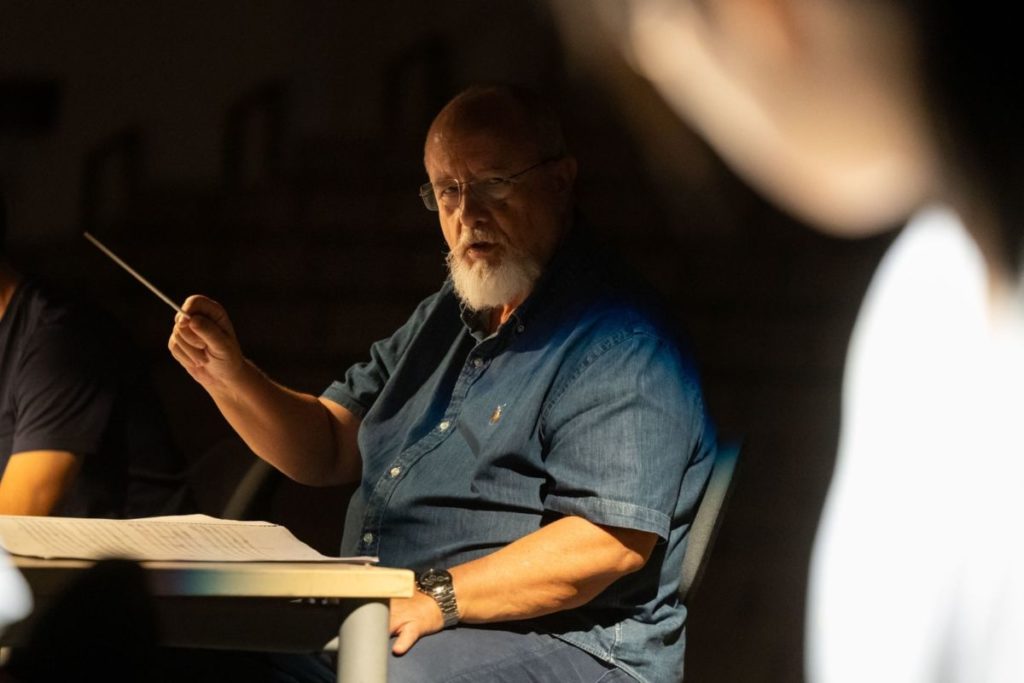
The director, adapter, and set designer is Paco Azorín. The musical director is the Brazilian conductor Luís Fernando Malheiro. He has reviewed the opera's score and will conduct the Tenerife Symphony Orchestra in three performances. On October 17, Pablo Urbina will take the conductor's stand. All performances will begin at 7:30 PM. The Ópera de Tenerife-Intermezzo choir will join the soloists on stage.
Interview with Luís Fernando Malheiro:
– Mr. Malheiro, next week you will be conducting "Yerma." What does Villa-Lobos' music convey from Lorca's story?
– Villa-Lobos was simply enchanted by "Yerma"! He wanted to set the play to music, not write a libretto. The music here is closely intertwined with Lorca's tragedy. Villa-Lobos managed to convey the drama of "Yerma" through music. But due to the lack of a libretto, the opera is complex for the singers, especially for the main character, who hardly ever stops. The role of Yerma is very exhausting, but I am sure we have a wonderful cast.
– You have reviewed Villa-Lobos' scores. What was the most challenging part of this work?
– I didn't review them, but edited them to make "Yerma" easier to understand. We worked on this here in Tenerife during rehearsals, making corrections. I think after the performances we will have a fairly accurate edition. Computer editions often contain errors. The score can only be "cleaned up" during performance, which is what we are doing. Everything in "Yerma" is complex: for the orchestra, for the singers, and for the conductor. It is a very theatrical opera, and the theater is the main character here. Therefore, effective direction is needed, and Paco Azorín is the ideal director for this.
– "Yerma" has not been staged often since it was written in 1956. Does the approach to such a rare opera differ from the approach to popular works?
– Of course, because there are no established traditions. On the other hand, this gives us the freedom to discover the work and try to convey the composer's intention as best as possible. It is interesting for a performer to work on a piece that is rarely performed. In addition, in our production, "Yerma" is performed in its entirety, without cuts.
– How was it working with the orchestra, soloists, and choir?
– I have the best impressions! The orchestra is wonderful, very professional. There is nothing easy in "Yerma," but with these musicians, everything is possible. The singers are also wonderful. Berna Perles, for example, has created a deep and emotional image of Yerma, who embodies Lorca's and Villa-Lobos' heroine very well. The casting was perfect.
– How do you see the role of the musical director? What are your goals in creating an opera that combines different art forms?
– Opera is a whole, where music and theater must be closely linked. I cannot conduct an opera if I do not believe in what I see on stage. Collaboration between the musical director and the director is important. There must be a close connection between them, and each must believe in the other's work. The musical director works with the orchestra, singers, and choir separately, and then harmoniously combines it all.
– What have you learned and what do you share with the orchestra and singers?
– You always learn, it's a constant exchange of experience. I am 67 years old and have been working for over 40 years, but musicians always teach you something. There are many young performers in the orchestra, and they are all very well prepared. It is a symphony orchestra, but it plays opera wonderfully. The members are interested, disciplined, and the soloists are wonderful. It is a very positive and enriching dialogue.
– How would you encourage someone who has never been to the opera, especially young people, to come to the theater?
– When I arrived in Manaus, the public did not know opera because it was not staged there. Over the years, I have realized that today it is easier to attract young people with works such as "Yerma," operas that are more theatrical, closer to our reality than bel canto. The main thing is that the public is captivated by the music, the story, the drama. If the opera is done well, it always evokes emotions, whether the viewer is an opera fan or not.
– "Yerma" is a joint project between Brazil and Spain. How do you see the future of opera in the digital age?
– There are pros and cons. When I started my career in Brazil, it was difficult to get a score, a disc, a recording of an opera. But today we have access to everything through our phones. For example, you can listen to Francesco Tamagno, the first performer of the role of Otello. That's why I tell young singers that they need to study not only music but also the history of interpretations. Today it is accessible to everyone. It is important to know what has been done before in order to have a wealth of information for career development. These are tools that we should all use.