
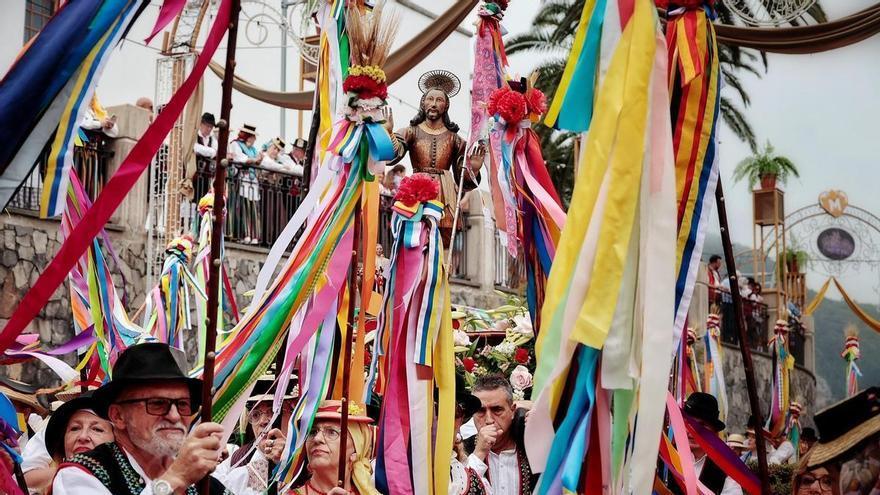
Los Realejos Pilgrimage Draws Record Crowds in Celebration of Canary Islands Heritage
The annual pilgrimage honoring Saint Isidore the Laborer and Saint Mary of the Head in Los Realejos drew massive crowds, underscoring a resilient commitment to preserving traditional Canarian culture and folklore.
The pilgrimage honoring Saint Isidore the Laborer and Saint Mary of the Head in Los Realejos has firmly established itself as one of the Canary Islands' most important cultural events. Following the end of pandemic-related restrictions, local reports confirm that residents are more committed than ever to preserving these long-standing traditions.
As the grand finale to the municipality’s May Festivities, this year’s event saw a massive turnout, featuring nearly 100 carts, floats, and motor cultivators. The procession began at the Apostle Santiago parish church, led and concluded by the Sabinosa Folk Group, who have been a staple of the celebration for 40 years. Mayor Adolfo González praised the scale of the event, which brought together all of the town’s folk groups alongside participants from the 51st Festival of the Islands.
Beyond the large crowds, the pilgrimage highlights a growing movement to reclaim local cultural identity. Since 2012, the local council has run an educational program called "As It Should Be," which teaches residents—especially students—how to wear traditional clothing correctly. This initiative aims to protect authentic folklore from being diluted, and officials note that it is already improving the overall quality and presentation of the festival.
Despite the misty, overcast weather typical of northern Tenerife, the day was a success, blending religious devotion with local food like chorizo bread and grilled meats. With visitors arriving from across the island, the event proved once again that these celebrations are vital for bringing the community together, successfully bridging the gap between older generations and younger people interested in their heritage.