
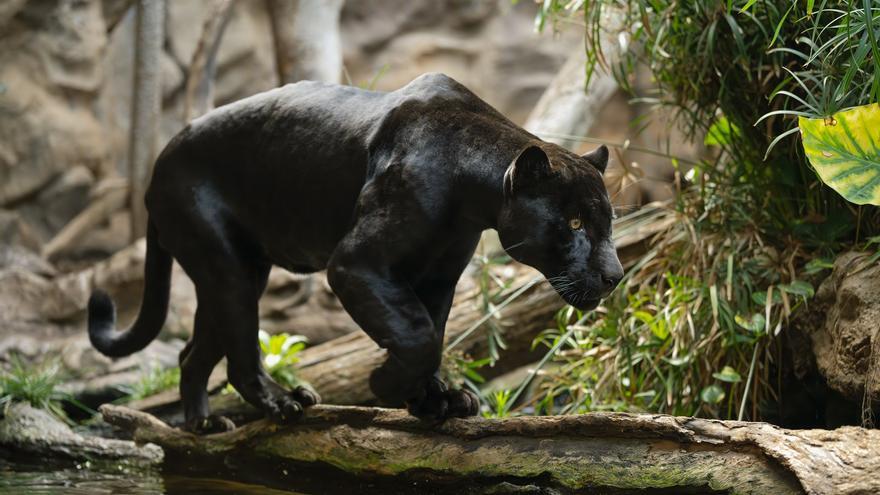
Loro Parque Welcomes Black Jaguar Tito for Conservation Breeding
Loro Parque welcomes Tito, a 12-year-old black jaguar, from the Czech Republic as part of a European Endangered Species Programme to breed with female Naya and bolster the species' genetically healthy population.
Loro Parque is taking another step in its commitment to conservation and animal welfare with the arrival of Tito, a 12-year-old black jaguar. Tito has come from Hodonín Zoo in the Czech Republic to Tenerife, as part of the European Endangered Species Programme (EEP). The goal is for him to breed, helping to secure the future of this species. While jaguars are generally listed as 'Near Threatened' by the IUCN, their situation is critical in some areas due to shrinking habitats, illegal hunting, and conflicts with people.
Tito will live with Naya, an eight-year-old female who has already had cubs. Naya's genes are very important for the conservation programme. After a careful period of getting used to each other, both jaguars have shown they get along very well. The park's team for land mammals has seen calm interactions and many signs of breeding behaviour.
Wolfgang Kiessling, president and founder of Loro Parque, explained: "Conservation isn't just about protecting animals in the wild. It also means making sure we have genetically healthy populations living under human care. At Loro Parque, we work daily to ensure these animals remain on our planet for generations to come."
The Loro Parque team carefully introduced Tito and Naya to each other. They started with controlled scent and sight contact over several days. This allowed the jaguars to get to know their surroundings and build trust before they finally met. Their first full meeting was a great success.
Daniel Rodríguez, head of terrestrial mammals at the park, said: "Right from the start, we saw signs of comfort, interest, and that they were open to each other. The introduction went smoothly, and they immediately showed breeding behaviours. This proves both animals are emotionally and physically well-balanced. This successful outcome is thanks to months of teamwork with the EEP, as well as the transport and registration teams."
Tito has already fathered cubs at another European centre, which makes the team hopeful for successful breeding at Loro Parque. His arrival not only helps keep the species' gene pool healthy but also strengthens the park's reputation as a world leader in conservation and animal welfare.
Jaguars (Panthera onca) come from Central and South America. They are the biggest wild cats in the Americas and the third largest in the world, only smaller than lions and tigers. As top predators, they are crucial for keeping ecosystems balanced by controlling the numbers of other animals. Jaguars are also known for their incredibly powerful bite, strong enough to pierce the skulls of their prey, and unusually for big cats, they love water.
The "black jaguar" is a melanistic variety, meaning it has extra dark pigment that makes its fur appear black. However, if you look closely in certain light, you can still see its distinctive rosette patterns. This unique feature fascinates both visitors and experts.
Loro Parque is known worldwide as a centre for protecting biodiversity, caring for thousands of animal species with the highest welfare standards. It is also the main sponsor of Loro Parque Fundación, a non-governmental organisation (NGO) dedicated to protecting species and their natural habitats. The Fundación has put over 29 million dollars into more than 300 conservation projects around the globe, helping to save 18 threatened species from extinction.