
Loro Parque Achieves Rare Captive Breeding Success of Razorfish
Tenerife’s Loro Parque has achieved a major scientific milestone by becoming one of only three institutions worldwide to successfully breed the razorfish in captivity.
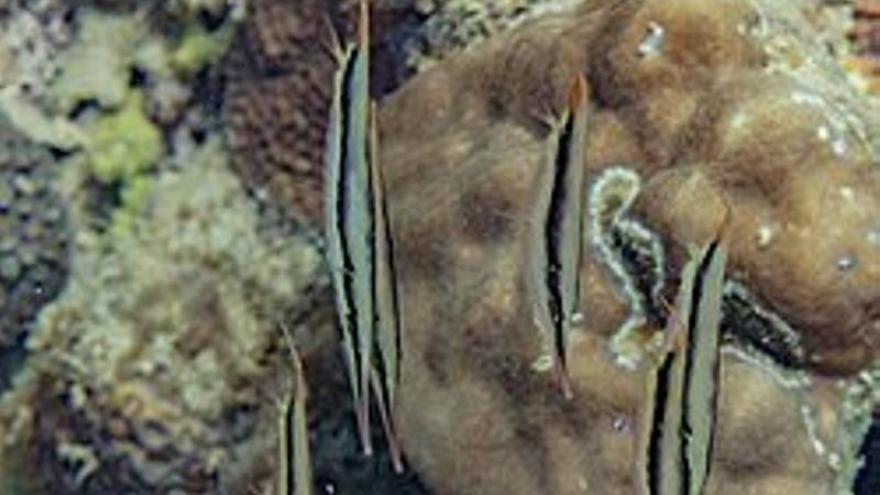
Loro Parque has achieved a major scientific breakthrough: the successful captive breeding of the razorfish (Aeoliscus strigatus). The Tenerife-based facility is now one of only three institutions worldwide to successfully complete the species' reproductive cycle, marking a significant step forward in complex ecosystem management.
The greatest challenge was the larval stage, a notoriously difficult phase in aquariology. To ensure the survival of the 18 juvenile fish—which are currently two centimeters long and under veterinary care—the team had to recreate the precise environmental conditions of the Indian Ocean and the Red Sea. Success relied on meticulous water quality control, a specialized diet, and a deep understanding of the fish's natural behavior.
The razorfish is famous for its unique, blade-like shape and its habit of swimming vertically. This posture is an evolutionary adaptation that allows the fish to hide among the spines of sea urchins, a symbiotic relationship that proved essential to their well-being in the aquarium. According to department head Yeray Martín, recognizing the species' social needs and gregarious nature was the key to the project's success.
This achievement highlights the vital role of conservation centers as hubs for research. As coral reefs face increasing threats from climate change and human activity, the ability to breed complex species in human care provides essential data. This knowledge is crucial for preserving biodiversity and understanding how marine life can adapt to the degradation of their natural habitats.