
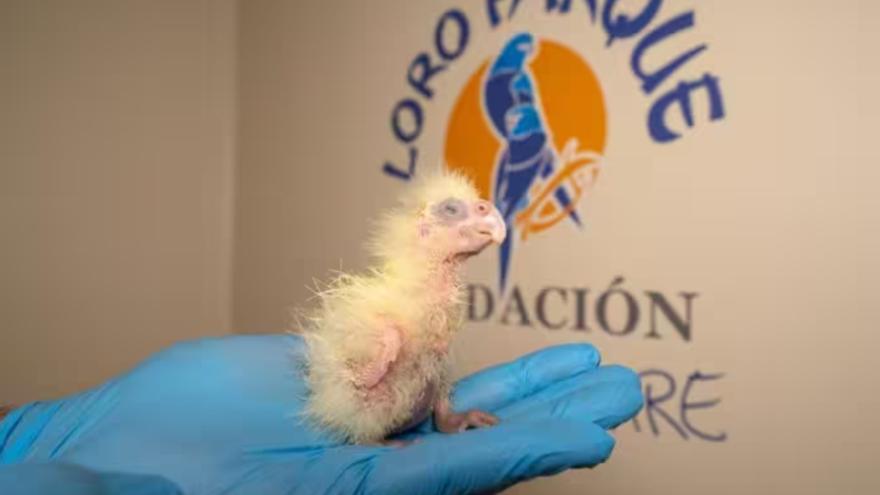
Loro Parque Achieves Europe's First Red-Tailed Black Cockatoo Breeding
Loro Parque has achieved a European first by successfully breeding the endangered southwestern Australian red-tailed black cockatoo, a significant milestone for the species' conservation.
Loro Parque and its foundation have achieved a major conservation first: they've successfully bred a southwestern Australian red-tailed black cockatoo in Europe. This bird, known as 'Karrak' in its home country, is facing decline, with its wild numbers severely cut down due to losing its natural habitat and other dangers.
This birth is the result of years of dedicated work by the park's biologists and keepers. They put in extraordinary effort to ensure the health and successful breeding of this very sensitive species.
"We're thrilled because, after years of trying, we've finally managed to breed this rare bird here at Loro Parque," said Marcia Weinzettl, a biologist and bird curator at Loro Parque Fundación. "For a while, things were touch-and-go as the chick struggled to hatch. But with a little help from our skilled keepers, it hatched successfully and is now getting the best possible care."
These cockatoos are originally from the far southwest of Western Australia, where they rely on old eucalyptus forests for nesting. Loro Parque points out that losing these trees, along with competition from wild bees and illegal hunting, has greatly reduced their numbers.
Mike Jordan, Loro Parque's Zoological Director, highlighted how important this achievement is. "The birth of this chick is a significant step in conserving the species," he explained. "Loro Parque doesn't just look after these birds here; we also work in Western Australia, in the same natural habitat, to protect the endangered Carnaby's black cockatoo. This species shares the same forests and also depends on them to survive."
Rafael Zamora, the Scientific Director, spoke about the scientific and strategic value of the birth. He said, "This success isn't just about breeding; it also proves that our methods for managing, enriching their environment, and monitoring them biologically can meet the needs of even the most challenging species."
He believes that "the red-tailed black cockatoo is incredibly sensitive to changes and needs very specific conditions to breed. Achieving this for the first time in Europe is a game-changer for conservation programs that keep species outside their natural habitat."
Zamora added that the goal "is not just to keep stable populations in human care, but also to create knowledge that can be used to help conserve them in the wild." He explained that "every bit of information we gather, from how they behave when breeding to incubation and raising the young, is shared with Australian organizations. This helps boost global efforts to bring the species back."
Loro Parque stresses that this birth once again shows how vital well-run conservation centers are. They believe that practical science and a long-term commitment "can truly change the future for species currently facing extinction."