
Legal Loophole Stalls Prosecution of Homicide on Migrant Boat to Gran Canaria
The arrest of two suspects for a homicide during a migrant crossing to Gran Canaria has exposed a critical jurisdictional loophole that prevents Spanish courts from prosecuting violent crimes committed in international waters.
The recent arrest of two people by the National Police, accused of a homicide during a migrant crossing to Gran Canaria, has exposed a major legal loophole regarding violent crimes committed on the high seas. According to EFE, the case is currently stalled because Spanish courts lack the jurisdiction to prosecute it. This is not an isolated incident, but rather a reflection of a deeper, structural flaw in both international and Spanish law.
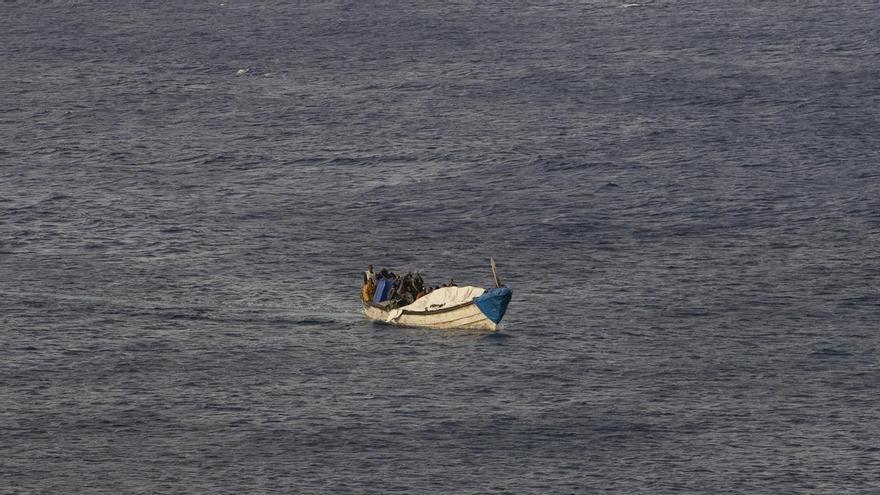
The incident occurred last May, when Maritime Rescue intercepted an inflatable boat carrying 62 people. The investigation began after a Tenerife resident reported that his 35-year-old brother, Daha Mohemad Fadel Lehbib, had gone missing. Witnesses told police that the victim was thrown overboard during an altercation, and that no one on the boat attempted to help him. However, conflicting witness accounts—some suggesting intentional harm and others suggesting negligence—have made it difficult to determine the exact legal nature of the crime.
From a technical standpoint, the Las Palmas Immigration Prosecutor’s Office is doubtful that the case can proceed. The main issue is the principle of territoriality: Spanish courts generally cannot judge crimes committed in international waters if neither the suspects nor the victim are Spanish citizens and the boat is not registered to Spain. While Spanish law allows for extraterritorial jurisdiction in cases involving human trafficking, current legal standards limit this to the organization or piloting of the boat. Other violent crimes committed during the journey fall outside this scope.
This case is part of a growing list of incidents highlighting a lack of accountability, a concern recently raised by prosecutor Teseida García before the European Parliament. She has pointed out that the justice system is often powerless to act in cases of sexual assault or extreme violence—such as throwing people overboard to lighten a boat’s load—because these acts occur outside of Spanish jurisdictional waters. The situation presents a difficult ethical and legal dilemma: there is an urgent need for reforms to address crimes on migration routes, yet the current system remains restricted by a lack of legal authority over common crimes committed in the open ocean.