
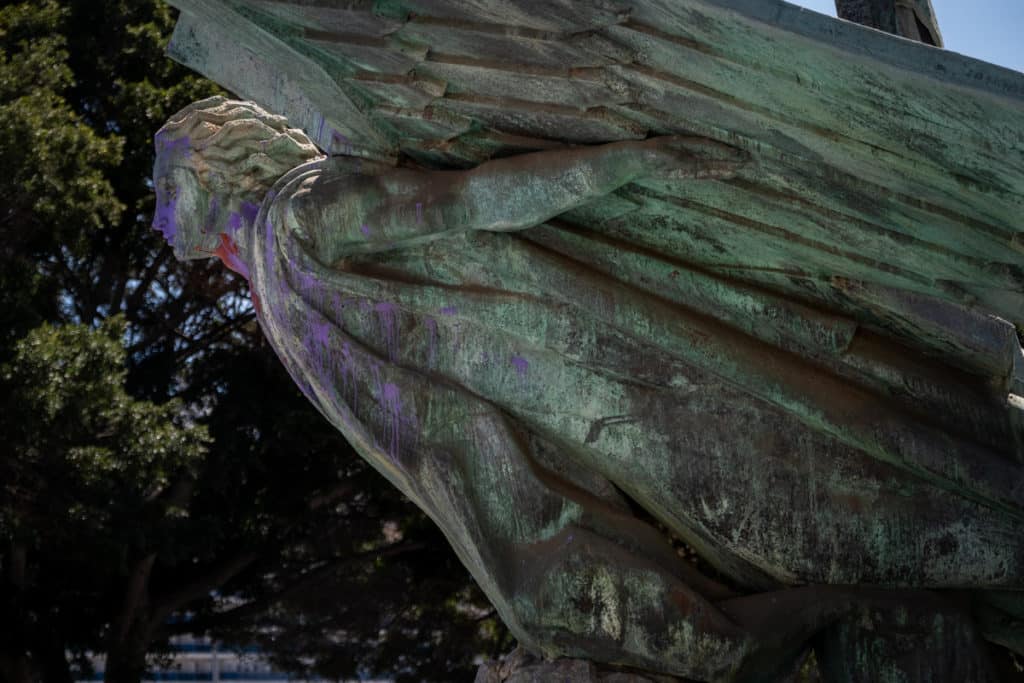
Legal Battle Intensifies Over Future of Santa Cruz Victory Monument
The future of Juan de Ávalos’s Victory monument in Santa Cruz de Tenerife remains uncertain as the San Miguel Arcángel association prepares a legal challenge against the Canary Islands’ Cultural Heritage Council’s decision to deny the sculpture protected status.
The legal battle over Juan de Ávalos’s Victory monument in Santa Cruz de Tenerife has intensified following a recent decision by the Canary Islands’ Cultural Heritage Council. The regional body has rejected the monument’s classification as an Asset of Cultural Interest (BIC), effectively removing the legal protection that previously shielded the sculpture from being moved or altered.
In response, the San Miguel Arcángel association, which has led the campaign to keep the monument in place, is preparing a legal challenge. Its president, Luis Sosa-Tolosa, claims the administrative process was flawed and lacked the technical rigor required for heritage management. If the association proceeds with a lawsuit, the case could drag on for two to three years, leaving the monument’s future uncertain.
Despite the council’s decision, supporters of the sculpture argue that it is not a final defeat. Sosa-Tolosa maintains that because the administrative file remains open, the monument is still protected under Article 28.2 of the Canary Islands Cultural Heritage Law, which grants it the same status as a BIC-listed site during ongoing proceedings.
The debate highlights the tension between historical memory and the preservation of public art. While authorities aim to apply current laws regarding the removal of controversial symbols, conservationists argue that the artistic value of Ávalos’s work should be considered separately from its ideological context. They insist that the lack of BIC status does not automatically require the monument’s removal. As the case heads back to the courts, it remains a focal point for the broader conflict between protecting historical monuments and addressing democratic memory policies in the Canary Islands.