
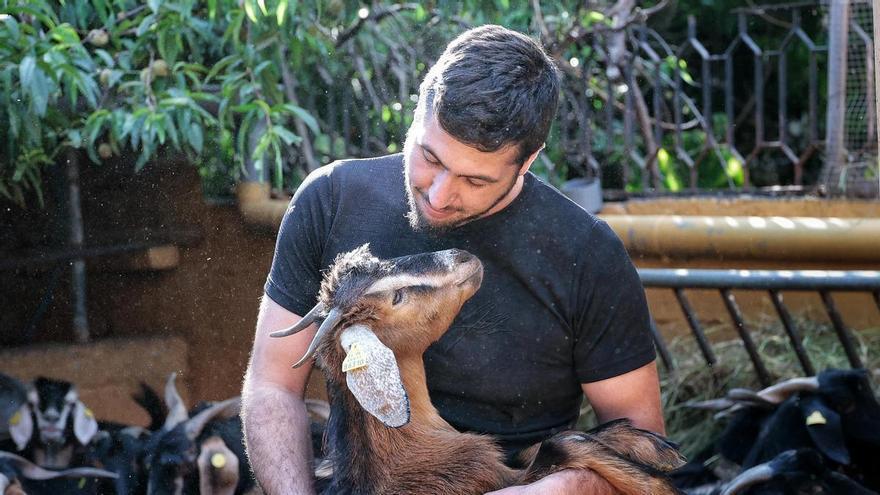
Last Goat Farmer in Tacoronte Struggles Against Bureaucracy and Rising Costs
Urbano López Bonilla, the last goat farmer in Tacoronte, highlights the broader crisis facing traditional agriculture in the Canary Islands as he struggles to balance award-winning production with mounting bureaucratic and financial pressures.
Goat farming in rural Tenerife is facing a major crisis, perfectly illustrated by the story of Urbano López Bonilla. As the last remaining goat farmer in the municipality of Tacoronte, his career highlights the struggle between the desire to keep traditional farming alive and the heavy bureaucratic and financial hurdles that make it difficult for small-scale operations to survive.
López Bonilla’s brand, Tagoror, has been a commercial success. His fresh raw goat’s milk cheese recently won a silver medal at the Pinolere competition, and demand now exceeds what he can produce. By selling almost exclusively from his home, he avoids the costs of logistics and middlemen. Even so, he still has to balance his farm of 80 North Tenerife goats with other jobs—a common necessity for farmers trying to survive the financial instability of the industry.
Running the farm requires constant, hands-on dedication that goes far beyond what can be learned in a classroom. López Bonilla notes that his business depends on more than just the 40 liters of milk he produces daily; it requires strict control over rising costs, such as the 64 euros he spends on feed every day. This economic reality often conflicts with government subsidy programs, which sometimes require farmers to work exclusively in agriculture—a condition that can be impossible for those just starting out without established infrastructure.
The situation in Tacoronte reflects a wider trend across the Canary Islands: traditional farms are disappearing as land is abandoned, driven by a lack of incentives and rigid land-use regulations. López Bonilla hopes to expand his herd to 150 animals using a grazing model, but he is currently held back by a lack of space and difficulty in finding new facilities. While he uses professional techniques like artificial lactation to keep his herd healthy and genetically pure, the future of his farm remains fragile, caught between his commitment to quality and the harsh realities of modern livestock farming.