
Tenerife: Las Vegas – an oasis of history fading away without shops and buses
On Tenerife, the village of Las Vegas, founded after the conquest of the Canary Islands, suffers from a lack of basic services, despite its rich history and potential for rural tourism.
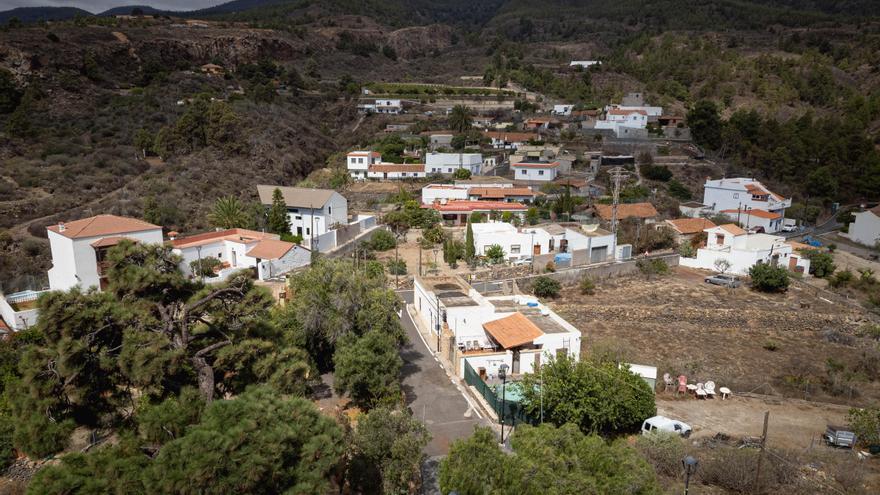
Arriving in Las Vegas, near Granadilla de Abona, is like stepping into an oasis amidst the hustle and bustle of southern Tenerife's tourist area. Suddenly, a pine forest rises from the yellow landscape, like a green brushstroke. At the entrance to the village, there are many pine trees and a stone plaque with the inscription: "Las Vegas. Historic village of Granadilla de Abona." This place was founded after the conquest of the Canary Islands.
The land here is fertile and there is plenty of water, so in the 16th century, Las Vegas became one of the main settlements. It got its name from the geological formation on which it stands. Today, about twenty people live here, and some of them say they feel abandoned.
In Las Vegas, history is felt at every turn. Old ovens for drying fruit, platforms where figs were dried, the chapel of the Virgin Mary de la Esperanza, built in the 16th century, a bell tower that "grows" on a pine tree, a traditional stick dance, a water mill, and cave houses – all these remind us of its former glory. But now it is quiet here, because there is almost nothing. The inhabitants of Las Vegas lack the most basic necessities: no shops, no bars, not even a bus. "People like the silence here, but I don't think everyone can stand it for more than a week," says Juan Antonio Casanova, who often visits here.
Casanova talks about Las Vegas with love: "I speak about this place with a special feeling. My grandmother and mother lived here. I spent all summer and a lot of time here, and now I come here every week." He lives in El Médano, but bought land and built a house that "fits into the environment. I didn't want to build a modern house among such architecture," he explains, pointing to the large courtyard. It is three buildings joined together, with a large open area and "always open doors". Previously, this was the property of Carmela Peraza, who had a grape press that all the neighbors used," he recalls his childhood. "It's a gem," he says of the village, "but no one is doing anything."
Other residents agree with him, who love this place so much that they feel called to return to where they were born or were happy. Cándido Pérez was born in one of the cave houses, not far from the center of the village. There were 12 people in his family. He is engaged in agriculture, although in Las Vegas "few people cultivate the land. There are four of us," he says. But while agriculture is declining, rural tourism is developing: "There used to be several rural houses, and now there are six."
Around Las Vegas, there are many trails that lead in different directions. Tourists often walk along the quiet streets. "I renovated the network of trails," says Pérez, "and there is also an ethnographic park at the entrance. There are platforms for drying fruit." In this park, at the entrance to the village, there are wooden tables inside the structures where figs were once dried. This is how people stored food for the winter. Although Las Vegas is in the south of Tenerife, it can be very hot and very cold here, because the village is located at an altitude of 650 meters.
Pérez knows well how people live in cave houses. "It's the best way of life. It is a bioclimatic dwelling: in summer it is 12-13 degrees, like with air conditioning. And it's warm in winter. My parents and brothers rented one of these houses from the landowner in Las Vegas," he recalls.
Pérez's family moved to Santa Cruz in the 70s. At that time, people were leaving Las Vegas. Casanova also experienced this. This is also mentioned in the records in the municipal register. All these data, as well as the history of the village, are collected in the book "Las Vegas. Historical Place" by Emiliano Guillén Rodríguez, the official chronicler of Granadilla de Abona. Casanova keeps this book as a treasure and relies on it in his stories. "The book is already sold out. We want the municipality to publish it again," he says.
Life in Las Vegas is not easy. An anonymous woman walking down the street says that "this is not life. To buy an ordinary bottle of water, you have to drive 30 kilometers." The nearest store is in Chimiche, three kilometers away. It's about five minutes by car. But the distance here, in Las Vegas, feels different.