
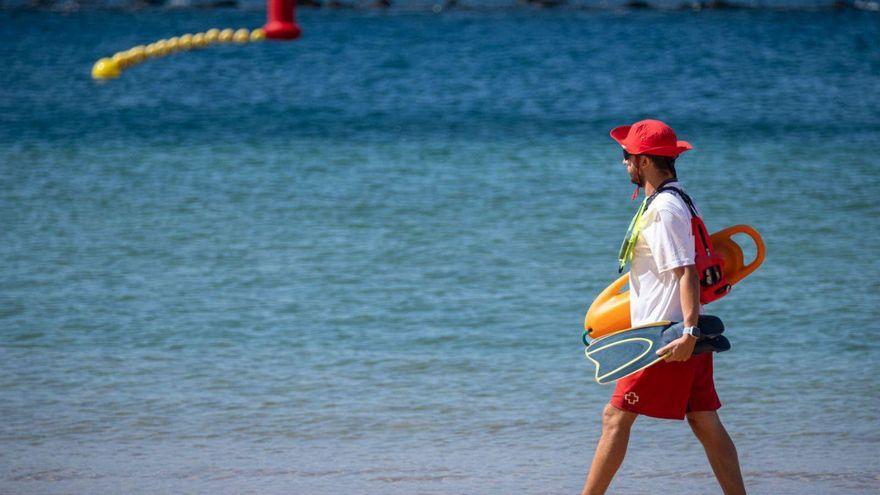
Tenerife: Las Teresitas beach has become the "deadliest" on the island
The popular Las Teresitas beach in Tenerife has become the deadliest swimming spot on the island in the last 10 years, with 8 people dying there since 2016, and a total of 192 water-related deaths recorded in Tenerife.
Las Teresitas beach in Tenerife has become more dangerous than the "cave of death," El Tancon, where swimming is completely prohibited. Since 2016, 8 people have died there.
Although Las Teresitas is a popular spot, and the large number of visitors may explain the sad statistics, it is still strange that this seemingly calm beach has become the deadliest on the island in the last 10 years.
In Santa Cruz, 28 people have drowned since 2016. In addition to Las Teresitas, there have been fatalities in Almaciga (5), Benijo (4), and Las Gaviotas (2).
Fañabé (Adeje) is the third most dangerous place to swim in Tenerife (6 deaths). In Santiago del Teide, in addition to El Tancon, another 10 people have drowned in other locations, including the coast of Los Gigantes and Playa de la Arena.
The highest number of deaths in hotel pools was recorded in Arona (4). The coast of La Laguna is also dangerous: 4 deaths in Bajamar and 2 each in Punta del Hidalgo and Jover.
The association "1500 km of coastline of the Canary Islands" has been collecting data on water accidents for 10 years. From 2016 to 2025, 192 deaths and about 700 accidents were recorded in Tenerife.
In 2022-2025, the most deaths occurred at Las Teresitas (5). However, the most accidents occurred in the natural pools of Bajamar (La Laguna) during the same period (6).
The President of the Association, Sebastián Quintana, explains the high mortality rate at Las Teresitas by the fact that it is an artificial beach with a breakwater. The absence of waves creates an illusion of safety, but the breakwater changes underwater currents, and a person may suddenly not feel the bottom under their feet.
Most often, men (8 out of 10) aged 55-75 drown on beaches without lifeguards or after their shift ends. Unlike mainland Spain, in the Canary Islands, the victims are mostly foreigners (75%). Most of the dead are Germans, followed by English, French, Italians, and Russians.
Although adults drown most often, since the beginning of 2025, 4 children have died in the Canary Islands, 2 of them in Tenerife. This is the worst figure in 10 years. Also, 20 young people were rescued with signs of drowning.
Quintana emphasizes that most cases involving children occur due to a lack of adult supervision. And, contrary to popular belief, the greatest danger for children is swimming pools, where 3 out of 4 fatal drownings occur.
In addition, on February 22, a 15-year-old Polish boy, Arek, who was swept away by a wave in La Guancha, went missing. He was catching crabs with his sister, and a wave took them into the sea. The father rescued the girl but could not help Arek.
Carelessness also leads to tragedies. This summer, more than 30 young people were swimming in Santiago del Teide during high tide, and about 10 of them were carried outside the natural pool.
Although the number of fatal drownings has decreased by 17% since the beginning of the year, the number of people rescued with serious injuries has increased (135 in the archipelago). 5 people drown every month in the islands. Drowning is the leading cause of accidental death in the Canary Islands, twice as high as traffic accidents.