
Las Lagunetas: Tenerife's Mountain Hamlet Cultivates Life
In Tenerife's Teno Rural Park, the small, aging community of Las Lagunetas preserves its deep-rooted farming traditions and strong communal bonds, welcoming new residents who embrace its unique way of life.
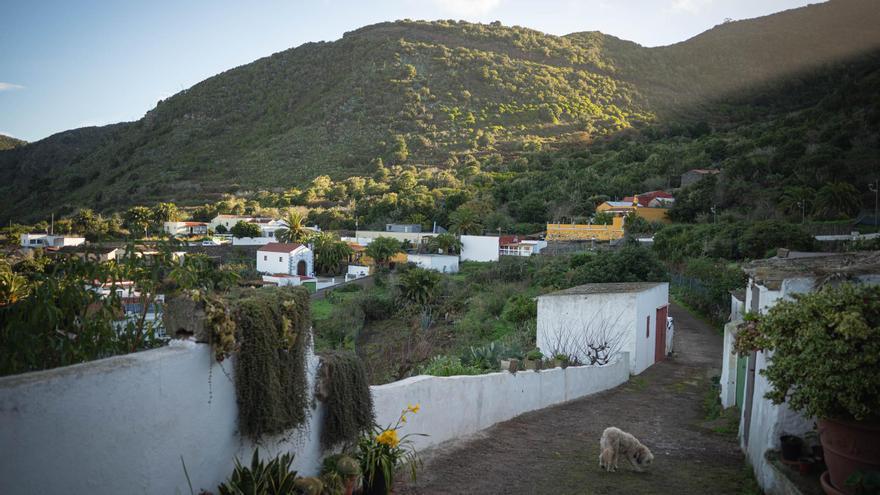
The sun gently appears, its rays splitting the mountain peak. A rooster's crow breaks the silence, joined by the bleating of two lambs. Sebastián López Martín, known to everyone as Juan, gets his 'tiller' ready to plow the vegetable gardens below his house. He's spent his whole life farming, and now, at 85, it's his favorite hobby. He cultivates life in the small community of Las Lagunetas, part of Buenavista del Norte. You'll find it just off a small turn-off to the left on the TF-436 road to Masca, deep within the Teno Rural Park.
Even though the community has only two streets and about 20 residents, it's full of energy and life. A great example is Miñona Acevedo Ávila, also known as Herminia. She's married to Juan, and they live their lives together in Las Lagunetas. Their hands are calloused, showing a lifetime of working the land. "'Childhood wasn't easy,' explains the woman with short, curly, gray hair. 'We worked hard, looking after cows, pigs, goats, and even pack animals.'"
Besides the animals, 83-year-old Miñona remembers planting potatoes, wheat, chickpeas, lentils, corn, and lupini beans. 'That was everything we had,' she says. The village and its land were their pantry, ensuring no one went hungry. "'We sold wheat, potatoes, and cheese,' she recalls. 'As little girls – my three sisters and I – we had to look after the goats barefoot before walking to school in El Palmar. We didn't have money for canvas shoes; we only wore them for school or special occasions.' This paints a picture of the tough childhood they experienced in the 1940s and 50s in the mid-altitude regions of Tenerife."
They did go to school. Pepe Ramos was their teacher, 'but we called him 'Uncle Pepe',' she says. 'Here, even if you weren't family, everyone was an uncle or an aunt.' She then lists several people, all referred to as 'Uncle' or 'Aunt'. This shows the community's warmth and friendliness. She also remembers, 'Before, when someone in Las Lagunetas died, my mother would make us wear a black apron for 15 days or a month, even if they were just neighbors.' It was their way of 'observing mourning'.
Las Lagunetas doesn't have a supermarket, but the nearest one is in El Palmar, just a couple of turns down the road. The same applies to the medical clinic. 'They see you every day there, and on Fridays, if you need it, they'll even come to your house,' Miñona explains.
As she talks, Miñona can't keep still; she's full of energy. 'I'm always on the go,' she admits. She laughs easily and becomes very animated when chatting. Her physical and mental quickness is remarkable; she even runs off to help a nephew. She repeats that life was tough, but 'we always had enough to eat. Some neighbors didn't own land and struggled more. They survived by collecting branches from the mountain for firewood.' They bartered goods, but also shared, and 'we always helped each other,' she says. "'If I harvested potatoes today, I wouldn't do it alone. All the neighbors – maybe 30 or 40 people – would come, and we'd cook them right there in the garden. We'd bring bread, gofio, and cheese all the way up the ridge,' she explains, pointing to the wooded peak that's part of Monte del Agua."
"'I haven't counted the residents here recently,' Miñona admits, but she clearly remembers a time when 'we had over 100 homes and families. Many houses are no longer visible.' She turns towards the ridge again, explaining how 'some houses have been swallowed by nature, blending into the landscape, but there used to be so many people here,' she emphasizes." Some of these homes are now hidden among the bushes along the Arrandianes path, which leads to the Monte del Agua track. It's not that people are leaving Las Lagunetas in large numbers. For Miñona, the main issue is the aging population and the natural passing of its residents.
However, this loss of residents is somewhat balanced by foreigners buying homes and settling in Las Lagunetas. Take Barry and Hiroko McNelis, for example; he's Irish and she's Japanese. Miñona speaks highly of her new neighbor, and Barry is thrilled to have found this spot. "'We wanted to live close to nature and in a quiet place,' he says in slightly broken Spanish, but he understands Miñona and Juan perfectly. 'We used to live in La Orotava, but someone told us about this area, and we've been here for about three years.'"
Their understanding is so good that Barry, in his cowboy hat and work overalls, helps them plant and harvest potatoes, prune vines, and do whatever else needs doing. He's fully integrated into the community, with his own home and several plots where he grows mangoes, avocados, and potatoes. This is how he spends his days. He also enjoys walking the many trails of the rural park. Other residents, from places like Lithuania, the Netherlands, or Korea, also come to Las Lagunetas, either for short stays or to live out their lives there.
The heart of Las Lagunetas is the Patamero tavern. It's the only business in the community, known for its excellent food from the El Palmar Valley, and it brings more life to this part of Buenavista. Here, in what used to be the old shop, the Rodríguez Ávila siblings – both with their mother's light eyes – grow local produce. "'There aren't many of us here, but we make a lot of noise,' explains Rosi Rodríguez Ávila, remembering a chestnut roast they held a few weeks ago."
Rosi, already in her chef's hat, preparing for the restaurant's opening, chose to stay and live in Las Lagunetas. At 59, she and her husband are now among the youngest residents. The lack of job opportunities contributes to the aging population, and 'that means no one stays,' they explain. 'Though some people are returning because of housing issues elsewhere.'
The family running the tavern is connected to almost everyone in the village, making the whole area feel like home. For 30 years, they've been organizing the annual festivities in honor of the Cross. This tradition was started by the former village mayor, José González Martín, known as José Romaldo. The role of neighborhood mayors faded over time due to administrative changes, but in Las Lagunetas, José Romaldo is remembered for getting the square, cultural center, playground, and church built. He planted the seeds of community, and now, 40 years later, the results of nurturing life in the neighborhood are clear to see.
No matter how few residents remain in Las Lagunetas, you can always see their strong spirit to survive and their willingness to share potatoes, wine, or meat around a table.