
La Orotava: Exploring the Historic Heart of Tenerife Beyond the Coast
La Orotava has emerged as a premier cultural destination in Tenerife, celebrated for its well-preserved historic architecture, traditional water-management systems, and unique social heritage.
La Orotava has become a must-visit destination for history lovers in the Canary Islands. While Tenerife is famous for its beaches, this town offers a rich cultural alternative, proving that there is much more to the island than just the coast. Designated a Historic-Artistic Site in 1976, the town is a living classroom that tells the story of how islanders managed water and social life throughout history.
The town’s layout was shaped by its steep, uneven landscape and the constant need to manage water. This resource was essential for farming—particularly for the region’s famous Malvasia grapes—and powered local industry. Of the thirteen traditional gofio mills that once operated here, ten still stand today, alongside remnants of old power plants and a historic public laundry facility.
The town’s history is clearly reflected in the divide between "Villa Arriba" (Upper Town) and "Villa Abajo" (Lower Town). Historically, the upper area was home to working-class families and artisans who tended small plots of land, while the lower area served as the hub for the nobility and religious orders. This social divide left behind a stunning collection of Mudejar-style manor houses, wineries, and granaries that define the town’s character today.
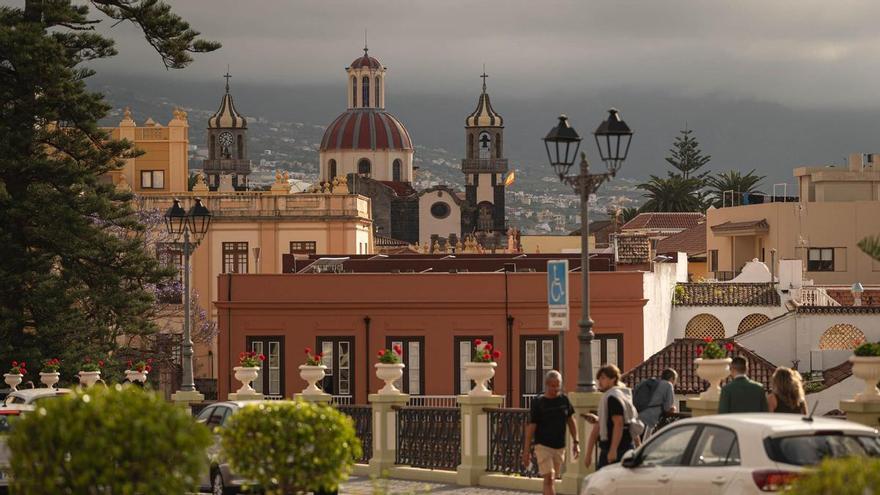
Key landmarks include the Church of Nuestra Señora de la Concepción, famous for its Baroque dome and ten 300-year-old stone gargoyles. You can also spot historical details like the four wooden corner guards on buildings, which were once used to protect facades from passing cargo carts.
Other highlights include the Casa de los Balcones, known for its intricate traditional woodwork, and the Victoria Gardens, which feature a marble Masonic mausoleum. These sites are brought to life by local traditions, most notably the famous flower and volcanic sand carpets created for Corpus Christi. From its 17th-century town square to its ancient irrigation channels, La Orotava is a place where every corner tells the story of a society shaped by its unique landscape.