
La Orotava Cemetery Reveals 19th-Century Canary Islands’ Social and Religious Turmoil
The La Orotava cemetery in the Canary Islands serves as a historical archive of 19th-century social, religious, and penal tensions, documenting everything from the selective excommunication of Freemasons to the grim realities of slavery and capital punishment.
Opened in 1823 after King Charles III banned burials inside churches, the La Orotava cemetery serves as a historical record of the social, political, and religious tensions that shaped the 19th-century Canary Islands. Recent research by the Genealogical and Heraldic Society of the Canary Islands highlights that this site was more than just a final resting place; it was a stage for ideological battles and a reflection of the era’s harsh penal system and the final days of slavery.
The cemetery’s history is marked by institutional inconsistency. For 26 years, the Diocese of San Cristóbal de La Laguna placed the cemetery under interdict because it held the remains of Freemasons, including José Nicolás Hernández and the 8th Marquis of Quinta Roja. However, parish records show an administrative contradiction: other Freemasons were buried with full religious rites without any interference from church leaders. This suggests the church applied its rules selectively, and the ban was not officially lifted until 1904.
The graveyard also documents the slow end of slavery. The 1826 death of a woman named Juana, who spent her life in servitude, marks the end of that era. Her story, along with those of others like Rosa, José Valentín, and Patricio Antonio del Sacramento—who were buried in churches before the cemetery opened—highlights the rigid laws of the time, where a child’s legal status was determined by their mother, effectively trapping generations in slavery.
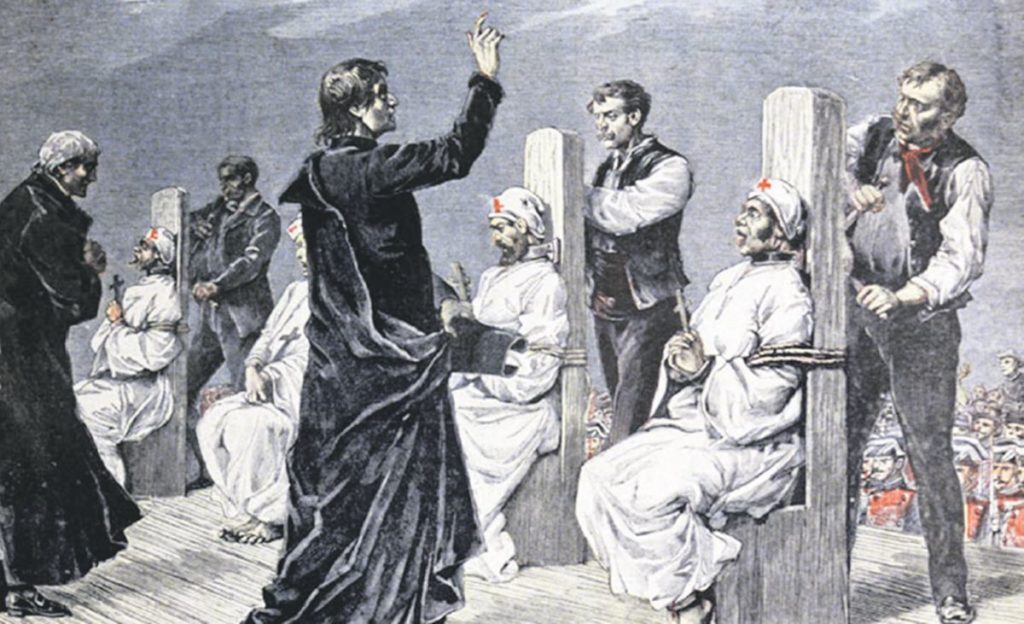
Finally, the cemetery reflects a punitive system that often ignored the humanitarian reforms of the day. The case of Demetrio Villar, who was executed and quartered in 1833, is particularly notable; by that time, regulations had already replaced the gallows with the garrote. His quartering was used as a public deterrent, even though he had received religious sacraments. His story, alongside those of other executed individuals like Juan Ramos, Juan García Cachaplu, Agustín Acosta, and María Martín—who was executed by firing squad in 1841—offers a grim look at the severity of 19th-century justice and the complicated relationship between civil law and the church.