
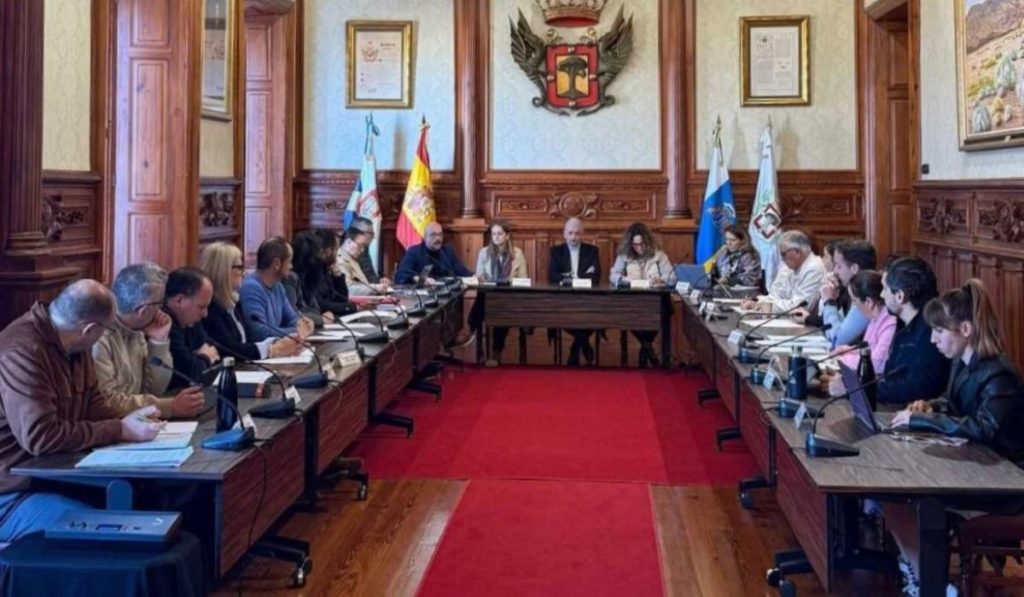
La Orotava Approves €68 Million Budget Amid Political Friction
La Orotava City Council has approved an eight-million-euro budget increase to reach 68 million euros, sparking political tension as the governing Coalición Canaria relied on PP support to bypass opposition criticism regarding project priorities and transparency.
The La Orotava City Council has approved a budget amendment that brings municipal spending to 68 million euros, a move that has exposed deep political divisions within the local government. The governing Coalición Canaria (CC) party secured the necessary votes for the eight-million-euro increase only with the help of the Partido Popular (PP), highlighting a lack of consensus with other political groups.
Mayor Francisco Linares and Treasury head Felipe David Benítez argue that the extra funding is essential for boosting social welfare, housing, sports, and culture. Key projects include renovating the Teobaldo Power Auditorium, updating the Atlante cultural space, and providing support for local businesses and the primary sector.
However, the PP’s support came with a warning. Spokesperson Ildefonso González made it clear that his party expects strict oversight of how the money is spent. He expressed skepticism about the government’s ability to deliver, urging officials to ensure these funds lead to real results rather than getting lost in administrative delays.
Meanwhile, the opposition—the PSOE and Asamblea por La Orotava—criticized the government for a lack of dialogue and public participation. PSOE councilwoman María Jesús Alonso questioned the effectiveness of the spending, arguing that the government prioritizes aesthetics over urgent structural needs, such as the long-delayed urban planning in San Agustín’s Zone 7. Manolo Pacheco of Asamblea por La Orotava added that the budget amendment lacks the necessary technical studies regarding its impact on housing and mobility.
During the debate, the governing team rejected several opposition proposals, including plans for a neighborhood council, electric vehicle charging stations, a new sports pavilion, and a minibus network. The government dismissed these ideas by claiming they are already part of their existing plans or are already in development, effectively shutting out input from minority parties.