
La Laguna Marks Holy Week with Traditional Processions and Sevillian-Style Displays
San Cristóbal de La Laguna celebrated Holy Week with traditional processions, including the notable "Encuentro" in La Cuesta and various religious displays across the city's historic center.
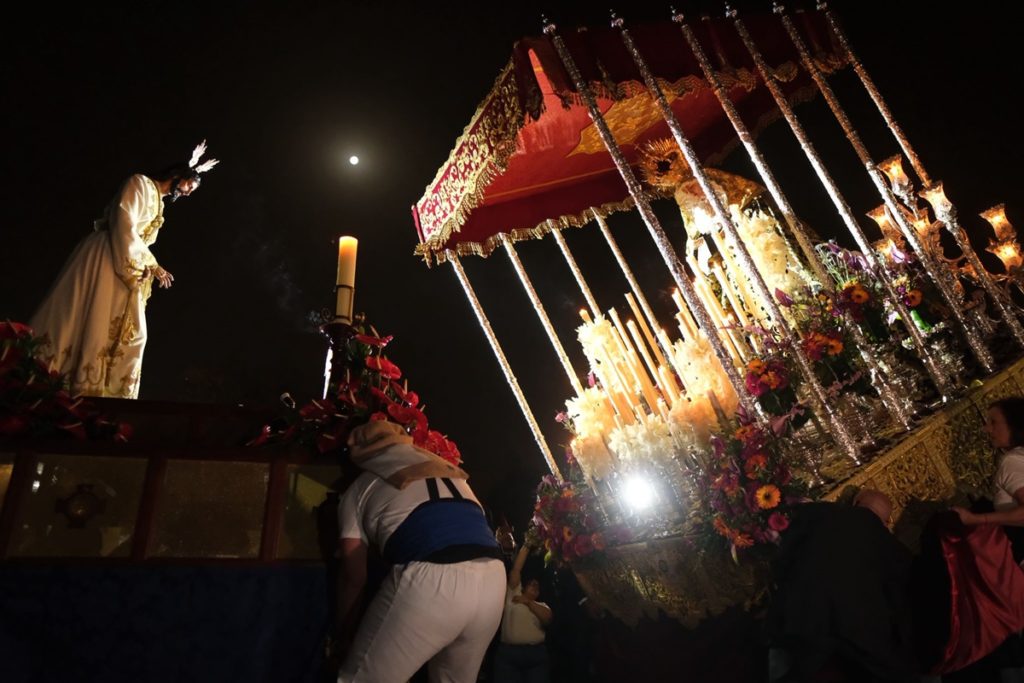
Holy Week in San Cristóbal de La Laguna saw one of its most distinct displays of faith this past Tuesday, characterized by an aesthetic style deeply inspired by Sevillian tradition. The day centered on the "Encuentro" (Encounter) procession in the La Cuesta neighborhood, an event that has grown from a religious observance into a major social milestone for the Tenerife municipality.
The highlight of the celebration is the challenging exit of the statues of Nuestro Padre Jesús Cautivo ante Caifás and María Santísima de los Dolores. Because of the narrow doorways at the La Candelaria and La Paz y la Unión parishes, the costaleros (pall-bearers) must perform a difficult maneuver, carrying the heavy thrones at ground level before lifting them once they are outside. This tradition, which culminates in the Plaza de La Candelaria, began in 1993 thanks to Jacky Romero, who was instrumental in sourcing the statues from Andalusia and establishing the brotherhoods that maintain the practice today.
While the La Cuesta procession drew significant attention, religious activity also filled the city's historic center. The Cathedral hosted the parade of the Señor atado a la Columna, the Santísimo Cristo de los Remedios, and Nuestra Señora de las Angustias. At the same time, the La Concepción parish saw the processions of the Lágrimas de San Pedro and Nuestra Señora de los Dolores.
These simultaneous events highlight the strength of La Laguna’s brotherhoods, which do more than preserve artistic heritage; they provide a vital social structure that keeps the community connected. The blend of local customs and outside influences reflects the evolution of Holy Week in the Canary Islands, where cultural identity is shaped by a variety of devotional traditions. The large crowds in attendance confirm that these processions remain a cornerstone of public life in the municipality during Easter.