
La Juncia: Native Recalls Vibrant Past Amid Hamlet's Depopulation
La Juncia, a remote hamlet in Los Silos, grapples with rural exodus, now home to only five residents, as native Nieves González Acosta reflects on its once-vibrant community and enduring challenges.
La Juncia is a hamlet that often surprises visitors. Tucked away among the cliffs of Los Silos, it first appears incredibly isolated and quiet. You might only hear silence, surrounded by still nature. But then, playful dogs might appear, full of joy, bringing the place to life. Suddenly, La Juncia reveals its vibrant colours, and you can sense a happy, peaceful past connected to nature.
However, the saying "the good old days" seems to perfectly describe La Juncia. No one born here still lives in the hamlet. Only five people call it home now: a foreign couple and their children. This number can be confusing, as some might say no one lives in La Juncia anymore, while others count these five. Being a native of La Juncia seems to give residents a special status.
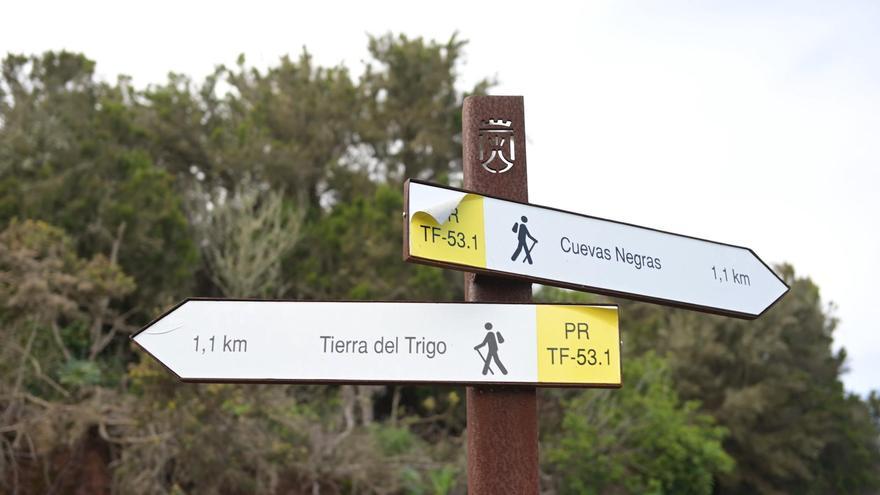
Nieves González Acosta was born in La Juncia. Her whole family is from here, except for her mother's side, who came from Tierra del Trigo. That's another village in Los Silos, located precariously among the La Culata cliffs and known for water leaks. Nieves still visits La Juncia daily to work, just as she did when it was her home until 40 years ago. She was born, lived, and even got married there. But after her children arrived, she decided to move to the main town. "We wanted a different life for them," she explains. "To get to school, we had to walk along a tiny path next to a ravine, no matter the weather – wind or rain."
Nieves, a native of La Juncia, prefers not to be photographed or filmed. She wears gloves from working in her potato and corn fields – the only crops they grow because "bugs eat the fruit." A hat shades her head, and when the sun catches her eyes, she squints, lost in thought. "La Juncia is sad," she remarks, pausing thoughtfully before adding, "It's not like it used to be." She then points out each house, recalling who lived where, noting that her entire family once called this close-knit place home. She estimates that up to 30 people lived here during the last century, and most of the properties are still in good condition.
While Nieves remembers a time when the community thrived, La Juncia has suffered from a rural exodus, slowly emptying out. Yet, despite its apparent emptiness, people are always coming and going, especially on weekends. Nieves and her husband visit daily. "Some people from the South come every afternoon," she says, "and a boy from Tierra del Trigo brings his dogs to look after the vegetable gardens." The deep roots of the community remain strong. "There was such beautiful unity here," González Acosta recalls. "We were always together. If someone slaughtered a pig, we all shared the meal... We were truly united." Beyond these strong bonds, people often return to places where they found happiness.
Nieves vividly remembers an example of this solidarity: when drinking water was installed in the houses. The pipes were left at the top of the ridge, and all the neighbours worked together, carrying each section down to the hamlet, piece by piece. Her father organized the distribution and acted as the community's link to the Los Silos Town Council, led by Mayor Gaspar Sierra at the time.
Nieves claims she's not a good talker, but the conversation flows easily. With sharp memory and dedication, she explains La Juncia's connection to El Tanque. Geographically, the hamlet is closer to El Tanque than to Los Silos, its own municipality. In the past, people would use old routes – which she hesitates to call proper trails – that no longer exist, to reach El Tanque for shopping. "There was never a shop here," she remembers. "We went to Tierra del Trigo or El Tanque. For fabrics or shoes, we had to go all the way to Icod de los Vinos."
For larger purchases, donkeys, mares, or horses would carry the goods. Someone would travel to El Tanque, take a bus to Icod de los Vinos (also known as Ciudad del Drago), and do the shopping. The journey to Icod alone took about an hour. Then, they would bring an animal to the bus stop in El Tanque to meet the shopper and carry the items back. "We were isolated here for a long time," Nieves states. She estimates the current, easily passable road was built about 50 years ago. She admits that "living here now wouldn't be as difficult as before." Still, the remoteness of places like La Juncia often brings a quietness that can feel unsettling at times.
Animals and farming were the mainstays of La Juncia's economy, located on the mid-slopes of Los Silos. Nieves González explains that while they didn't practice traditional herding, "they kept goats and cows in corrals. There were many vegetable gardens planted, and letting animals roam free would have damaged the harvest." Seeing chickens in her yard, she remembers her parents also had them, and "pigs in the pens," she laughs. Today, besides the free-roaming birds, she has cats and dogs that bark at any visitor.
The dogs' barking helps deter potential intruders. González Acosta recalls a troubling incident in 2024 when some houses next to her property were occupied. Such risks are higher in isolated settlements like La Juncia due to their solitude. It's hard to imagine the intense police operation, involving dozens of officers, that Nieves describes taking place in such a peaceful setting.
In the family yard, a swing hangs discreetly from a large orange tree. Nieves has four grandchildren who enjoy visiting. "They come when they can," she says with a laugh, "but if they're not in school, they have soccer or something else." She sees their childhood as very different from her own. Although she attended school in Tierra del Trigo, she also had to help her parents with farm work. "Fetch water, get baskets for gathering, sacks... whatever our parents told us, we had to do," she explains. The children and grandchildren of this woman from Los Silos are truly lucky to have a place like La Juncia where they can play and experience nature – it's a real privilege.