
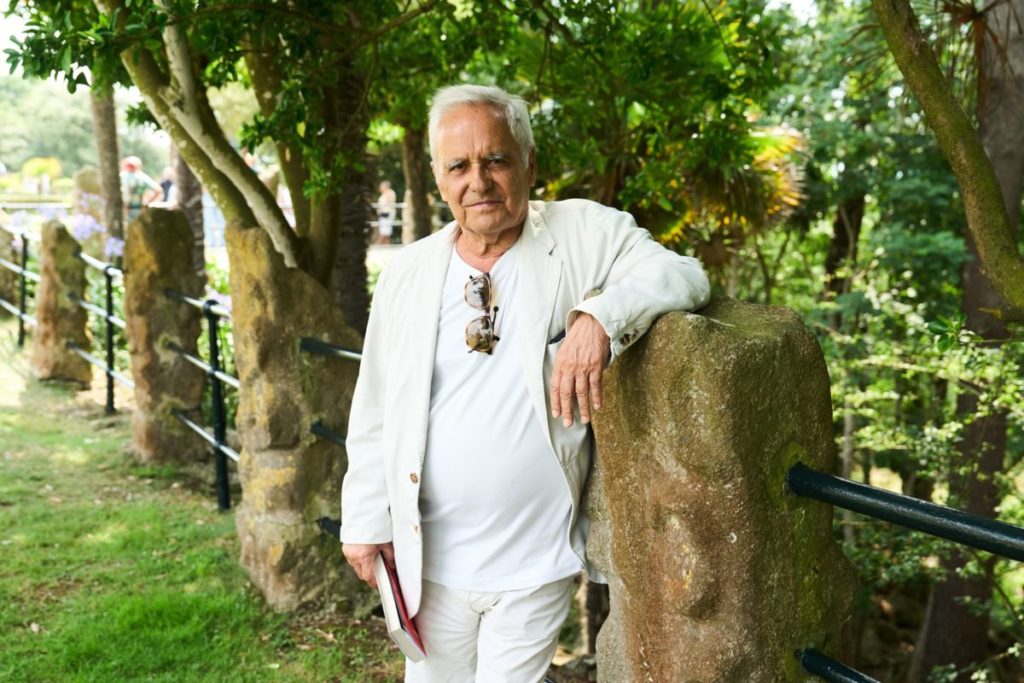
Juan Cruz Reflects on the Art of Listening in New Book 'Inolvidables'
In his new book Inolvidables, veteran journalist Juan Cruz Ruiz reflects on a lifelong career of interviewing influential figures, advocating for a humanistic approach to journalism rooted in deep listening and genuine inquiry.
Journalism is, at its core, a constant process of inquiry. In his new book, Inolvidables. La pasión de entrevistar (Galaxia Gutenberg, 2026), Tenerife-born journalist Juan Cruz Ruiz demonstrates this through a career defined by consistency and method. The book collects his interviews with some of the most influential figures in literature and thought, serving not just as an archive of great minds, but as a window into the mind of the interviewer himself.
Featuring icons like Gabriel García Márquez, Susan Sontag, Jorge Amado, and María Zambrano, the book is more than a simple collection of conversations; it is a masterclass in curiosity. For Cruz, an interview is not a box-ticking exercise. While he prepares thoroughly, he believes the best results come from intuition and the ability to truly listen. He describes his approach as "letting yourself feel," prioritizing a genuine human connection over a rigid list of questions to uncover truths that even the interviewees hadn't realized themselves.
The book also offers a critique of modern journalism. Cruz worries that reporters today often place themselves at the center of the story, prioritizing their own opinions over their role as a mediator. In contrast, he champions the question as a vital tool for knowledge, staying true to the humanistic vision of the craft that drew him to journalism in the first place, despite his family’s early concerns about the instability of the profession.
On a personal level, the book captures deeply emotional moments, such as his final interview with Jorge Semprún, where the intellectual’s vulnerability left a lasting impression. Cruz also addresses a recurring failure in journalism: the tendency to overlook the most disadvantaged members of society. He notes that the poor are often spoken for rather than spoken to, and he expresses a desire to use his work to give a voice to those who are frequently ignored.
Ultimately, Inolvidables is a record of a lifelong education. It shows that a journalist’s job is not just to record statements, but to engage in a dialogue that seeks the truth of the other person. The book stands as a powerful reflection on the ethics of listening and the responsibility that comes with trying to explain the world to others.