
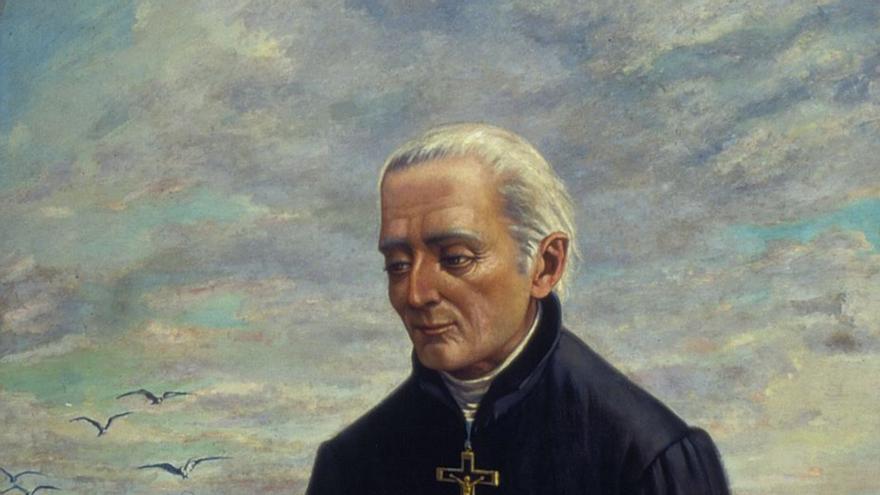
Jesuit Missionary José de Anchieta: A Legacy of Faith, Language, and Indigenous Advocacy
José de Anchieta, a 16th-century missionary born in the Canary Islands, is remembered for his significant contributions to Christianity in Brazil, his advocacy for indigenous peoples, and his lasting cultural and religious legacy.
José de Anchieta was born in San Cristóbal de La Laguna in 1534. His family had Basque-Portuguese roots. When he was 14, he moved to Portugal to study at the University of Coimbra. There, he stood out for his intelligence, his humanist outlook, and his love for literature.
At the young age of 18, he joined the Society of Jesus. Two years later, he traveled to Brazil as a missionary. This marked the beginning of a significant chapter in the history of spreading Christianity in America.
Anchieta arrived in Piratininga in 1533. He established a school to educate indigenous children and wrote a beginner's guide in the Tupi language. Later, he helped found São Paulo and contributed to building the first hospital and school in Rio de Janeiro.
Besides being a missionary, he was also a poet, playwright, linguist, and a strong advocate for indigenous peoples. He opposed the mistreatment they faced from Portuguese colonizers.
His talent for writing led him to create poems and plays in Latin, Portuguese, Spanish, and Tupi. He also compiled the first grammar of the Tupi language, which was published in Coimbra in 1595.
The missionary passed away on June 9, 1597, in the Brazilian town that now bears his name, Anchieta. Thousands of indigenous people attended his funeral, showing him great respect.
In 2014, Pope Francis canonized him. Today, he is recognized as a co-patron saint of Brazil, alongside Our Lady of the Conception of Aparecida.
Every year on June 9, Brazil celebrates National Anchieta Day to honor his life and his work as an apostle in Brazil.
In his hometown, La Laguna, his influence is still strongly felt. His family home has been preserved as a museum, and his name is found in schools, foundations, organizations, and on streets.
A well-known symbol is the Padre Anchieta statue, a five-meter-tall bronze figure depicting him as a pilgrim. It is now located in the plaza of the Faculty of Biology at the University of La Laguna.
In Santa Cruz de Tenerife, he is also remembered with a parish church and a street named in his honor, both reflecting his lasting legacy.
More than five centuries later, José de Anchieta continues to be an inspiration to the people of Tenerife. His impact in two of the world's significant cities makes this missionary from La Laguna one of the most influential figures from the Canary Islands in global history.