
Inguinal Hernias: Common in Men, Treatable with Surgery
Inguinal hernias, common in men due to groin weakness, are typically resolved with surgery, either open or laparoscopic, tailored to the individual patient for optimal recovery and reduced recurrence.
Inguinal hernias, caused by general wear and tear in the abdominal area, are very common. Statistics show that one in four men will experience an inguinal hernia in their lifetime, which is 27% of the male population. While prompt and proper treatment can resolve them easily, ignoring a hernia can lead to health issues and a longer recovery.
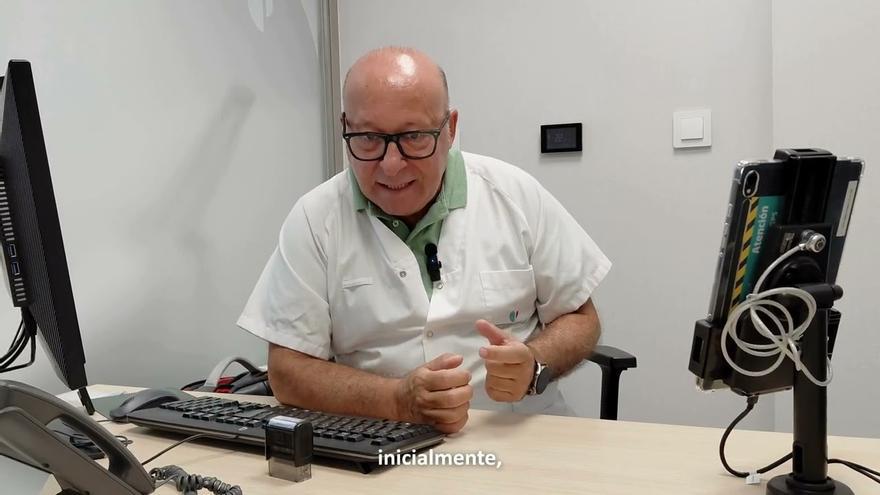
Men are more prone to inguinal hernias because, as Dr. Carlos Trujillo, a specialist at Hospital Quirónsalud Tenerife, explains, "the groin area is naturally a weaker spot" and is subject to strain, particularly from the passage of structures like the spermatic cord.
Symptoms often begin as discomfort in the groin during certain movements. Over time, a painless bulge may appear in the groin area, especially when you cough, strain, or exercise, or during any activity that increases pressure inside the abdomen.
Other factors contributing to this weakness include aging, being overweight, and repetitive physical strain. Dr. Trujillo notes that "more than one in four men will develop a hernia at some point." Hernias aren't caused by a single issue but a combination of factors, such as genetics, increased abdominal pressure from chronic coughing, constipation, or heavy lifting, smoking, or loss of muscle tone with age. While less common in women, inguinal hernias can occur, sometimes linked to multiple pregnancies or previous surgeries.
Most diagnosed hernias require surgery because they "tend to grow and can develop complications." Therefore, addressing them early leads to the best outcomes and quickest recovery. "Only in very elderly patients or those with significant surgical risks might we consider watchful waiting." A serious complication of inguinal hernias is "intestinal incarceration or strangulation, which is a medical emergency."
Inguinal hernias are typically diagnosed through a physical exam. However, for small hernias or when a patient is overweight, a dynamic ultrasound can be "very helpful." Dr. Trujillo adds that CT scans or MRIs can also be useful for these patients, though these are usually reserved for complex or recurring cases.
When planning surgery for an inguinal hernia, doctors consider factors like the patient's age, the type of hernia, whether it affects one or both sides, any prior surgeries, and the patient's overall health. "The surgeon's experience also matters," as Dr. Trujillo points out, "there isn't a one-size-fits-all technique; the choice must be tailored to the individual."
The best surgical approach depends on the hernia type and the patient. "Open surgery remains an excellent option for initial, single-sided hernias, especially in older patients or when general anesthesia isn't suitable," as it "can be done under local or regional anesthesia and provides very reliable results," according to the specialist.
Laparoscopic surgery is preferred for bilateral or recurring hernias. Dr. Trujillo explains that it "allows both sides to be treated through small incisions, resulting in less pain and a faster recovery." This minimally invasive technique is "very beneficial for young, active patients who want to return to work or sports quickly."
Inguinal hernias in women have specific considerations, with femoral hernias being more common and requiring a different surgical approach. "For younger patients, we focus on functional and aesthetic recovery, while for older patients, the goal is to minimize anesthetic risks and the chance of recurrence."
As the doctor from Quirónsalud explains, "there's no single perfect technique: the best surgery is the one that fits the patient, not the other way around."
Dr. Carlos Trujillo, a specialist at Hospital Quirónsalud Tenerife, highlights that inguinal hernias are usually treated with surgery, a common and straightforward procedure that can be performed either openly or laparoscopically, depending on the specific case and the patient.
The difference between open and laparoscopic surgery lies in the approach, though both yield good results. Open inguinal hernia surgery involves an incision in the groin and the use of a superficial mesh, and is "safe and effective," as noted by the specialist.
Laparoscopic surgery, conversely, is performed "through small incisions in the abdomen and allows for the repair of both sides in a single procedure, with less pain and a quicker recovery." A key benefit of laparoscopy for inguinal hernias is the "early return to normal activities."
Meshes are crucial for the safety and effectiveness of inguinal hernia surgery, as they "reinforce the abdominal wall and significantly reduce the chances of the hernia returning." Dr. Trujillo explains that modern meshes are "lightweight, biocompatible, and integrate well with tissues."
He recalls that "years ago, there were issues with rejection or chronic pain," but these problems have largely been overcome, and "such cases are now exceptional thanks to new materials and atraumatic fixation techniques."
Recovery after surgery for inguinal hernias is typically rapid. "In most cases, patients can walk a few hours after surgery" with "mild pain manageable with common painkillers." Patients can usually resume normal activities within a week and return to sports in two to three weeks.
Full recovery of daily life usually takes a few weeks. Depending on the type of work, individuals may return to their jobs in as little as a few days or up to two weeks. "For office jobs, a return to work can be expected in 3-5 days. If the job is physically demanding, we advise waiting between 2 and 4 weeks," while "athletes typically resume their activities gradually, around 3 weeks," according to the doctor.