
How Michael Jackson’s 1993 Tenerife Concert Transformed the Canary Islands’ Events Industry
Michael Jackson’s 1993 Dangerous World Tour stop in Tenerife transformed the Canary Islands' events industry by proving the region could successfully host large-scale international productions.
Michael Jackson’s visit to Tenerife on September 26, 1993, was more than just a concert; it was a turning point that helped professionalize the events industry in the Canary Islands. As the final stop of his Dangerous World Tour—moved to Tenerife after a cancellation in Seville—the event proved that the islands could successfully host large-scale international tours.
The technical requirements were immense. Two Antonov aircraft were needed to transport the equipment, setting a new standard for how the islands managed major cultural infrastructure. Building a 77-by-30-meter stage at the Port of Santa Cruz and temporary seating for 55,000 people showed that the region was capable of handling global productions. With its advanced lighting, sound, and laser technology, the concert brought a level of production to the local public that had previously been reserved for major mainland cities.
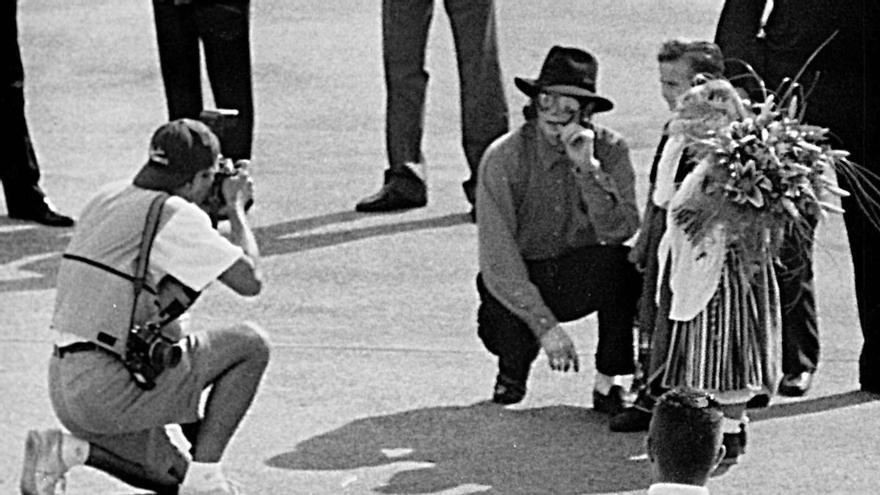
Beyond the media frenzy, Jackson’s stay—which included time at the Hotel Botánico and a visit to Loro Parque—had a massive social impact. The excitement surrounding his visit is still remembered three decades later as the moment the Canary Islands officially joined the international live music circuit. Today, the archipelago’s status as a regular host for world-class festivals and tours is largely a legacy of that 1993 effort, which successfully placed Tenerife at the heart of the European cultural scene.