
Granadilla Port Expansion Stalls After Tender Fails to Attract Bids
The Port of Granadilla faces further delays as a failed tender for its completion forces the Port Authority to increase the project budget to 50 million euros in a bid to finally establish the facility as a key logistics hub.
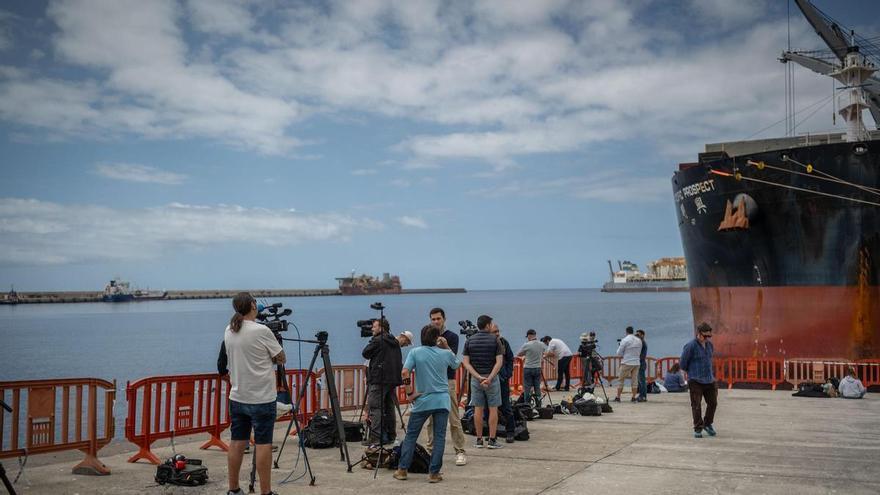
The recent health emergency involving the cruise ship Hondius at the Port of Granadilla has highlighted a troubling reality: despite its strategic importance, the facility is stuck in administrative limbo. The industrial dock, which recently served as the center of an international World Health Organization operation, has hit another roadblock after a tender to finish its construction received no bids.
This failure underscores the gap between the project’s grand ambitions—which date back over 50 years—and its current state. Although formally inaugurated in 2018, the port remains unfinished. With no companies bidding on the 39.3-million-euro contract announced last March, the Port Authority must now rethink its approach. Under the leadership of Pedro Suárez, the authority is revising the contract to increase the budget to 50 million euros, aiming to account for the rising costs of materials and global economic instability.
Completing the port is vital for it to reach full capacity. The remaining work involves finishing 543 meters of the main breakwater by installing eleven concrete caissons. This will allow for the creation of a 30-hectare esplanade, providing the space needed for large-scale logistics and industrial operations. So far, over 200 million euros have been invested in the site, a figure expected to reach 300 million once the work is finished.
The Port of Granadilla has faced significant political and social controversy since its inception, with decades of debate over its environmental impact on local seagrass. As a result, the port has operated at a minimal level for years. In 2026, it has hosted only a dozen ships, mostly for wind farm logistics, ship repairs, and fuel supply, alongside occasional emergency calls.
Despite these hurdles, the Port Authority remains committed to a plan to fully establish the dock within the next two to three years. The current strategy focuses on attracting high-value businesses, such as biogas and liquefied natural gas plants, as well as shipyards. Officials also hope that finishing the construction will improve fuel logistics for the island, specifically by supplying the Tenerife South airport and reducing reliance on current discharge buoys. With 90 million euros in further investment planned through 2029, the port aims to move past its history of underutilization and public opposition to become a key logistics hub for the Canary Islands.