
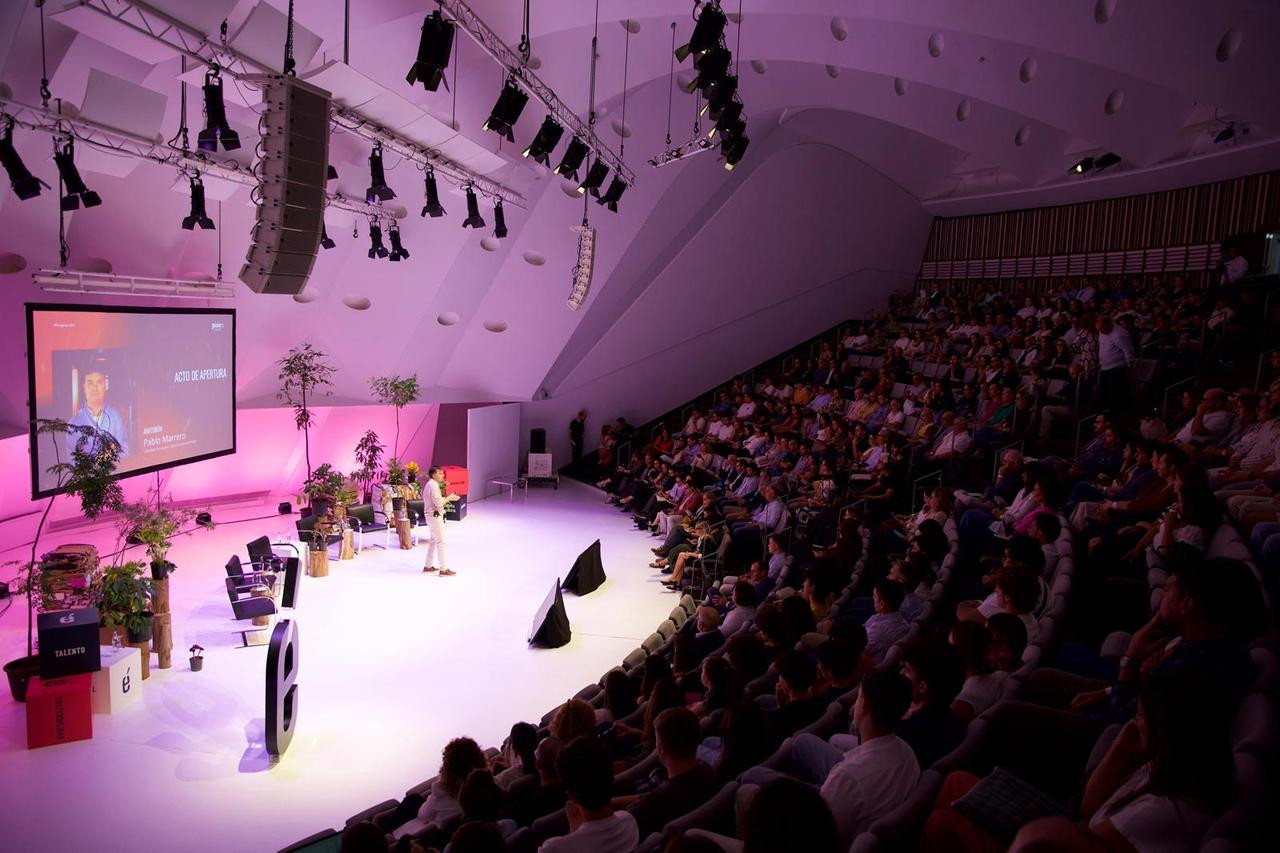
Géiser 2025: Islands Urged to Lead Change Through Action
The 10th Géiser Forum in Tenerife advocated for a "philosophy of action," uniting leaders to transform ideas into practical change across sustainability, AI, and conscious leadership, urging the Canary Islands to lead future development.
"The islands shouldn't just survive change; they should lead it," declared Pablo Marrero at Géiser 2025, an event focused on turning inspiration into collective action.
"Don't wait for everything to be perfect – learn by doing," advised Yurena Escobar, the forum's patron, as Géiser celebrated ten years of promoting conscious leadership from the Canary Islands.
"Let's be good ancestors," urged José Luis Gallego, calling for a sustainable approach that looks to the future.
Tenerife, November 7, 2025.
The tenth Géiser Forum, held this Friday at the Auditorio de Tenerife, marked a significant shift: moving from simply discussing ideas to actively putting them into practice. Under the theme "Philosophy of Action. New Challenges," over 400 people gathered for a day that brought together leadership, sustainability, and artificial intelligence. Their shared goal was clear: to transform concepts into real-world impact.
Organized by Biplaza, Géiser celebrated its tenth anniversary, solidifying its role as a network for positive change. It connects people dedicated to building a more ethical, sustainable, and humane future. "Géiser isn't just an event; it's a community built on innovation and a desire to improve things," said Pablo Marrero, co-founder of the forum and managing partner of Biplaza. He emphasized that "the islands should not only survive change, but lead it."
This call to action was echoed by Yurena Escobar, the event's patron. She encouraged the audience to accept imperfection and act with integrity: "Don't wait for everything to be perfect; learn by doing. What you don't change, you choose." Her message set the tone for a day that explored collective responsibility, technological innovation, and environmental commitment.
Philosopher Pilar Llácer reminded attendees that in a world transformed by technology, future leaders must prioritize people and values. "Technology has evolved from being a tool to becoming a sixth sense. Humans must focus on what makes us unique: telling stories that stir emotions," she explained. Llácer highlighted "eight human skills" crucial for organizations: curiosity, friendship, creativity, willpower, critical thinking, concept, empathy, and – with a touch of humor – "reggaeton luck."
This human-centered view also extended to sustainability. Environmental communicator José Luis Gallego deeply moved the audience with an honest reflection for younger generations: "The most a generation can hope for is to be good ancestors, and mine isn't doing well. But it's not about blaming; it's about forming partnerships." His speech connected with the idea of "blue innovation," which sees the sea and nature as partners in development. "You cannot choose not to be sustainable. Sustainability doesn't save the planet; it saves humanity," Manu Calvo pointed out. Other speakers highlighted the Canary Islands' potential as a living laboratory to demonstrate how progress and environmental protection can coexist.
Sustainability, technology, and leadership were thus presented as three facets of the same urgent ethical need: to act with awareness and purpose. Innovation expert David Alayón cautioned about the limitations of artificial intelligence: "AI isn't truly intelligent; it simulates understanding us, but it doesn't actually understand us." He stressed that critical thinking must accompany its use. María Guerrero added that today's biggest challenges are human, not technical: "For complex problems, there are no easy answers; you have to learn by doing, innovate, and accept mistakes."
The discussion on technology also included critical perspectives on power and ethics. Scientist Ramón López de Mántaras warned of "technofascism" and advocated for a "digital diet" to make room for critical thought. Conchita Díaz called for more women in AI to reduce biases. Noelia González summarized the general agreement: "AI should help us think better, not think less."
Beyond just ideas, Géiser 2025 was an exercise in shared action. From business leaders to young participants, the day showed that change starts with everyday actions. A student bravely shared her story of creating a sustainability group in her high school, embodying the forum's spirit: even small actions are the first step to changing the world.
The event concluded by reaffirming its commitment to "Crecer con raíces" (Growing with Roots), an educational initiative that promotes sustainable learning environments in Canary Islands schools. The collective energy transformed Géiser into a dynamic community, encouraging everyone to stop being mere observers of change and to recognize their own role in it. This edition truly turned the philosophy of action into a real commitment to the present and the future.
Organized by Biplaza, Foro Géiser received sponsorship from Canary Islands Tourism, Government of the Canary Islands, Flecher.co, Mínima, Cronotropo, Zaguán, Economía Tic, Mayi Juárez, and La Laguna City Council. Collaborators included Plaza Grande Eventos, La Impopular, LCB Studio, SW Plant Studio, Asinca, Excelencia Turística de Canarias, EF Canarias, Kaudal, Martínez Cano, Zona Verde, and AJE Canarias.