
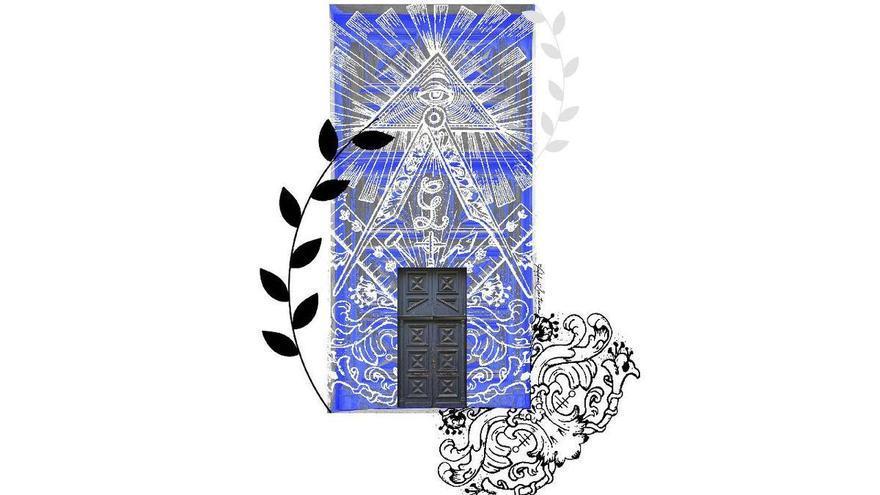
Freemasonry: A History of Secrecy, Persecution, and Enduring Relevance
Freemasonry, a centuries-old global movement rooted in medieval guilds and defined by its secrecy, has historically faced persecution and misunderstanding, yet continues to advocate for human progress and values like equality and tolerance despite internal conflicts and its troubled relationship with the Catholic Church.
What exactly is Freemasonry? While it might seem like an obvious question, the bad reputation it has gained throughout history has created such a dense cloud around it that it's hard to see what it truly is. Has it been an organization of free-thinkers leading the way in defending progressive values? A secret group of conspirators secretly controlling power? Or a cult whose members attack the Church and governments?
"The first answer to these questions is that we shouldn't talk about 'Freemasonry' as one single thing, but rather 'Freemasonries' in the plural," explains Pedro Álvarez Lázaro, a Jesuit and Professor of History at the Pontifical University of Comillas, and one of Spain's leading researchers on the topic. "It's a movement with centuries of history that has changed a lot over time and in different places."
Its roots go back to the guilds of builders who constructed cathedrals and castles between the 12th and 16th centuries. These groups later became modern Freemasonry when the old lodges started accepting members from other professions. In all cases, Freemasonry was only for those who had been initiated, following strict rules that are still in place today.
It all started in England, then spread to France, Germany, the United States, other parts of America, Asia, and Africa, creating a worldwide network dedicated to human progress. Why has it been so often rejected throughout history? According to Pedro Álvarez, the answer is simple: "Its secrecy."
Freemasonry has its own rituals, symbols, and language, governed by strict, formal rules. This private world, closed off to outsiders, has both protected it and made it vulnerable, leading to distrust and attacks from outside.
In Spain, the persecution of Freemasonry grew stronger from 1936, lasting through the entire Franco regime. Franco's intense dislike for Masons is clear from many articles he wrote under the name Jakim Boor, where he accused them of promoting liberalism and democracy, calling them "an instrument against Spain."
Franco created the Tribunal for the Repression of Freemasonry and Communism, which operated between 1940 and 1963. It opened 27,085 cases, including 300 against women. Even in his last speech in 1975, he continued to obsess over the "Judeo-Masonic conspiracy."
The Tribunal of the Inquisition also persecuted Masons, who were often called philosophers, libertines, or materialists. In Tenerife, the first inquisitorial trial against a Mason, the Irish merchant Alejandro French, took place between 1739 and 1742. This was a crucial case for understanding how people joined Freemasonry at the time.
Another challenging time was after the Disaster of '98, when Freemasons were held responsible. During that period, the only Masonic Temple still standing today was built in Santa Cruz de Tenerife, serving as a symbol of their resistance and public presence.
Freemasonry is seen as a school of thought or training, based on values of equality, tolerance, and brotherhood. However, it has had to deal with its own internal conflicts, such as the exclusion of women or its troubled relationship with the Catholic Church.
In 1713, Pope Clement XII banned Catholics from joining Freemasonry with his official decree, In Eminenti, which further spread negative views and conspiracy theories.
Female Masons showed an early form of feminism, championing equal rights, non-religious education, and critical thought. Some lodges included both men and women, others were 'adoption lodges' (for women connected to Masons), while some still excluded women entirely.
In the Canary Islands, Freemasonry was a significant movement. More than 1,500 Masons were members of lodges on the islands, including merchants, landowners, and public figures like Jerónimo Saavedra.
Masons have been accused of global conspiracies, gruesome rituals, and crimes they never committed. Currently, a law is being proposed to clear the names of those convicted under Franco and restore their honor and dignity.
Today, the question persists: what is the relevance of being a Mason now? For Álvarez Lázaro, as long as human rights are violated, Freemasonry will remain relevant. It seems, then, that Freemasonry isn't going anywhere soon.