
"Forest Cent" Fuel Tax Sparks Debate on Island Residents' Burden vs. Environmental Funding
A new one-cent per liter fuel tax, dubbed the "forest cent," has been implemented in Tenerife to fund protected natural areas, despite opposition arguing it unfairly burdens residents and contradicts budget allocations for environmental policies.
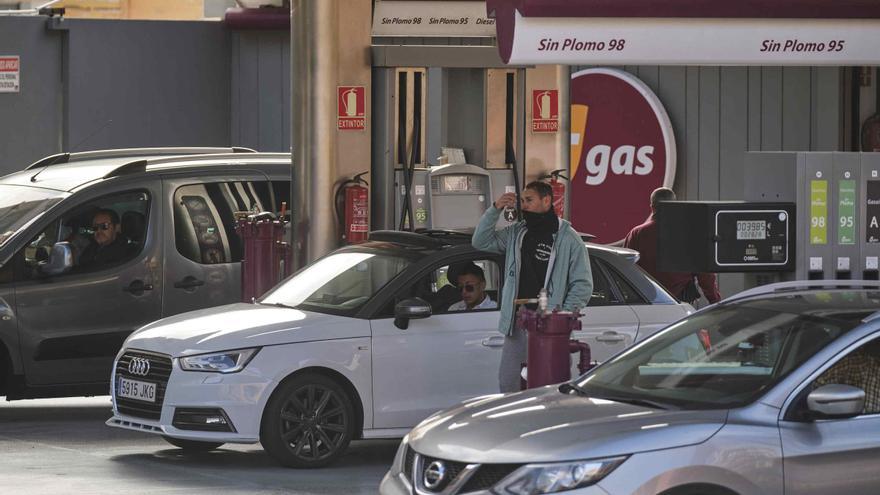
Drivers will pay an extra one euro cent per liter of fuel, a tax nicknamed the "forest cent." This means the average car owner will spend about six euros a year on this new charge. For most drivers, this works out to around two to three euros extra each month, depending on how much fuel their car holds. The local government, the Cabildo, expects to collect 4.8 million euros annually from this tax, with gas stations reporting the amounts quarterly.
The Cabildo's finance department believes the financial impact will be "small and fair for everyone." They think the extra charge is "very little" for people. The Cabildo had initially planned to charge two cents per liter, as allowed by regional law, which would have brought in ten million euros. However, they decided to lower it to one cent.
The official notice of this new tax, the "forest cent," was published in the Provincial Official Gazette. It was approved by the Cabildo's plenary session, with the ruling parties (CC and PP) voting in favor, and the opposition (PSOE and Mixed Group) voting against.
Gas stations will now pay three cents per liter of fuel each quarter. Two cents of this have been in place for over ten years and go towards road maintenance. The new one-cent charge will be specifically for managing protected natural areas.
With almost one car for every person on the island, collecting this annual amount is feasible. Importantly, professional transport services, like freight and public transport, are not affected because the tax only applies to fuel sold at public filling stations. People are estimated to fill their car tanks two to three times a month. If a car has a 50-liter tank, this means an extra 50 cents each time, adding up to about 24 euros per year for this specific tax. The finance department notes that this is an estimate, and the actual amount collected in 2026 will give a clearer picture.
The Cabildo's finance department prepared a report, which was also published, to explain why they rejected twelve objections that were made against the new tax law. During the official objection period, two objections came from the municipalities of Fasnia and La Victoria de Acentejo, nine from individuals, and one from a neighborhood association. Five other municipalities submitted their objections after the deadline: La Matanza de Acentejo, Santiago del Teide, Los Silos, Vilaflor, and El Tanque.
Those who objected, both individuals and groups, felt that the extra tax would "increase the cost of daily life for residents and unfairly burden those who are already struggling." They argued the measure was "unjust and regressive" and would also negatively impact the island's economy by "increasing the cost of goods and services." They also pointed out that there are "no practical and sufficient public transport alternatives that would allow people to do without their private vehicles."
Furthermore, they suggested that "fairer tax options exist," such as a tourist ecotax that would charge visitors instead of residents. They acknowledged the need for funds but stated that "the Cabildo has failed to spend significant amounts of money in the last two years," and therefore, it should "improve management and budget spending" rather than "imposing new taxes on island residents."
The finance department countered that "public transport has been free since 2023, and its use has increased by 39%." They reported that in some months of 2025, over 425,000 different people used public transport, which is 45% of the population. They also argued that "most trips made by private vehicle could be done on foot, by personal mobility devices, or by public transport." Data from the Tenerife Sustainable Mobility Plan shows that 50% of daily car trips are less than seven kilometers, and 75% are under ten kilometers.
Regarding the claim of financial necessity and unspent budget funds, the finance department stated that "committed expenses and funding for various projects (like EU funds and contributions from regional and local governments) are not being considered." They also mentioned that "100% of the treasury surplus for general expenses has been allocated to various budget policies." Additionally, they noted that "financial needs during the period have been met by taking on debt," which, along with "high spending rates (115% of computable expenses were spent in 2024)," supports their position.
The "forest cent" is also seen as a way to "ensure a steady income that cannot be used for other purposes." This guarantees "a fixed and consistent budget for forest management, regardless of other budget changes." They also stated that "a tourist ecotax, which would be managed by the regional government, would not replace the forest cent. It could be used for any government policy, potentially leaving forest conservation underfunded again." Having a fixed and guaranteed income "allows for the planning of larger, multi-year projects in phases, which improves strategic planning and makes public spending on forest conservation and management more effective."
The reasoning behind the tax also highlights that "forest management heavily depends on weather and climate conditions. Without a mechanism to set aside funds, forest financing faces structural problems." The "forest cent" "solves this by creating a stable source of funds that can be saved and used when actions can actually be carried out." In terms of fairness to current and future generations and different areas, "forest management protects shared resources like water, soil, biodiversity, and helps prevent fires." These benefits "are enjoyed by all residents, now and in the future."
Finally, they concluded that "without stable funding, the risks of fires or erosion, and the subsequent environmental cleanup after a major fire (like the one in 2023), end up costing society much more in economic, social, and environmental terms. The forest cent is therefore 'a preventive investment measure that avoids much greater future costs.'"
The PSOE party expressed its disagreement on social media. Its general secretary in Tenerife, Tamara Raya, called the "misnamed forest cent" a "new deception." She pointed to a "reduction" in the budget for the Natural Environment and the "rejection" of over ten million euros in European funds for the same purpose. The PSOE's attempts to block the proposal in previous Cabildo meetings align with the objections from individuals and municipalities. They voted against the measure because they "agreed with the reasons for rejecting" this "new indirect tax on the people of Tenerife."
However, according to their spokesperson, Aarón Afonso, they have encountered a "strange situation." He explained that "they justify the forest cent for environmental policies," yet in 2026, "with an extra 4.8 million euros from this tax, the budget for environmental and forest policies on the Island is being reduced by 2.45 million euros, dropping from 75.42 to 72.97." Afonso stressed that this is the "Cabildo's money for developing the Island's forest and environmental management (reforestation, firefighting, recreational areas, natural spaces, etc.)." This includes the budget for Teide National Park, which also sees a "significant reduction from 10.09 to 9.85 million euros." Afonso concluded by calling the situation "inconsistent and a mockery."