
First "Tenerife Day" Celebrates Island's Rich Identity
Tenerife marks its inaugural "Tenerife Day" on February 2nd, an initiative by the local government to celebrate the island's unique identity, history, traditions, and people.
Landscapes, traditions, and history define Tenerife. Today, the island is taking a moment to reflect on its identity and plan for the future, especially with a booming tourism industry and growing population.
February 2nd marks the first-ever Tenerife Day, an initiative by the local government (Cabildo) to honor those who have helped the island progress and to celebrate what it means to be from Tenerife. The main event will be held at the Adán Martín Auditorium at 9:00 PM, coinciding with the feast day of the Virgen de Candelaria, which has been an island holiday since 2005.
The Cabildo explained that this decision was made because "Tenerife wants its own day that represents what it is as an island, its shared history, its traditions, and, above all, its people."
Tonight's celebration, a tribute to history and traditions, encourages us to focus on Tenerife and its unique symbols. Some are shared across the Canary Islands, like the sound of the timple (a small guitar), Canarian wrestling, the shepherd's leap, gofio (a type of flour), patron saint festivals with their parades and outdoor dances, and spontaneous street parties. Others are specific to Tenerife, linked to its landscape, history, and social life, from Mount Teide to Anaga Rural Park, including various religious and festive icons.
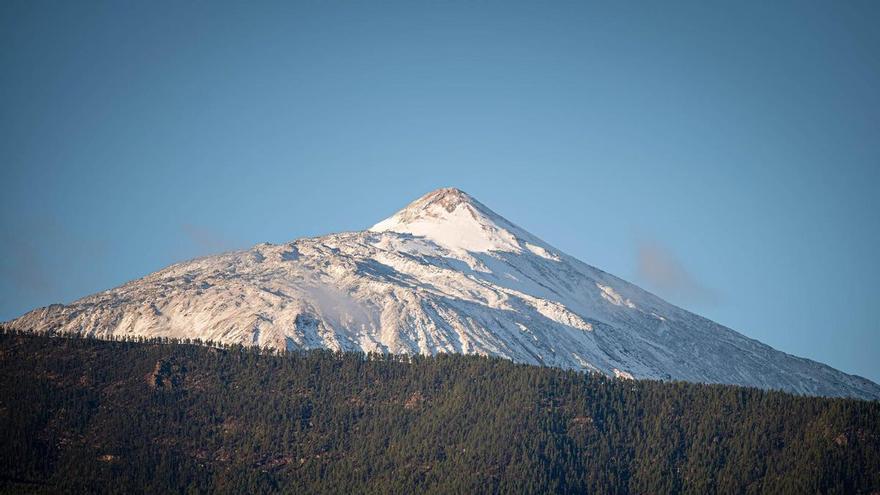
Mount Teide, standing at 3,718 meters, is arguably the island's most prominent symbol and its geographical heart. In recent years, there have been ongoing discussions about managing visitor numbers, and an eco-tax has recently been introduced. Teide's history spans millions of years of volcanic activity. It was a sacred mountain for the Guanches, the island's first inhabitants, who called it Guayota. Today, it remains a significant tourist and scientific landmark, recognized by UNESCO as a World Heritage Site in 2007.
The legacy of the Guanches, who saw Teide as sacred, is still evident in Tenerife's culture. Their social structure, customs, and connection to nature have influenced place names, archaeological sites, and collective memory. Their presence, particularly highlighted by statues in Candelaria, is an important part of the island's identity.
Just as the Guanches of Candelaria are a must-see, so is the Anaga Rural Park, known for its dense laurel forests, ravines, and cliffs. This area, spanning parts of Santa Cruz, La Laguna, and Tegueste, boasts exceptional environmental conditions and is a Biosphere Reserve. However, it currently faces challenges from uncontrolled tourism that has overwhelmed some areas. Despite this, it remains a place of undeniable beauty, with viewpoints offering stunning panoramic views of the sea, valleys, and small villages.
The ancient dragon tree in Icod de los Vinos is Tenerife's most famous tree, estimated to be between 800 and 1,000 years old, with a distinctive wide, twisted trunk. Beyond its botanical importance, it's a cultural and tourist icon, featured in exhibitions, island promotions, and local legends. It's a must-visit in the North. Other significant plants, like tabaibas and cardones, are common in arid landscapes, especially along the coast and in dry mid-altitude areas. Their ability to withstand drought and adapt to volcanic soils showcases the local flora's resilience, serving as a metaphor for survival in challenging conditions.
Speaking of the environment, the "sea of clouds" is a frequent and spectacular natural phenomenon that blankets Tenerife's valleys and mid-altitude areas, changing throughout the day. Caused by Atlantic humidity and the island's mountainous terrain, it transforms the landscape and keeps the mid-altitude forests moist.
Among Tenerife's geographical and symbolic elements, one often overlooked but deeply authentic aspect is the medianías. These are the intermediate areas between the coast and the peaks, where a traditional way of life endures, beautifully captured by Andrea Abreu in her novel Panza de burro. These slopes were settled for farming, and crops like potatoes and vineyards are still harvested there. But what truly defines the medianías is the simple, often challenging, life of its people and their strong connection to tradition – a glimpse into real life, far from tourist postcards or Instagram poses.
La Laguna is undoubtedly another key part of Tenerife's identity. This historic city was declared a UNESCO World Heritage Site in 1999. Its original urban plan, without walls and with straight streets, served as a blueprint for colonial cities in America. La Orotava, with its stately homes featuring carved wooden balconies and inner courtyards, shares some architectural similarities with La Laguna, echoing a bygone era.
In La Laguna, as an episcopal see, religion still holds some importance, though less than in the past. It remains a vital part of Tenerife's identity. The Virgen de Candelaria attracts pilgrims every year (around August 15th and February 2nd), and the Christ of La Laguna has been revered for centuries. Both images are central to thousands of people.
Just as Tenerife's landscape is full of contrasts, its symbols range from the deeply religious to the highly festive. Carnival, one of Tenerife's most famous events, is currently in full swing with its preliminary contests. The romerías (pilgrimages/festive processions) are also very important. Two notable ones are the San Benito Abad romería in La Laguna, held every second Sunday of July and the only one with the title of Regional, and the Tegueste romería, which kicks off the annual calendar of major festivities of this kind.
The Bajada de la Virgen del Socorro (Descent of the Virgin of Socorro) in Güímar is another romería that draws thousands of people each year for a procession featuring traditional music and dances. Popular creativity shines in the Corpus Christi carpets of La Orotava, where streets and squares are adorned with temporary tapestries made from flowers and volcanic earth. Their creation involves hours of patient work by local residents and artists, transforming the urban space into a collective masterpiece.
Beyond these festive and symbolic expressions, Tenerife's identity is also shaped by its food and local produce. Guachinches, originally family-run places selling homemade wine, are now part of the island's cultural fabric. However, they've long faced the issue of other establishments, not fitting the original guachinche definition, using the name to attract customers.
History also provides powerful symbols. Every July 25th, Santa Cruz commemorates the "Feat" of 1797, when the people of Tenerife successfully repelled Horatio Nelson's fleet. The Tigre Cannon is a key artifact from this conflict, where the English attempted to conquer the island but were defeated by the city's defenses and the Canarian Militias, led by General Antonio Gutiérrez.
Moving from Santa Cruz to the South of Tenerife, the landscape once again plays a crucial role, seen in places like the Cliffs of Los Gigantes. These sheer volcanic rock walls, rising up to 600 meters above sea level, are the result of millions of years of geological processes. Another natural landmark is the black sand beaches, such as Benijo, Almáciga, or El Bollullo, which clearly show Tenerife's volcanic origins. The sand, formed from ancient eruptions, creates a striking contrast with the blue sea and green peaks.
And what about iconic groups like Los Sabandeños, formed in 1965, or Club Deportivo Tenerife, which has maintained the loyalty of tinerfeños even during tough times? These entities have grown beyond their original purpose to become collective symbols that evoke strong emotions and a sense of belonging, extending far beyond stages or stadiums.
The Adán Martín Auditorium, where Tenerife Day is celebrated today and which has recently been in the news due to the poor condition of its exterior, also makes this list of recognizable island elements. It has become an icon of the capital and of Tenerife as a whole. The building hosts concerts, operas, and internationally renowned shows, and this Monday, it will be the focal point for all things tinerfeño.