
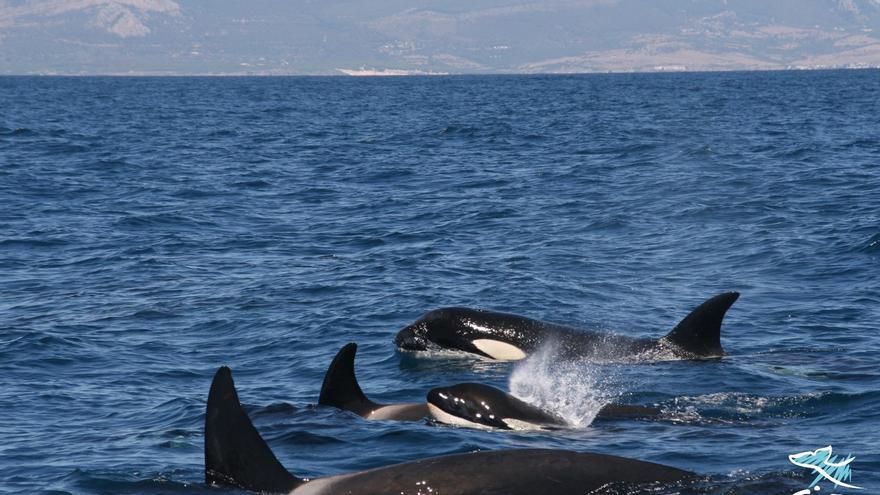
First Sounds of Endangered Iberian Orcas Described in New Study
A new scientific paper has for the first time described the unique sounds of critically endangered Iberian orcas, offering crucial insights for their conservation efforts.
A new scientific paper has just been published, describing for the first time some of the sounds made by Iberian orcas. This is a major step for marine conservation, especially since these orcas are critically endangered. The study, led by Dr. Javier Almunia from the University of La Laguna (ULL) and supported by Loro Parque Fundación and CIRCE, is a scientific breakthrough. It paves the way for more research into how these unique orcas communicate, behave, and how best to protect them.
For more than 20 years, Loro Parque Fundación and CIRCE have worked together to study and protect these orcas. These are the same orcas that have recently gained attention for interacting with sailboats in the Strait of Gibraltar. CIRCE is the only group allowed to study this specific orca population in Gibraltar, which has helped them gather some of the most important scientific data in the area. The orcas living at Loro Parque have also played a part in this success, contributing to scientific progress over the years.
Dr. Javier Almunia, a professor at the University of La Laguna, explained that "we have described some of the sounds Iberian orcas make for the very first time. These sounds were unknown until now and will help us understand how they communicate and organize themselves socially. This understanding is crucial for protecting them."
Researchers used a special acoustic buoy, first tested in Tenerife and later deployed near Barbate in May 2025. This technology clearly recorded Iberian orca sounds, allowing scientists to identify four different types of calls – the first ever described for this group. The buoy also picked up 40 Hz calls from fin whales, linked to feeding, which had never been heard in the Strait before. Additionally, it recorded sperm whale clicks and dolphin whistles, showing how diverse the marine life is there. However, the buoy also detected constant human-made noise, mainly from ships and sonar devices. This ongoing noise means whales and dolphins have to communicate in a very noisy environment, which could threaten their survival in busy shipping lanes.
A key takeaway from the study is how important new passive acoustic monitoring (PAM) technology is. These tools allow scientists to continuously study animals in challenging places like the Strait of Gibraltar without disturbing them. They provide vital information about how animals communicate, feed, move, and react to human activities like ship traffic and underwater noise.
Renaud de Stephanis, co-author of the study and director of CIRCE, believes the findings "strongly support setting up a permanent acoustic monitoring station in the Strait. This area is one of the world's busiest shipping routes."
Stephanis added that "such a network would help us detect endangered species in real-time, better understand how they use their habitat, pinpoint threats like noise, ship collisions, or fishing, and create more effective ways to protect them."
This new research highlights the global importance of the work Loro Parque Fundación has been doing for over 30 years, through advanced scientific studies, partnerships, and ongoing funding for marine conservation projects.
The study also shows how important it is to combine data from places like Loro Parque, where detailed studies can be done in a controlled setting, with information gathered from the wild. Only by bringing these two types of data together can we fully and accurately understand the behavior, communication, and conservation needs of the Iberian orca, a very vulnerable population with only about 37 individuals left.