
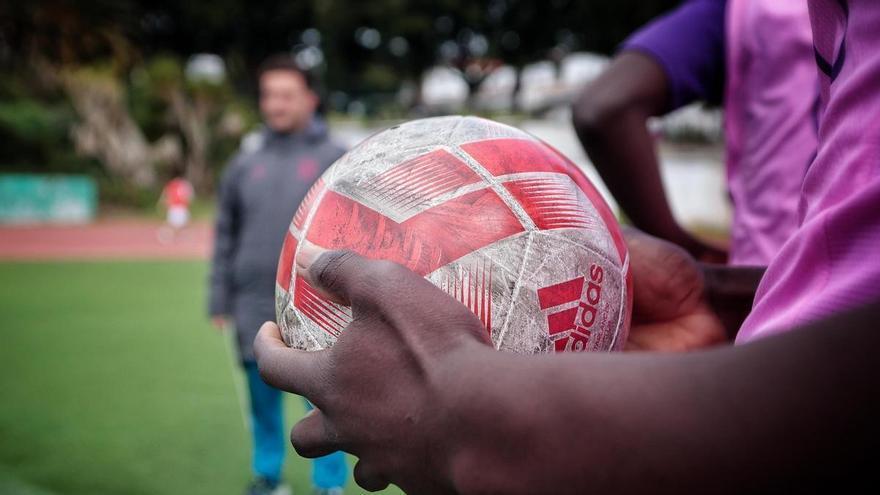
FIFA Rules Leave Unaccompanied Migrant Minors in Canary Islands Sporting Limbo
Strict application of FIFA’s international transfer rules is preventing unaccompanied minors in the Canary Islands from joining official football leagues, prompting an investigation by the Spanish Ombudsman.
A clash between FIFA’s international rules and Spanish law has left dozens of unaccompanied minors in the Canary Islands stuck in a sporting limbo. As reported by El Día, FIFA’s Article 19—intended to prevent the trafficking of young players—is being applied so strictly that it is blocking children under the care of the Canary Islands government from joining official football leagues, unless they have official refugee status.
This creates a legal contradiction. While Spanish law and the Convention on the Rights of the Child guarantee every child the right to play sports, the requirement for an international protection document—which is nearly impossible for many to obtain—prevents them from getting a player’s license. The Inter-island Football Federation of Tenerife (FIFT) argues this is necessary to prevent illegal transfers, though other sports, like basketball, do not enforce such rigid barriers.
The human cost is clear. At clubs like Florida CF, young players like Mustapha Barry have waited over 700 days to play in an official match. Others, such as E.H., A.B., and A.S., have faced repeated rejections or years of waiting. Without a solution, many of these young people are simply giving up on sports altogether.
The situation has caught the attention of the Ombudsman, Ángel Gabilondo, who has opened an investigation following concerns raised by the regional ombudsman, Dolores Padrón. Meanwhile, the Canary Islands government is pushing for national law to take priority over federation rules, arguing that there are already legal ways to protect these minors' right to play.
Beyond the red tape, there is a financial hurdle: because these minors often lack full documentation, they do not qualify for resident airfare subsidies. This forces grassroots clubs to pay over 150 euros per trip for away games, a cost they cannot afford. While local initiatives like Campus Sansofé organize friendly matches to help these youths integrate and learn the language, they are no substitute for the administrative reform needed to let these children compete on equal terms, as was eventually achieved for young Mamadou Dambele after a long and difficult process.