
Experts Back Tenerife Geothermal Project to Drive Canary Islands' Decarbonization
A coalition of 139 international experts has issued a manifesto supporting the development of geothermal energy in Tenerife, citing its potential to provide a reliable, constant renewable power source for the Canary Islands.
The scientific community is throwing its weight behind Tenerife’s geothermal potential, a move that comes at a vital time for the Canary Islands' transition to clean energy. A group of 139 experts from national and international research institutions has signed a manifesto calling for the responsible use of underground heat as a key strategy to decarbonize the islands.
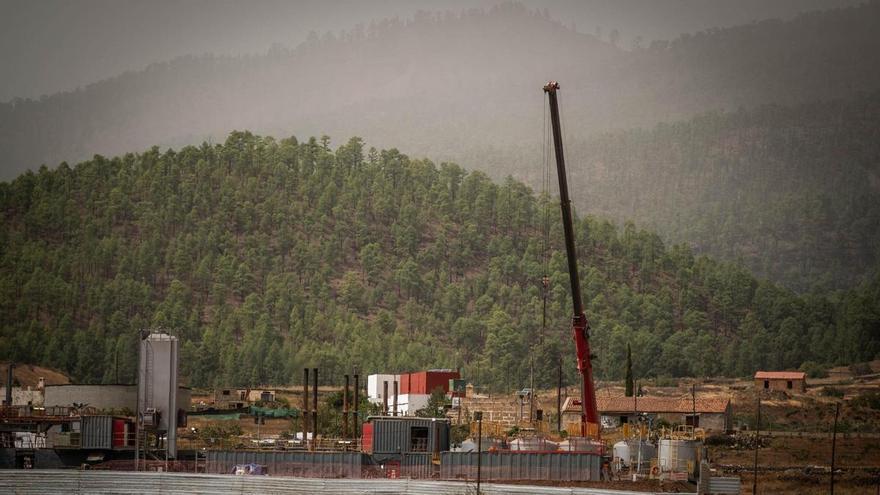
This support follows the discovery of a deep hydrothermal system in Vilaflor de Chasna. Drilling has already reached over 2,800 meters—with a goal of 3,000—and has successfully located water hotter than 150 degrees Celsius within permeable rock. If the project proves technically and economically viable, it could provide Tenerife with a reliable, constant source of renewable energy.
Unlike solar and wind power, which are intermittent and require storage, geothermal energy provides a steady supply 24 hours a day. The manifesto’s signatories, including the rectors of the University of La Laguna (ULL) and the University of Las Palmas de Gran Canaria (ULPGC), as well as specialists from the CSIC and the National Geographic Institute (IGN), believe this consistency is essential to reducing the islands' reliance on imported fossil fuels and protecting their power grid from global market instability.
Itahiza Domínguez, director of the National Geographic Institute in the Canary Islands, has clarified that these drilling operations pose no seismic or volcanic risk. He noted that the minor seismic activity recorded in the region occurs at depths of about 10,000 meters, far below the current drilling site. Furthermore, experts point out that geothermal plants require much less land than other renewable energy projects, a significant advantage for the islands.
The project is being managed by a public-private partnership involving the Cabildo, the Canarian company Disa, and the Icelandic firm Reykjavík Geothermal. The team is currently analyzing key data, including pressure and flow rates. On September 16, Minister of Territorial Policy Ángel Víctor Torres, along with regional and island government representatives, will present the preliminary findings of this research, marking a major step toward the archipelago’s goal of energy independence.